



by Nataliia Serebriakova
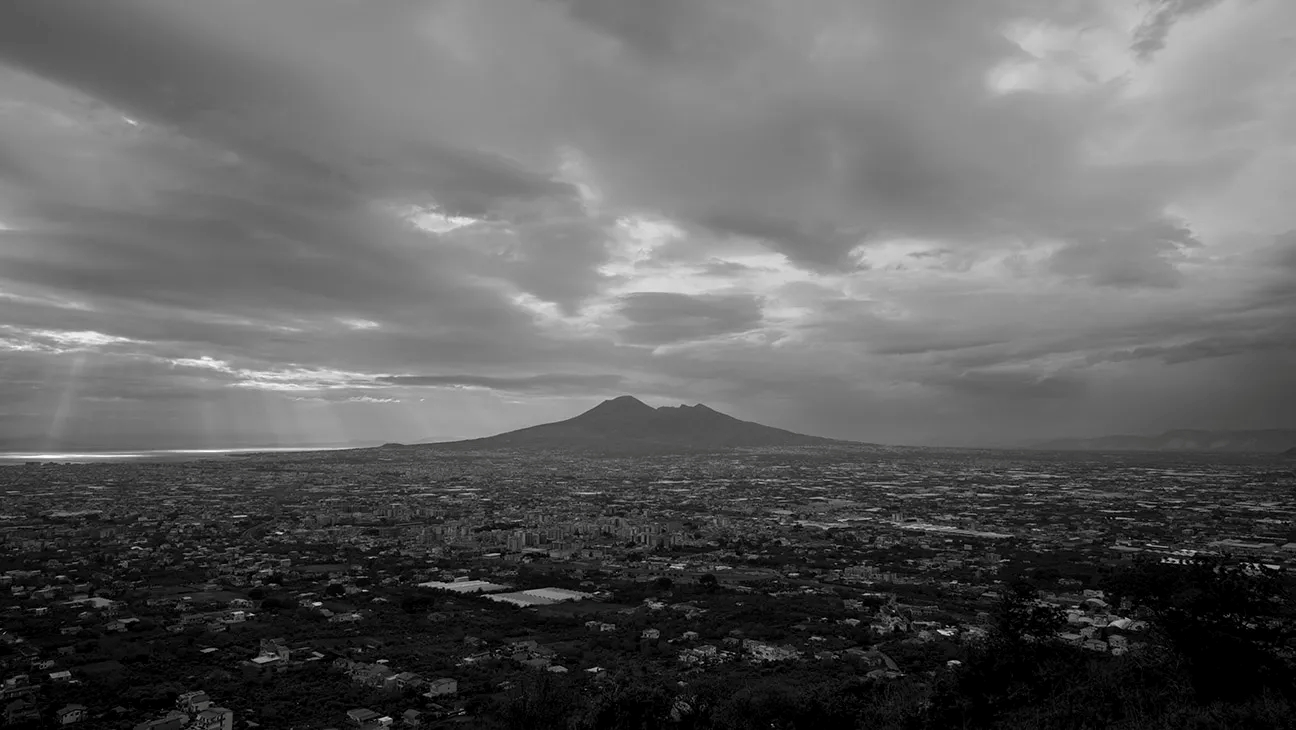
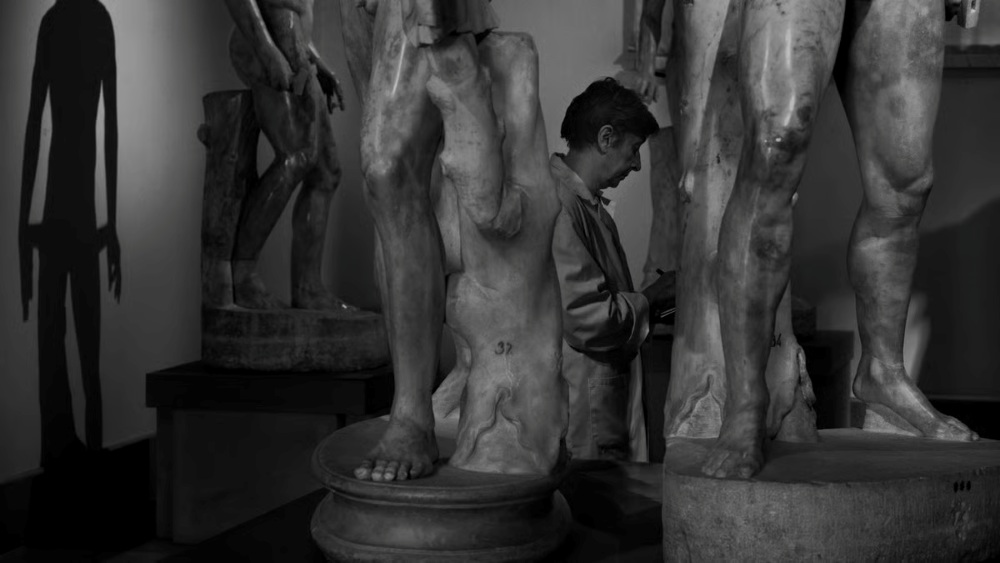
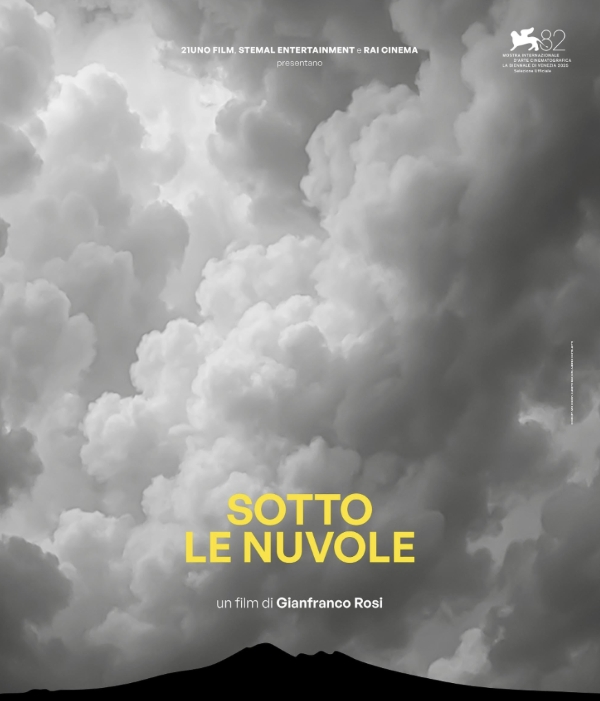
The documentary Pompeii: Below the Clouds is not a film that announces itself loudly. Instead, it moves slowly through the landscapes around Mount Vesuvius, listening as much as observing.
Directed by Gianfranco Rosi and featuring a striking experimental score by Daniel Blumberg, the film explores Naples and its surrounding territories as a place where past and present co-exist under the same restless sky.
The collaboration between the two artists is unexpected. Rosi, known for works such as Fire at Sea and Notturno, had rarely used composed music in his films. Blumberg, on the other hand, gained attention for the sweeping, dramatic score of The Brutalist.
Yet, Pompeii: Below the Clouds demanded something entirely different: a sound that almost dissolves into the landscape itself.
A film born from encounters
For Rosi, the project began not with a script but with a suggestion. The director recalled that the idea of filming in Naples originally came from fellow filmmaker Pietro Marcello.
“I was suggested to enter into this journey in Naples,” Rosi explained. “I’m not from Naples, so, like all the films I did, they come from a strange encounter of people.”
The city fascinated him precisely because of its complexity. Naples, he said, is a place where time seems layered rather than linear.
“What I wanted to do in this city,” he said, “was to show the complexity of this city – this city that is constantly suspended in time… where you constantly perceive the weight of the past.”
Living in the shadow of Vesuvius means living with the awareness of history. The volcano is both a symbol of destruction and a strange guardian of memory. Pompeii and Herculaneum survived precisely because they were buried.
“The Vesuvio preserved is like Shiva,” Rosi reflected, referencing the Hindu deity. “A bit like Shiva the Destroyer and the Regenerator.”
The city beyond the frame
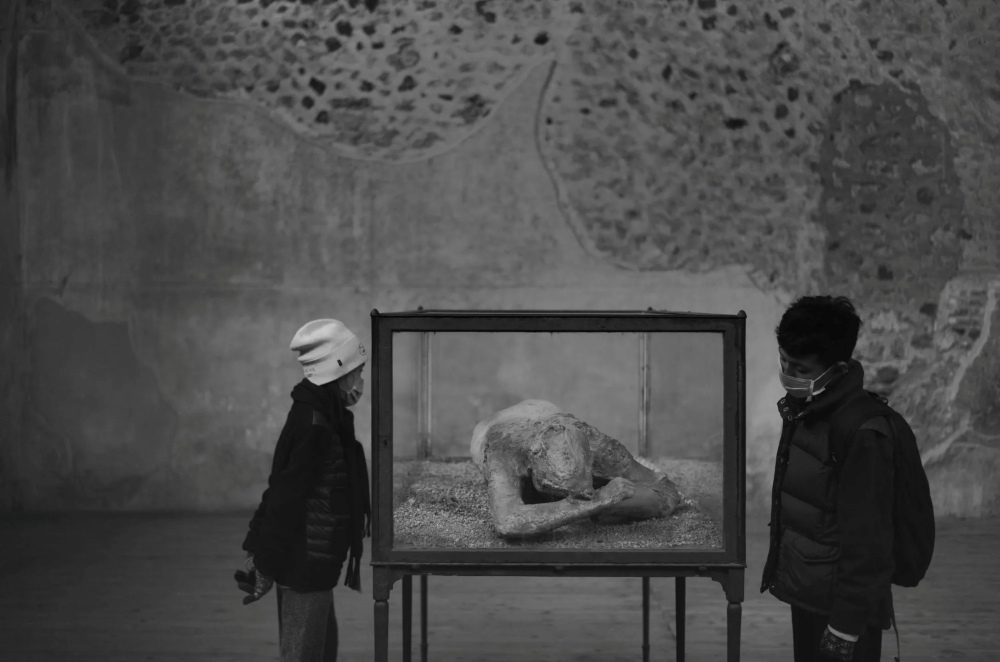
Rosi often describes Naples as a city that cannot be fully contained within a frame.
“For me, Naples, it’s a place I’d like to define as an immense outside frame,” he said. “Whatever you perceive from the city is never there. There’s always something that is hiding.”
This idea lies at the heart of his filmmaking philosophy: cinema should evoke not only what is visible but also what remains unseen.
“A perfect approach on cinema,” he said, “is always to be able to say in one frame not only what you see, but also what is outside that frame.”
This philosophy shaped the structure of Pompeii: Below the Clouds. Rather than explaining everything, the film leaves gaps for viewers to fill.
“All the people I met, each of them could be a documentary on its own,” Rosi said. “And yet I like… to take as little information as possible and leave the audience somehow the freedom of interacting with the gaps that I leave in the film.”
Waiting for the right sky
Technically, Rosi’s method is surprisingly minimalistic: “I have a great friend of mine, [cinematographer] Ed Lachman, who’s been my companion all this year. And I never dare talk to him about lighting or about lenses or about things like that, because I’m completely ignorant. For me, any camera is there, I have to have a good lens.” He also relied heavily on natural light — especially clouds.
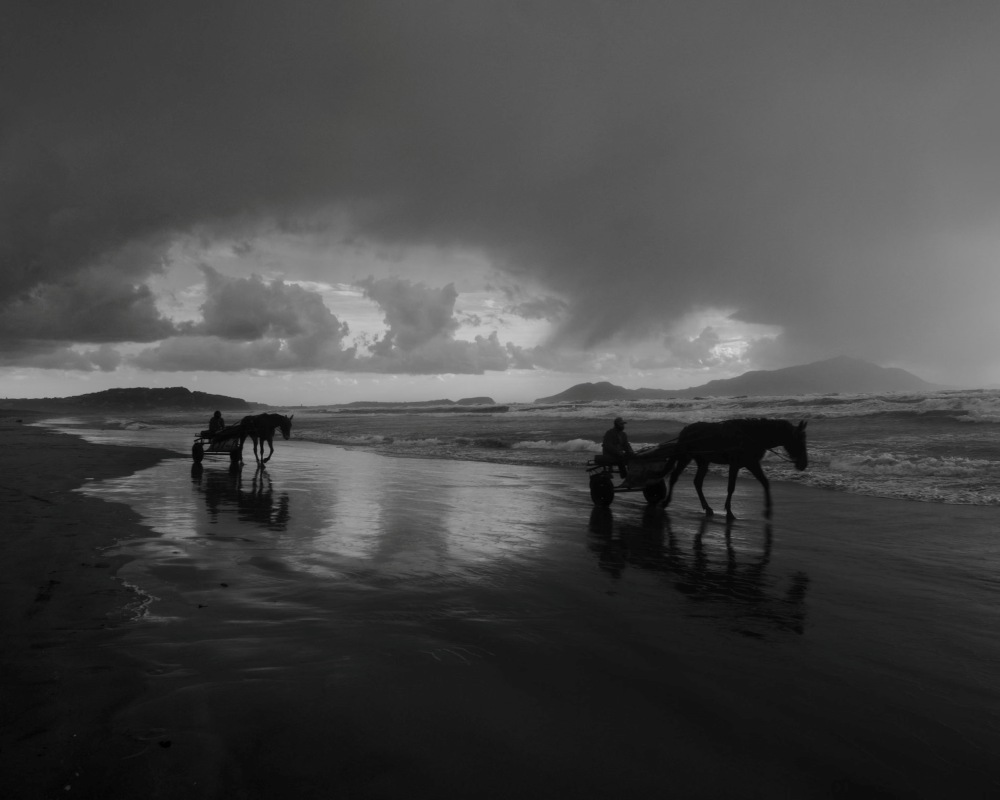
“For me, they are my own companions,” he said of the clouds. “I never film with this blue sky. I either go to sleep or go somewhere where I can hide from the lights.”
The reason is both aesthetic and narrative.
“The clouds for me are an important narrative element in my film. They’re the one that allowed me to have the perfect frame and the perfect distance with the subject.
“I can wait for weeks, I can wait for years before I shoot,” he said.

Enter Daniel Blumberg
Blumberg joined the project late in the process. When Rosi first approached him, the request was modest.
“He initially asked me to make something for the end of the film when the camera goes under the water,” the composer recalled.
Blumberg, who describes himself primarily as a film lover rather than a soundtrack enthusiast, approached the invitation cautiously.
“My first thought was whether I could add something,” he said. “If it would add… like 1% or something, then it would be worth trying something.”
He had admired Rosi’s work for years.
“Gianfranco is one of my favourite filmmakers,” he said. “I was really into his work as a fan for many years.”
Recording the landscape itself
The sound design of Pompeii: Below the Clouds became an unusual experiment. Blumberg used hydrophones — microphones designed to capture underwater sound — as well as geophones, devices normally used to record seismic activity.
“We were talking about mirroring the camera going underwater with the technology for capturing the sound,” he said.
At one point, the early experiments took place in the composer’s apartment.
“When Gianfranco came to London, we were doing lots of experiments in my bathtub and with speakers underwater.”
Eventually, Blumberg recorded musicians such as saxophonists Seymour Wright and John Butcher before re-recording their performances underwater near the volcanic coastline.
“The wind coming from the volcano, the waves… were washing over the microphones,” he explained. “You could hear the landscape interfering with the sound.”
Rosi loved how the environment transformed the music.
“The metal, the sand, the stones, everything is there,” he said. “The way the water was moving… it’s incredible.”
A score built in two weeks
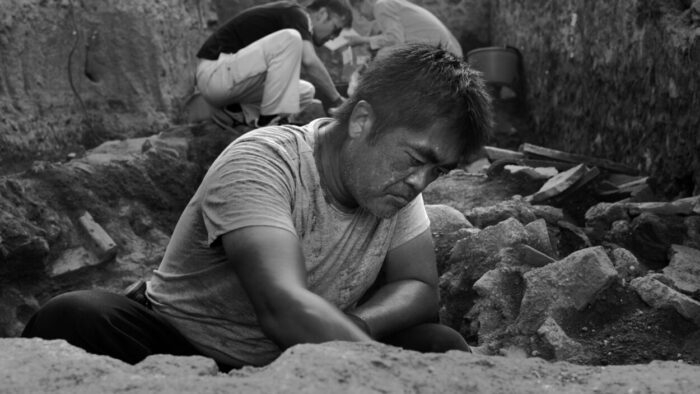
Despite the film’s carefully layered soundscape, the actual recording process happened surprisingly fast.
“All this was done in two weeks,” Rosi said. “From the moment I came to London… the concept of what we wanted to have.”
His only instruction to the composer was unusual.
“The only thing I asked Daniel was, I would like the sound where you don’t recognise the instrument.”
Blumberg embraced the challenge, experimenting with improvisation, looping, and unconventional recording techniques. The result is a score that slowly reveals itself over time.
“What is very interesting in the film,” Rosi said, “is that it started with this slab of sound… and slowly… you start perceiving that there are some notes there.”
Improvisation as a creative method
For both artists, improvisation became the foundation of their collaboration.
“Without experimenting, you cannot create much,” Rosi said. “And I think the beauty of documentaries is the one that can challenge you constantly in finding a new language.”
Blumberg agreed that the compressed timeline actually helped preserve the energy of the process.
“If we’d started recording months before,” he said, “we might have lost the quality that you get from just… massive energy.”
Although the physical work happened quickly, their conversations about the film stretched over months.
“You say it’s two weeks,” Blumberg joked, “but we spoke about it for six months.”

The myth of observational cinema
Rosi’s approach to documentary has always challenged traditional categories. Asked about the observational style of the film, he dismissed the label entirely.
“I don’t believe in observational filmmaking,” he said. “I believe in transforming reality constantly into something else.”
For him, the camera inevitably alters whatever it records.
“Reality in front of us is infinite,” he explained. “And then we put the frame and we narrowed that space… We transform reality into something else.”
In other words, documentary is not about capturing reality but reshaping it.
“Cinema is a metaphor,” Rosi said. “You have to create a constant sense of metaphor.”
 Trust and time
Despite the philosophical complexity of his work, Rosi insists that filmmaking begins with something simple: trust.
“Encountering and building up trust is part of my filmmaking,” he said. “And the trust takes time to build it out.”
That is why many of his projects stretch over several years. Living alongside his subjects allows the film to emerge naturally rather than being imposed from outside.
Breathing with the film
Ultimately, the collaboration between Rosi and Blumberg turned sound into a living element within the film. The music does not guide the viewer emotionally in the conventional sense; instead, it creates a sense of suspended time.
“It gave the film this sense of breath,” Rosi said. “This sense of suspension.”
Under the clouds of Vesuvius, past and present echo through both image and sound. In Pompeii: Below the Clouds, cinema becomes less about explanation and more about atmosphere — a space where history, landscape and human presence quietly converge.
Pompeii: Below the Clouds is streaming on Mubi from 25 March 2026
