



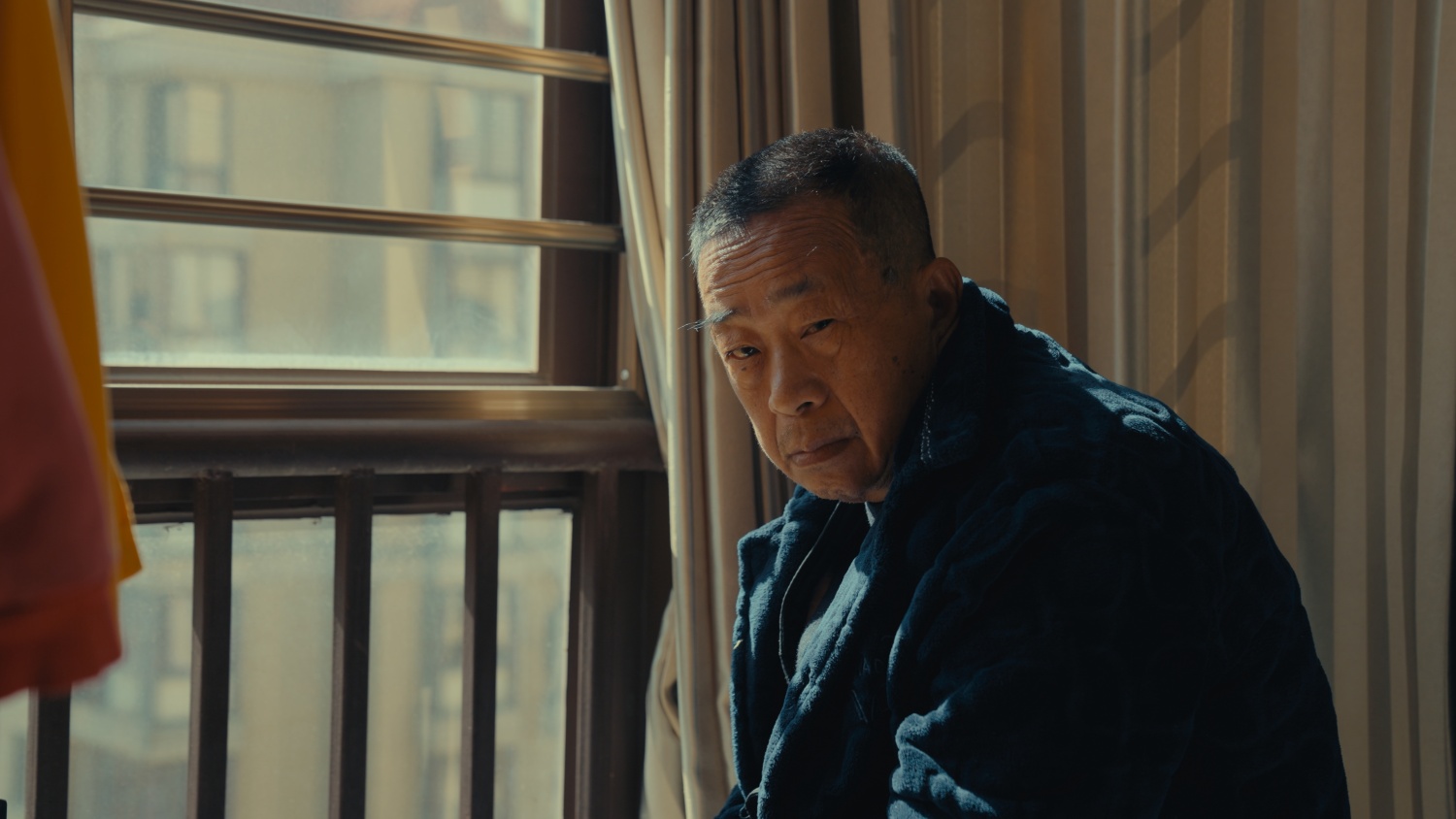
by Christy Tan
The film made its international debut in the Burning Lights Competition at Visions du Réel in Switzerland before premiering in Australia at the Sydney Film Festival, where it won the Documentary Australia Award.
Director Vee Shi migrated to Australia at age 18 and has spent much of his life away from his hometown. Returning to Longtian in the aftermath of the COVID-19 pandemic, he wanted to make a film about his family. “Having been on my own since I was 13, it was only through making this film that I truly got to know my family… The film is only possible because they love me so much.”
Time and Tide is a homecoming that reckons with the complexities of filial piety, moral responsibility and personal sacrifice. Through an intimate portrait of his family, Shi reveals how the ties that bind us can constrain the lives we imagine for ourselves, asking what we owe to those we call family, and what it costs to fulfil those obligations.
“Although the film is deeply personal and specific, it reflects a wider generational experience in China. In my parents’ generation, families were often separated in the aftermath of the Great Leap Forward and the Cultural Revolution, when survival meant working far from home or overseas, and developing a remarkable capacity – and expectation – to endure hardship. In Chinese, we call this “eating bitterness.”
Originally conceived as a narrative fiction centred around a prodigal son making his return, the film’s concerns shifted alongside reality. “When I realised how troubled my parents’ marriage had become,” Vee shares, “I wanted to persuade them to divorce. Before I could act, however, my father suffered a stroke, and the burden of care fell on my mother.” Rather than a story about whether his parents should separate, it evolved into an exploration of caregiving. Despite wanting to leave the abusive marriage, Vee’s mother was now the only person able to care for her husband.
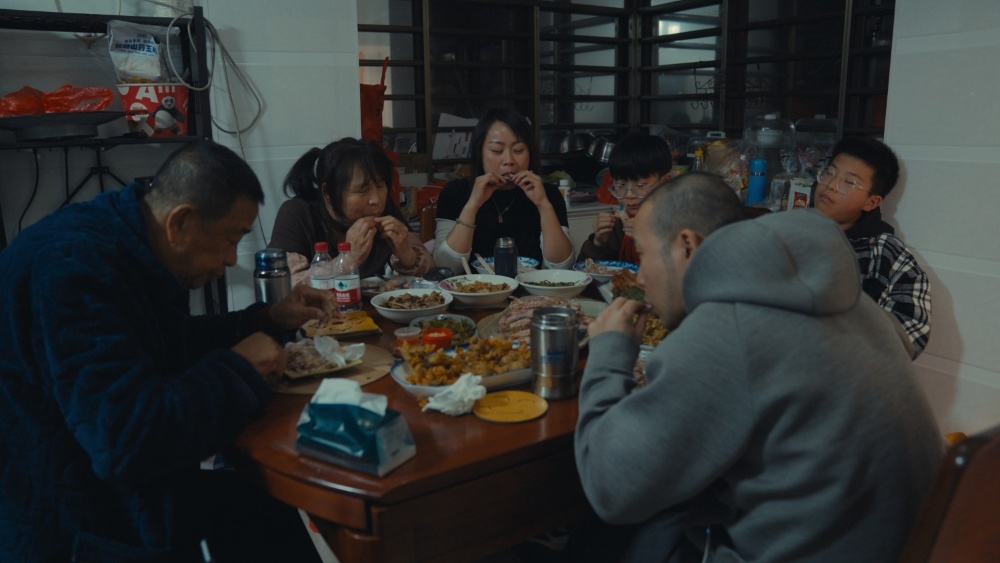
“Time and Tide is also a film about domestic violence, but it is not concerned with judgement. Instead, it observes how violence reverberates through a family over time, and how responsibility, care and obligation continue to coexist within intimate relationships.”
The film highlights how the labour of care work often falls on women. Their capacity for agency and mobility is determined by larger political and social structures that shape the family unit. Liyun, Shi’s sister, who was given up for adoption during China’s one-child policy and is now a single mother, also bears the responsibility of caring for Vee’s father. Although he depends on her, he resists acknowledging this reliance, driven by both a fear of burdening others and deeply ingrained patriarchal ideals of masculine independence.
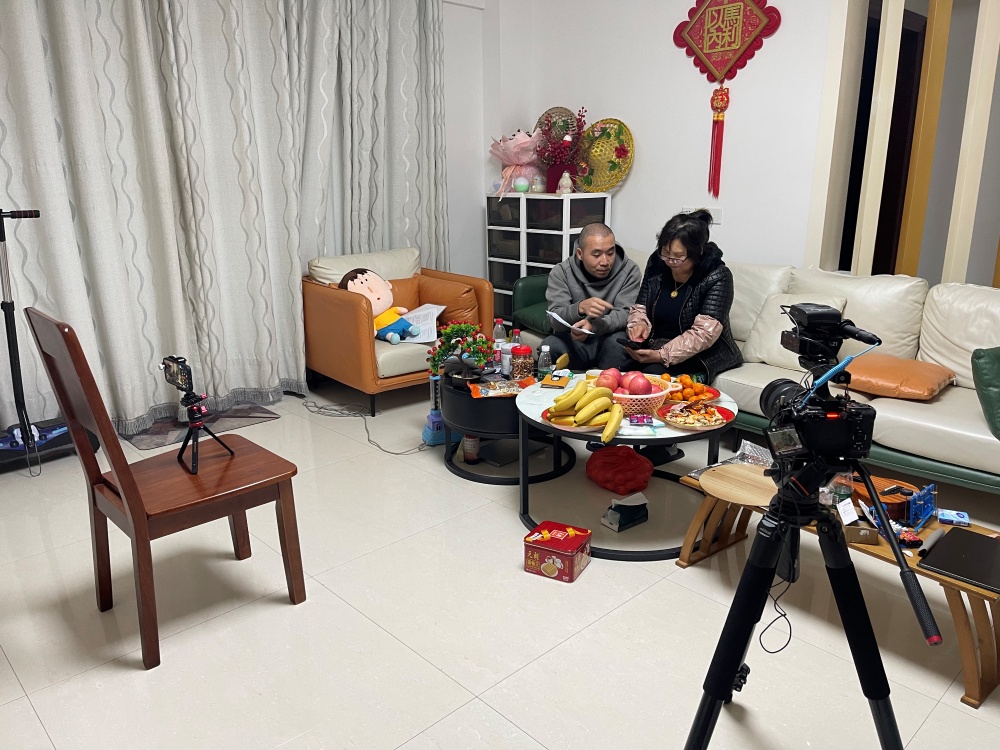
Time and Tide was filmed over the span of 30 days with a small crew of three people – director Shi, cinematographer and producer Nicholson Ren, and sound recordist Yilin Xie. They lived alongside Shi’s family with the camera serving as a quiet witness to their everyday lives.
“For a long time during the editing process, I still tried to force the material into a narrative film, but once I stripped away the artificiality, I realised that the heart of the film came from simply observing what was already there… Surprisingly, I was okay with seeing myself on screen. I was able to detach from myself. While editing and watching the film, it felt like I was observing someone else.
“I love fiction. But whether it’s documentary or fiction, it’s always about emotional truth. We leaned toward documentary because my parents simply couldn’t act. We realised the only way to really connect was to let them be themselves. What we discovered is that the most impactful, emotional moments in the film are the ones that were completely unscripted.
“That messy, contradictory reality is what I wanted to capture. My sister leaves, I leave, and my parents continue living together despite their strained relationship, their tensions. Life just goes on. And to me, that feels truthful – unlike most Hollywood films where there’s resolution. Life doesn’t work that way.”
Although the film begins as a son coming home wanting to impart change, it ends with the sobering realisation that nothing really changes. As the title suggests and the old adage reminds us, time and tide waits for no one.
“My mother was denied a visa to Australia three times, even though I am an Australian citizen and I have been here for almost 20 years. I still can’t bring my mother to see where I live, to attend the screening of a film that she is a part of. This situation feels like the perfect encapsulation of what the film explores – where you are born, who you are, dictates what choices you have in life.”
Time and Tide is screening in select cinemas from 10 September 2026
