




by James Mottram
When Martin McDonagh was just 12, he heard a record by The Clash that changed his life. From the 1980 album Sandinista!, the politically charged ‘Washington Bullets’ read like a history of imperialism, including reference to the 1973 coup in Chile, that saw General Augusto Pinochet seize power from the democratically elected President Salvador Allende. “[It] talked about Allende and Victor Jara, the folk singer who was murdered by the fascists,” McDonagh tells FilmInk. “Obviously, as a 12-year-old, I didn’t know anything about any of that history.”
Intrigued, he began to read up on this brutal, bloody turning point in Chile’s history – a coup d’état that received covert U.S. support. “I guess we’re told to believe that America or the CIA believes in democracy above everything, and that was one of the clearest examples of that not actually being true,” says McDonagh, whose subsequent work in the theatre – plays like The Pillowman and The Lieutenant of Inishmore – has often explored political violence and state power.
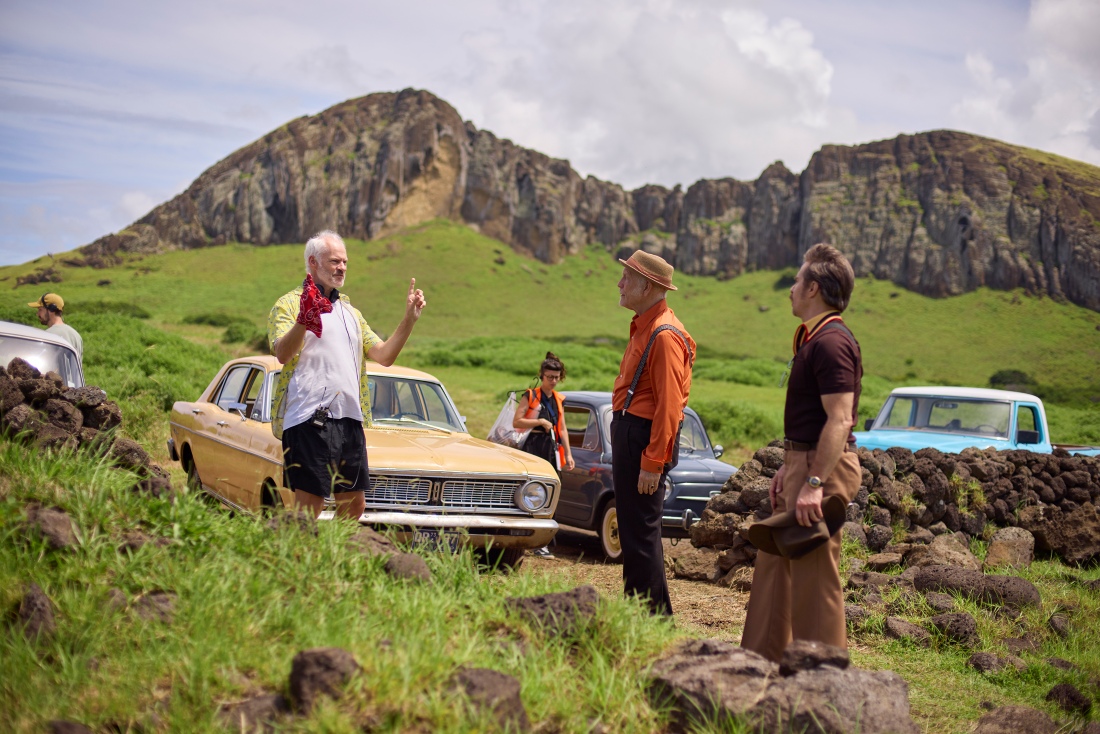
McDonagh’s latest film Wild Horse Nine takes audiences back to 1973, and the eve of the coup, albeit in a very unexpected fashion. The British-born director behind such award-winning movies as Three Billboards, Outside Ebbing Missouri and The Banshees of Inisherin had been toying with a story for years about two men – one older than the other. Sometimes they were father and son. Sometimes they were two actors. “The groundwork of the characters was already in place – a bickering odd couple, like an old married couple who love each other but argue every day,” McDonagh (above, on set) says.
Similarly, he’d visited Rapa Nui fifteen years ago – the Polynesian isle and Chilean territory. Famed for its carved stone heads, known as moai, it felt like a perfect setting for a story. “It was beautiful and mysterious and all those things, and [I] tried to come up with a story for it and it never quite fell into place,” he says. Eventually, his mind turned to the coup that had fascinated him as a teenager. Suddenly, those bickering friends became CIA agents. “And when I put those two things together, it seemed to really gel.”
Gel, it certainly does. A scathing black comedy laced with pathos, Wild Horse Nine sees Chris (John Malkovich) and Lee (Sam Rockwell) dispatched to Rapa Nui by their bureau chief MJ (Steve Buscemi). Armed with the knowledge of Allende’s impending fate, this pair is left to wrestle with their dark pasts and their own mortality, as well as a friendship forced to extremes. The result is an actor’s dream. “Something like this, you might read once every 20 years, 25 years, not very often. So that in itself is a reason to do it,” says Malkovich, who won the Volpi Cup for Best Actor at the Venice Film Festival in September for his performance.
 Calling it “an incredible gift”, it’s a script full of “incorrect things that we can no longer say”, he adds. “People love that because speech is sometimes limited by supposed reaction or imagined reaction or real reaction … you can’t just say things anymore. And these characters do. Chris is a truth teller. He’s also a jackass. And these are people that … they don’t talk. They never address if it’s right or wrong if you kill people. They only address if it’s right or wrong to do so while that person is eating! So, you can tell that their moral temperature needs to be read.”
The 72-year-old Malkovich is old enough to remember the events that the movie alludes to.
“I lived in the years the character worked. I remember being a small child and watching … I believe it was on NBC News … footage of Patrice Lumumba being chased through the Congo. I remember his death. I remember the coup against Salvador Allende. I was nine years old, about to be 10 when John Kennedy was killed. So, like all Americans my age, and all Chileans born, say by 1968 … [I] know what happened in Chile in 1973.”
Malkovich also calls it “an area I’ve worked in a lot”. Just this year, he adapted and starred in The Infamous Ramírez Hoffman, a stage play that toured South America. Based on the final chapter of Nazi Literature in the Americas by Chilean author Roberto Bolaño, the actor played the titular aviator and poet who writes verses in the sky whilst working as a killer in the Pinochet dictatorship. Before that, in 1994, at the Chicago Steppenwolf Theatre, he adapted Don DeLillo’s Libra, the author’s acclaimed novel about Lee Harvey Oswald and the Kennedy assassination.
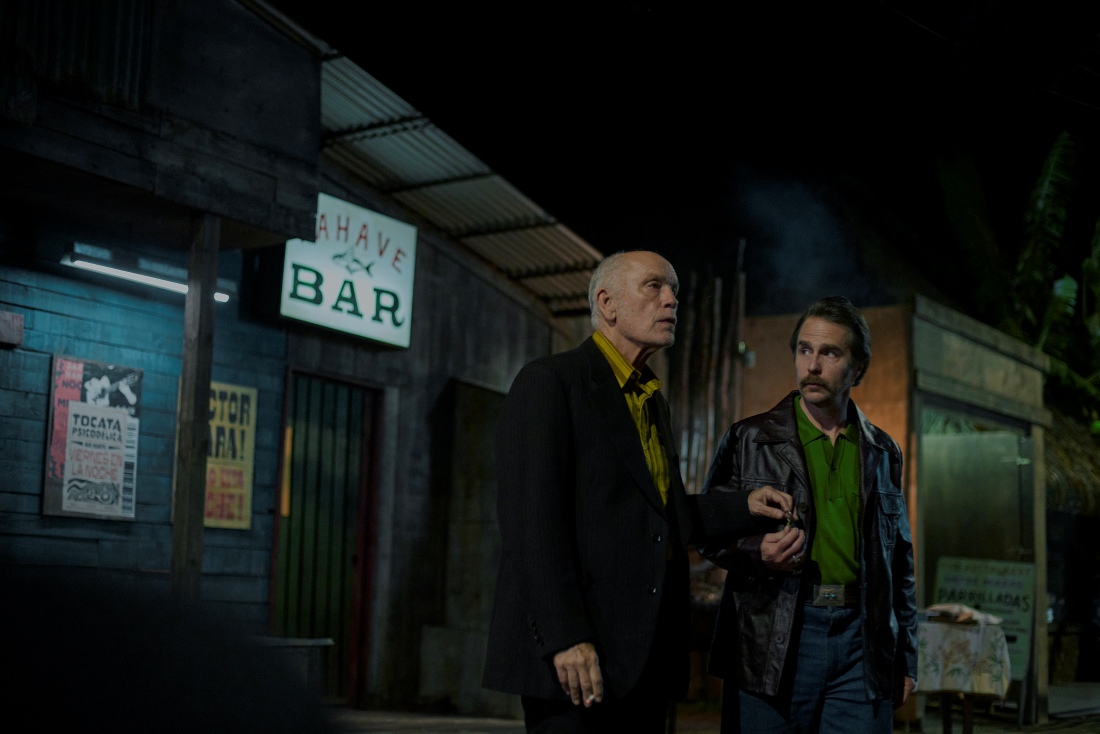
While Malkovich is familiar with this period of history, many are not. McDonagh feels, just as he did after listening to The Clash’s record, that it might be interesting for younger viewers – particularly young Americans – to watch the movie and “just Google all these truths” and learn about the time President Richard Nixon was in the White House. “I do think a lot of people think Trump’s as bad as it’s gotten, but I think we’ve had really bad [leaders] in the past,” he says. “I’m sure we’ll get some really bad ones in the future too!”
Marking the first production on the island since Kevin Reynolds’ 1994 film Rapa Nui, an historical epic co-produced by Kevin Costner, “I did find the island to be a very spiritual Zen-like, calming place,” McDonagh adds. “There are loads of wild horses there. When I went there 15 years ago, that was the biggest surprise to me, and that’s what stayed in the versions of the story ever since – these wild beautiful horses roaming everywhere. So, I knew I always wanted to keep that, and that makes the island – and the film – feel spiritual.”
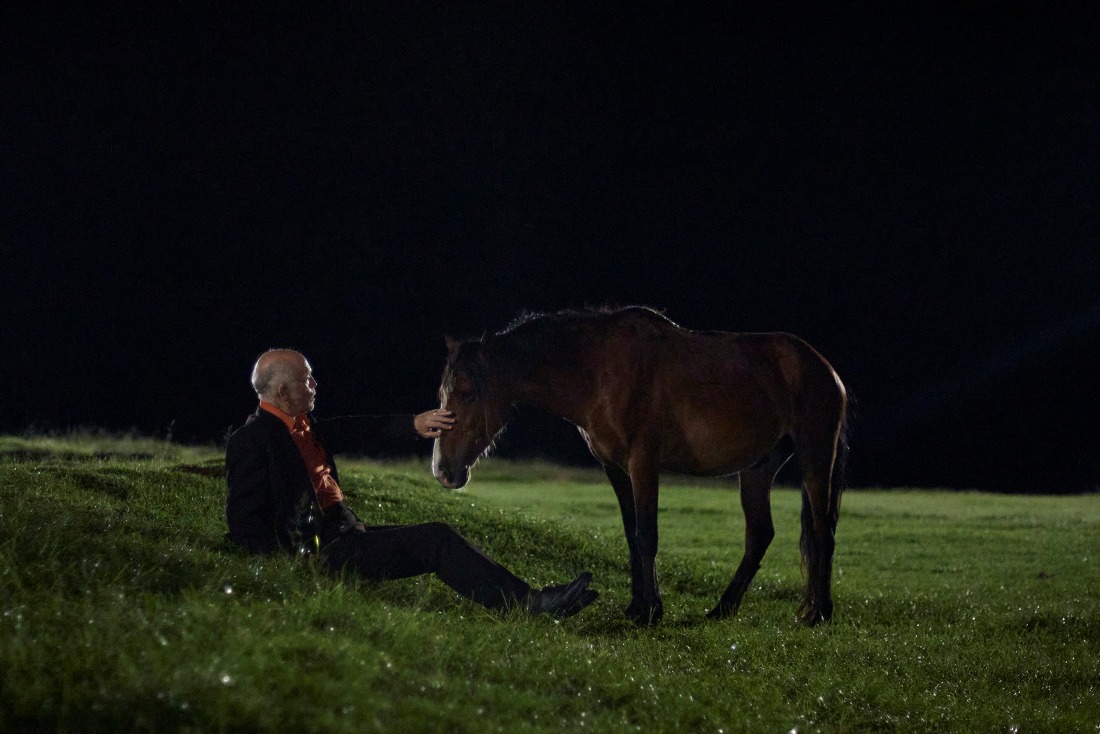
Given the remoteness of Rapa Nui – camera equipment was shipped from the UK, period vehicles from Santiago – the actors were unable to go home on weekends. It meant that every spare minute they had, they were thinking about the script. “When you shoot a movie, you don’t get years of time to rehearse,” says Malkovich. “[But here] we would just run lines and try it this way, try it that way, and just keep feeling it out.” Of course, with a script filled with typical McDonagh zingers, in Malkovich’s hands, they became pure gold.

Sam Rockwell recalls, in rehearsal, Malkovich chewing over the line where his character calls Lee the “Arch-Pussy Ferdinand”. “A very funny line. Martin just politely said to John, ‘Hey, could you just turn up the heat a little bit on that line?’ And John brought what he does, as you know if you’ve seen In the Line of Fire or Con Air or Burn After Reading … he brings the heat. He has the gift of fury, and he did it, and Martin and I just kind of looked at each other: ‘Fuck me!’ Front row tickets to the John Show. So, we were very excited because it brought a danger that we hadn’t thought of necessarily.”
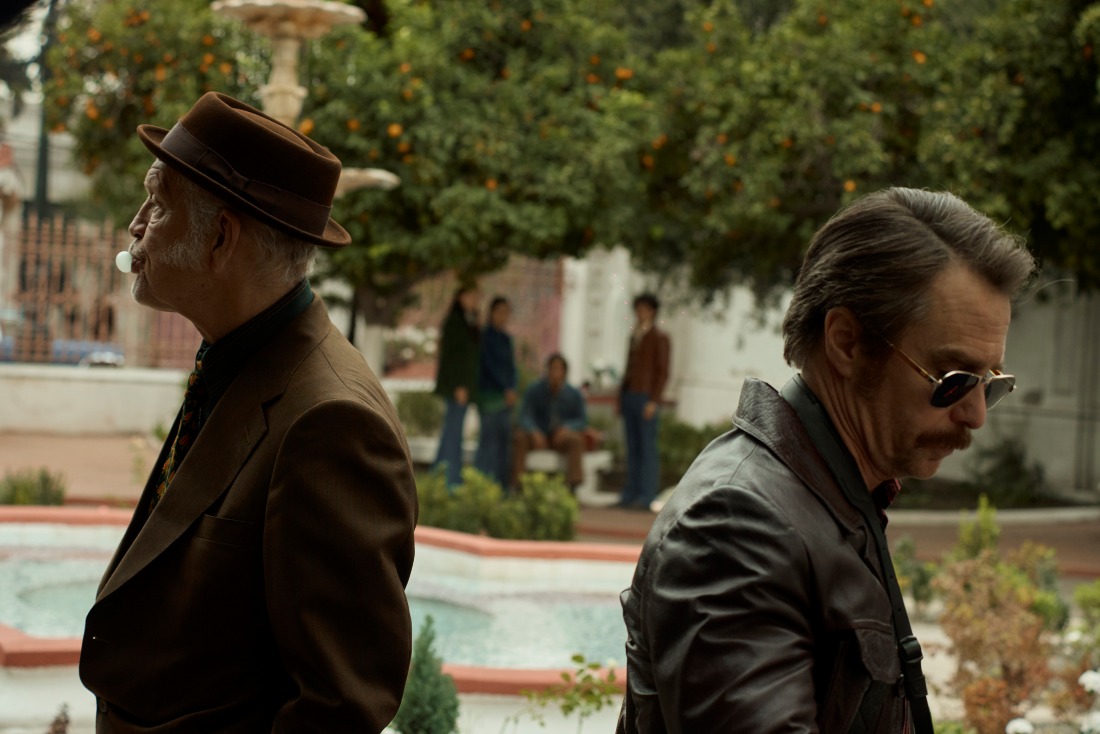
Fans of McDonagh will likely be reminded of his 2008 directorial debut In Bruges, which starred Colin Farrell and Brendan Gleeson as two argumentative hitmen. “It’s an easy sort of go-to place, two bickering guys,” the writer-director says, “but in a way, it almost felt like we’re seemingly setting up ‘In Bruges 2’ but then subverting it and going to a very different place.” Indeed, Wild Horse Nine does go in a very different direction to In Bruges, showing a greater maturity from the 56-year-old McDonagh.
“My thing is never to judge the characters,” he says. “It’s interesting for an audience to be allowed in to like them, but then by the end of the film actually think about what the CIA has done and what these men are really like. I think that’s an interesting theme to play with. But not to judge them is always the most important thing to me. You see John’s character judging himself completely, and that’s always a very interesting thing to see: the guilt and regret. I wrote those two words, I think, on the first page of the script when I was writing it. Despite the comedy and the plot twists, we come back to the story being about those two things.
Wild Horse Nine opens in cinemas from 5 November 2026
