

by Stephen Vagg
We recently did a long series on the Rank Organisation, arguing that studio displayed a consistent trend of identifying young female talent, rushing them into movies, failing to exploit them, and watching on as they achieved great success elsewhere. Examples of this breed include Diana Dors, Julie Christie, Brigitte Bardot, Anne Heywood, Barbara Steele and Samatha Eggar, who passed away on 15 October 2025 in Los Angeles, after an amazing life and career.
She was born in March 1939, to a British dad (a brigadier in the army no less) and Dutch-Portuguese mother, raised just down the road from Oliver Reed, educated at a convent school, then studied fashion and acting in London.
Eggar was talented and gorgeous and was cast in stage parts very rapidly – quite classy ones too: Landscape with Figures for Cecil Beaton, Taming of the Shrew with Sian Phillips, A Midsummer Night’s Dream directed by Tony Richardson (alongside Lynn Redgrave and Rita Tushingham). It was not long before film producers came calling: indeed, before she’d even made her first movie, Eggar had signed deals with J Lee Thompson (who announced her for a never-filmed version of Graham Greene’s The Living Room) and Paramount (who announced her for the never-filmed Mistress of Mellyn).
The British film industry of the early ‘60s was relatively healthy; particularly popular genres at the time included horror, sexy dramas and comedies… and Eggar kicked off her movie career with one of each. The horror was Dr Crippen (1962) with Donald Pleasance doing his Pleasance thing; the sexy drama was The Wild and the Willing (1962), an angry young undergraduate drama from Ralph Thomas and Betty Box (alongside a young Ian McShane and John Hurt; while the comedy was Doctor in Distress (1963), with Dirk Bogarde. None of these films were entirely successful but all are watchable and Bogarde’s popularity saw Doctor in Distress bring in some customers.
The other common role for young actresses in the 1960s was flirty vixen, and Eggar was cast as one in Psyche 59 (1964), a barely-remembered drama-thriller with Patricia Neal and Curt Jurgens.
Then Eggar was given the role of a lifetime… The Collector (1965), as a young art student abducted by an incel (Terence Stamp) who keeps her captive and… anyway it doesn’t end well. This was directed by William Wyler who, from all accounts, gave Eggar a very tough time during the shoot, psychologically torturing the actress throughout filming, isolating her from other cast and crew, ordering Stamp to bully her to “help their performances”, firing her, then rehiring her after Natalie Wood couldn’t do it, and using an acting coach. We’ve no doubt Wyler assumed all this was justified, but he probably got a kick out of it as well (many directors do); the situation was exacerbated by the fact that Wyler didn’t really want Eggar in the first place, the actress having been pushed by Columbia’s head of production Mike Frankovich. Anyway, Eggar’s performance earned her a Golden Globe and an Oscar nomination; the film was a minor hit, inspired several real life serial killers, and its female lead was established as a Hollywood name.
J Lee Thompson cashed in, casting Eggar as another flirty vixen in a little-remembered thriller Return from the Ashes (1965), a film which doesn’t give in to its inherent silliness. Shen then played the female lead in Walk Don’t Run (1966) a popular comedy alongside Cary Grant and Jim Hutton. After this, Eggar beat out Hayley Mills, Barbara Streisand and Maggie Smith for the female lead in Doctor Doolittle (1967), 20th Century Fox’s behemoth musical. The film became legendary for its production difficulties, not the least of which involved the antics of star Rex Harrison; seen today the movie is quite sweet though it has problems, such as uncertainty whether Eggar should romance Rex Harrison or Anthony Newley.
Eggar was considered for the part of Katherine Hepburn’s daughter in Guess Who’s Coming to Dinner? (1967), for which she’d have been ideal, but it didn’t work out (due to her now-large fee and Doolittle overruns apparently). Eggar signed to play the lead in MGM’s musical remake of Goodbye Mr Chips (1969), from the same producer as Doolittle, but was fired after she fell pregnant and/or the studio could not come to terms with original star Richard Burton (accounts vary). Petula Clark took the role.
Her next film was another big budget fiasco – Paramount’s The Molly Maguires (1970) for director Martin Ritt where she falls in love with miner Richard Harris, not aware he’s investigating a violent miners’ union led by Sean Connery. The film was a flop but was an attempt to make a smart epic and is worth watching.
Eggar had the lead in The Walking Stick (1970), a British crime drama romance with David Hemmings, that kind of disappeared – as did a thriller with Oliver Reed, The Lady in the Car with Glasses and a Gun (1970). Eggar then went into The Light at the Edge of the World (1971) with Kirk Douglas and Yul Brynner where she plays a character who, in the spirit of The Collector, gets kidnapped, pack raped and murdered (Quentin Tarantino loves this film).
Following this series of flops, it was off to horror and giallos, which at least had her in leads: The Dead are Alive (1972), A Name for Evil (1973). She starred in a TV series from the story that inspired The King and I, Anna and the King (1973), where she was charming as ever, but despite Yul Brynner reprising his most famous performance, it didn’t run.
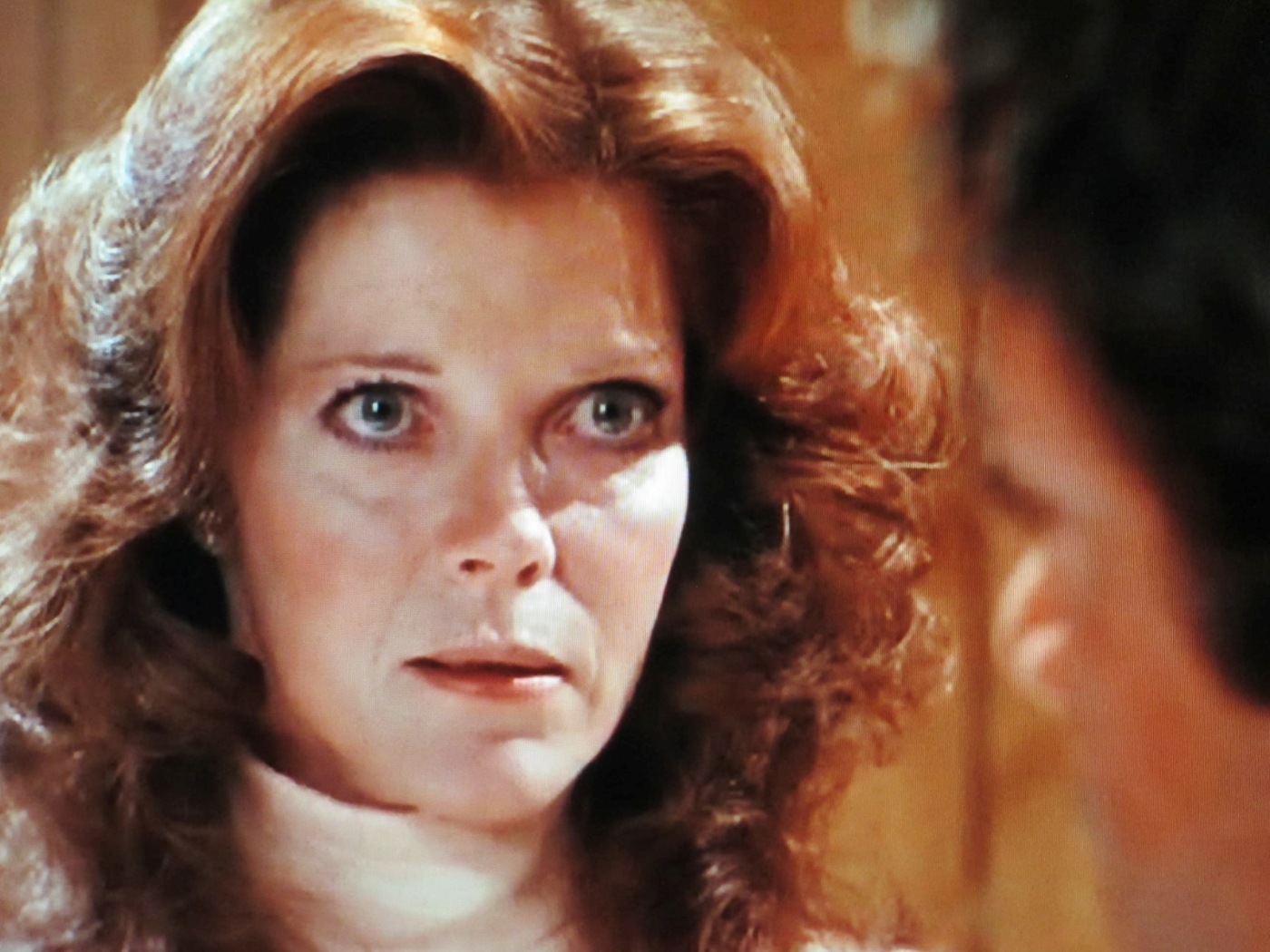
By now, Eggar had two young children and her marriage had broken up, so she based herself in Los Angeles and took more television roles – telemovies like All the Kind Strangers (1974) and a remake of Double Indemnity (1974), and guest roles on Spelling dramas like Fantasy Island. She played Watson’s wife in The Seven-Per-Cent Solution (1976) and then unexpectedly became a Canadian film star, appearing in a string of productions north of the 49th parallel such as The Uncanny (1977), Welcome to Blood City (1977), Why Shoot the Teacher? (1978) (a Canadian film that was actually popular), The Hot Touch (1981), Curtains (1983), and most notably, The Brood (1979), David Cronenberg’s ode to divorce. The latter made a real splash – it’s still beloved – and reminded everyone how capable and gorgeous Eggar still was.
She appeared in some other cult favourites like The Exterminator (1980) and Demonoid (1981), but her career was hampered (though her life enriched) by the responsibilities of being a single mother. (“That’s how I guided my life at that time,” she said later. “Grab a film in the holidays when they’re [the kids are] with my ex-husband.”) Still, she kept busy – support parts in big features (The Phantom, The Astronaut’s Wife), voice over work, radio plays, conventions…. From all accounts, she remained remarkably sane and nice and never lacked for work.
Samantha Eggar perhaps lacked the individuality of the truly great stars, and definitely got saddled in too many “girl” parts, but her filmography, life and career is one to be proud of.
