


by James Mottram
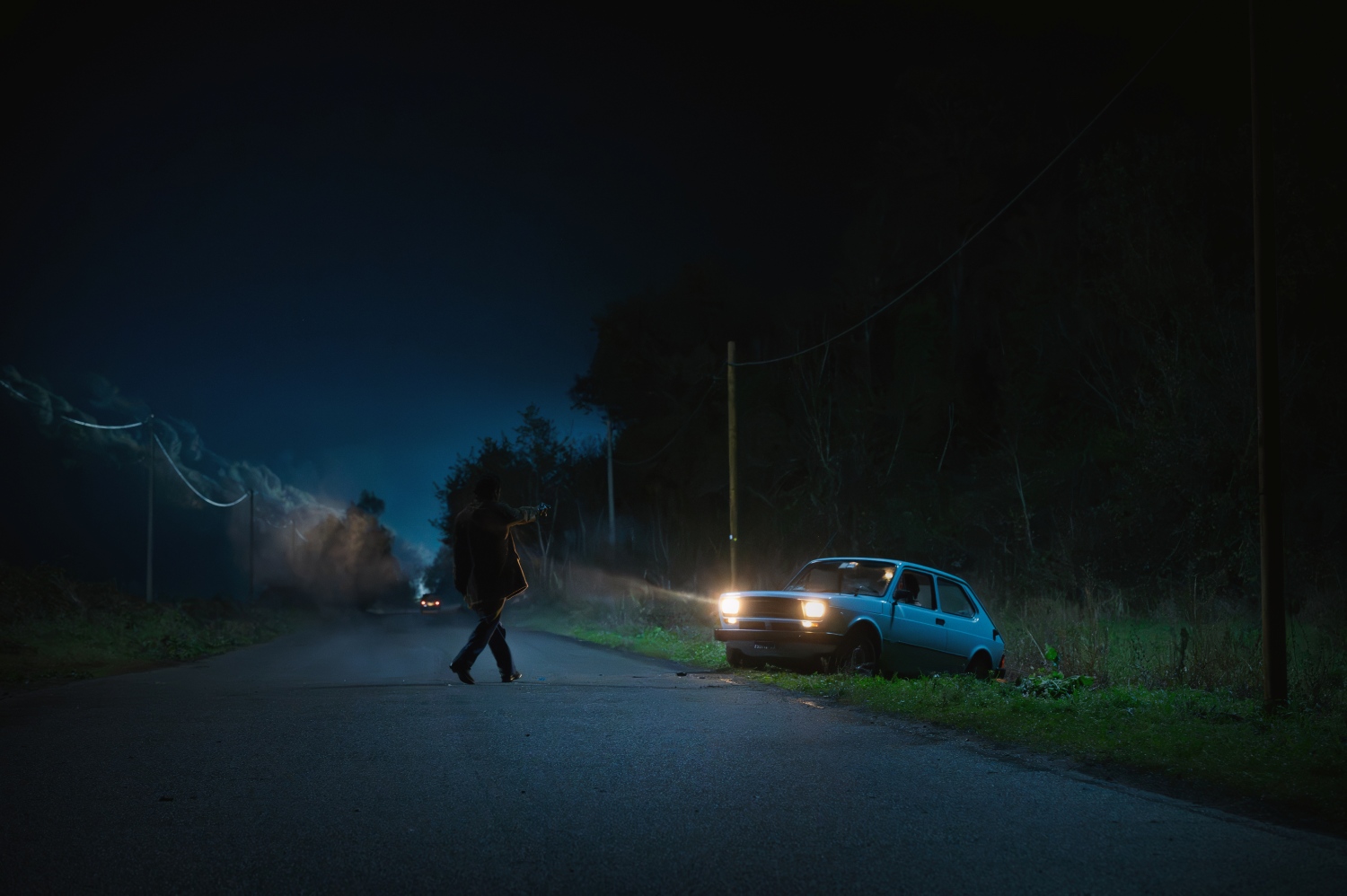
Books, documentaries and a wealth of online conspiracy theorists have attempted to unpick this labyrinthine tale of a serial killer (or killers?) who attacked couples, often while they were in a state of arousal. Now comes a new four-part Netflix drama, directed by the king of Italian crime sagas, Stefano Sollima, putting its own stamp on events.
“It’s a complex story, a tragic one, a very delicate one,” says Sollima, when we meet at the Venice Film Festival, where his show The Monster of Florence, has just premiered.
Sollima has trod similar terrain before, directing TV series Romanzo Criminale (2008-2010) and the 2018 sequel to Denis Villeneuve’s drugs drama Sicario. Here, he’s working with Leonardo Fasoli, who created the show, following on from his Roberto Saviano adaptations, ZeroZeroZero (2020) and Gomorrah (2014-2021), which Sollima co-directed.
The phrase “complex” doesn’t begin to cover a story that, possibly, began in 1974, with the slaughter of lovers kissing in a car in Sagginale, north-east of Florence. The woman’s breasts and pubic area were stabbed 97 times. Similar brutal crimes were committed between 1981 and 1985, with the same H-series gun cartridges and .22 caliber Beretta used in every murder.
But an earlier double murder, in 1968, was later considered by many to be the real ‘first’ killings in this still unsolved case.
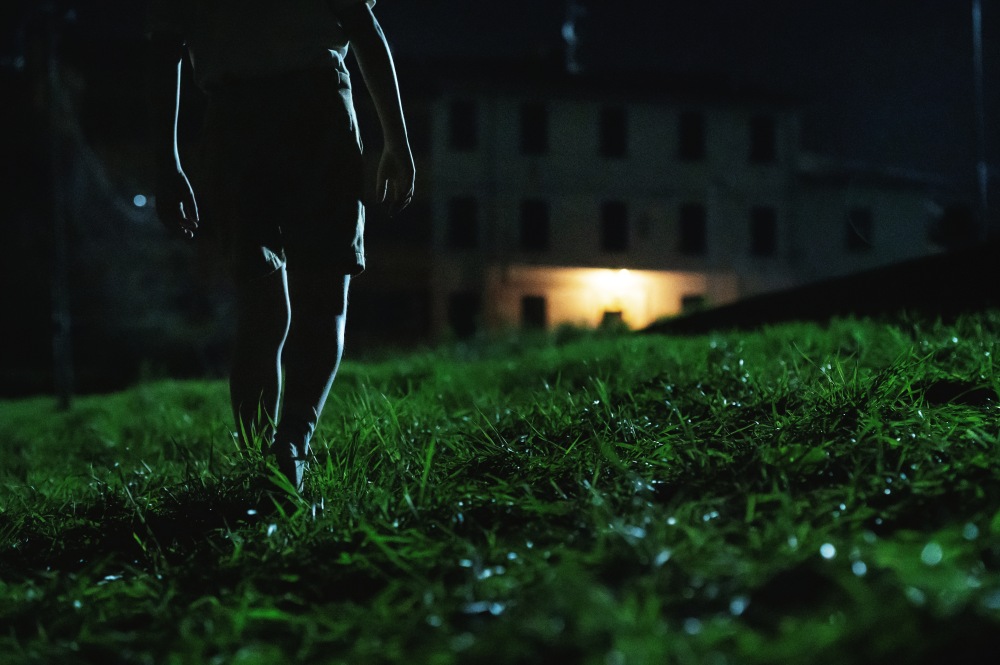
In Sollima’s show, the series goes back to the origins of the case, looking at the ‘Sardinian lead’, a phrase that came from a line of inquiry as cops investigated a local Sardinian couple living in Tuscany beset by relationship issues. But there was never an attempt to put a definitive stamp on the case, say the filmmakers. “We didn’t want to take a stand, so we decided to talk about all the different assumptions that came out from that story,” notes Sollima. “We didn’t want to give any answers. We didn’t even want to try to understand. We just wanted to tell the story.”
Their approach was nothing short of forensic, especially when it came to showing the violence. “In order to reproduce the murders on screen, we had to study the pictures of what happened at the time,” says Sollima. “The pictures taken just after the murder by coroners, for example. And actually, we thought a lot about how to portray the murders. To some extent, we tried to tell the least possible. As in, we didn’t want to show too many graphic details. We wanted to take a step back to pay some respect to the murder, to what was happening. As in, we decided to suggest and not to show.”
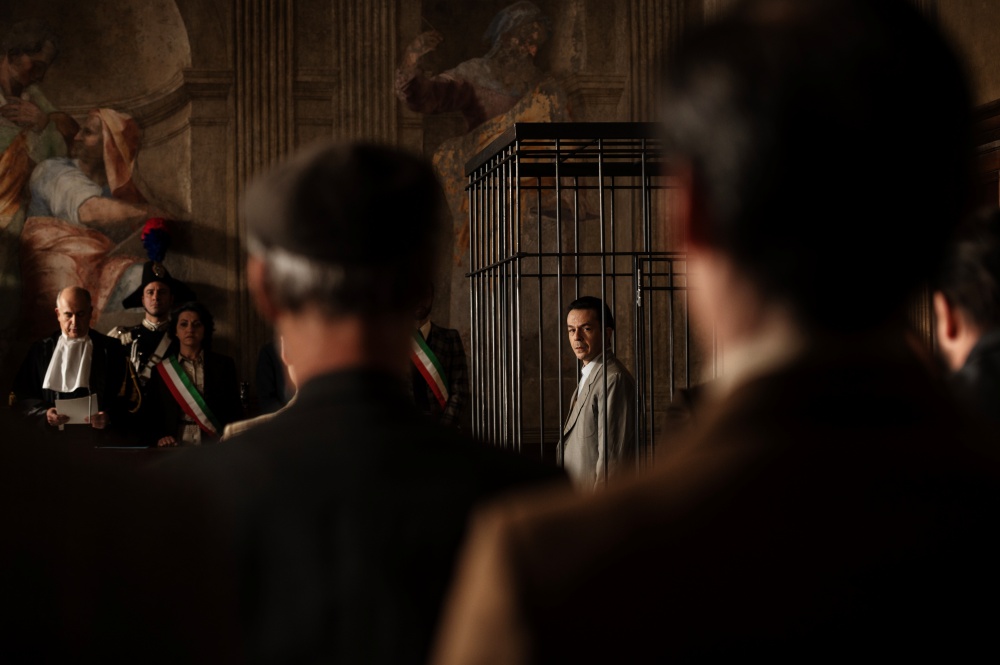
The case was further complicated by the fact that a serial killer (or possibly killers – there may have been more than one) wasn’t always on the cards. “At the beginning, the investigators didn’t think about a serial killer,” Sollima explains. “Maybe one of the reasons why the case still remains unsolved is that they never thought that, at least at the beginning, the murders were perpetrated by the same person. They mostly thought about jealousy… murders out of jealousy. If there is a woman making love in a wood and then she is killed by someone else, you immediately think, out of cultural bias, that it’s going to be the husband that killed the wife. She had to be punished because she had betrayed the rules.”
More than that, Sollima believes the show is a prism looking at Italian patriarchal culture, a notion that the show’s creator Fasoli expands upon. “In Italy, every day in the last year, a woman [has been] killed,” he says. “It’s a patriarchal culture where women are still considered as objects, and it is still seen today. So, we were curious about that.” Has Italy changed since the time of the murders? “I don’t know,” sighs Sollima. “I’d like to consider this story, The Monster of Florence, as something that belongs to the past, like an old story. The point is that, unfortunately, it seems to be very modern.”
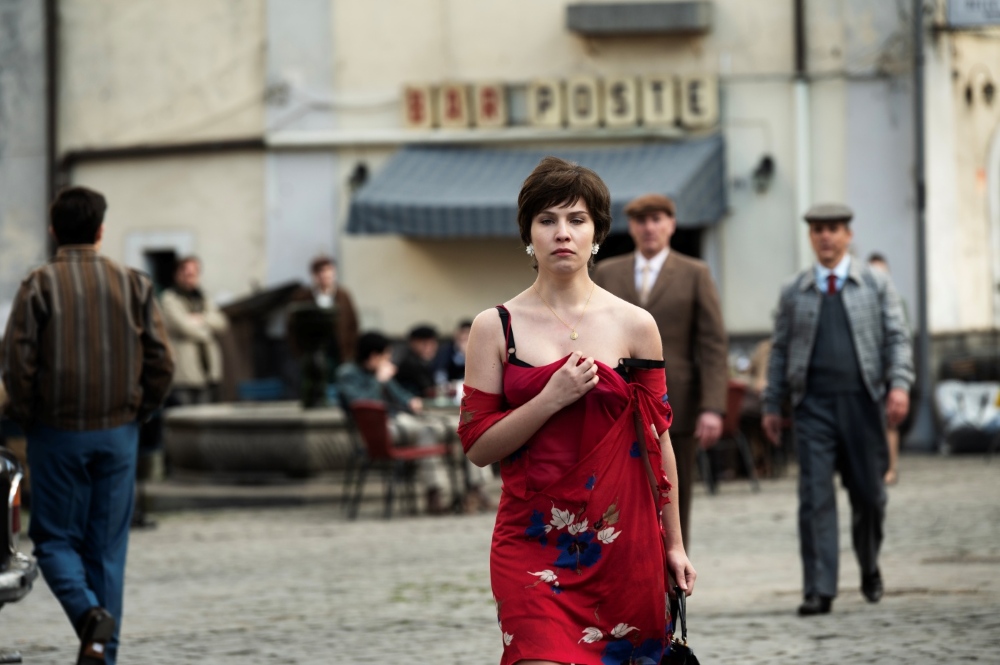
Sexism, if that’s what you want to call it, is ingrained, even in the architecture. Take Catania, the second largest city on the island of Sicily, notes Fasoli. “Catania is a city whose symbol is an elephant. Now, Sicilian culture is known to be a sexist culture, and that statue has the elephant with testicles, showing the testicles outside, which is not the case for real elephants. But this is the way it is, because of that culture.”
Did Sollima take inspiration from other great ‘unsolved’ serial killer films? The one that springs to mind is David Fincher’s Zodiac, which dealt with the Zodiac Killer, who haunted the San Francisco Bay Area during the 1970s. He shakes his head. “Our choice was to use real names,” he replies. “And when you tell a true story, your characters are real, and therefore you cannot get inspiration from anything, because you’re talking about facts, that you are led by facts, and you cannot deviate from reality and from what really happened.”
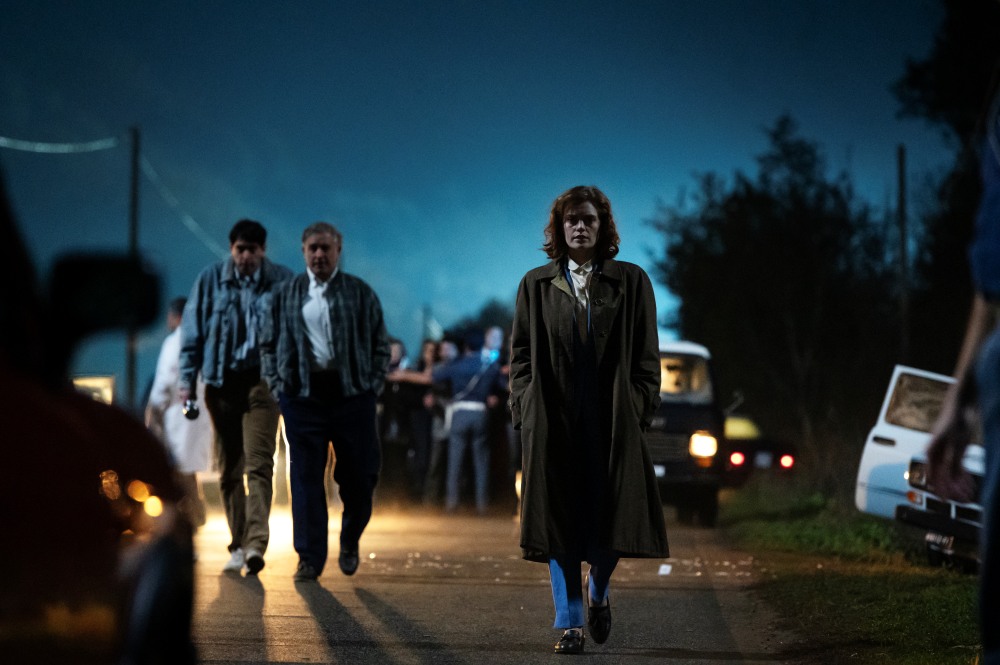
He adds that Zodiac is somewhat different in its approach. “There’s a different perspective, because there, it was journalists [seeking the killer]. In Monster, the hunt is just in the background. Here we have decided to talk about the story of the suspects who might not be the monster.” While Fincher’s film featured the likes of Robert Downey Jr., Mark Ruffalo and Jake Gyllenhaal, Sollima’s show has, understandably, gone for a more local cast, including Marco Bullitta, Valentino Mannias, Francesca Olia and Liliana Bottone.
Just don’t call The Monster of Florence true crime. Although Netflix has somewhat become the home of such shows, both fictional and otherwise, Sollima admits that he’s not a big fan of the phrase. “I think it’s more of a journalistic term, true crime. It’s a genre. True crime, it’s kind of a new definition for something that is, I think, really old. I can watch some of them, but I’m not passionate about them.” Fasoli nods in agreement. “When men do something wrong, this is what really interests us and what interests people.”
The Monster of Florence is on Netflix from 22 October 2025
