


By Travis Johnson
What is your background? What drew you to the world of VFX?
I was always interested by films and filmmaking and when I saw Empire Strikes Back as a kid I was blown away by the imagery and decided to figure out how it was made. I did a lot of animation films with my brothers. Cinema, computers and the arts have always been a passion in my family, so it felt natural to get into this field.
Where did you study and how did that prepare you for your current role?
I hold a bachelor’s degree in quantum physics and then moved to an art school called Ecole Emile Cohl in Lyon. But at the time I learned a lot of my craft doing things by myself on computers and with cameras.
How did you come on board Doctor Strange? Did you pitch for the role?
I had just finished Guardians of the Galaxy for Marvel and Victoria Alonso at Marvel introduced me to Scott Derrickson, the director of Doctor Strange.
 How familiar were you with the character and concept of Doctor strange prior to working on the film? Had you read the comics?
Not really. But we get a full package of visual references and comics when you’re assigned to a film at Marvel. This gave me a chance to learn more about it.
What was you remit going in? What parameters were you given to work within, and how much freedom did you have to develop the look and style of the effects?
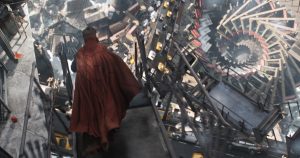
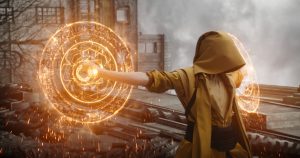
We were told not to fear to be crazy, be bold and break boundaries of how magic had been depicted in other films before. It was very liberating.
How closely did you work with the director and production designer? Was it a very collaborative process?
Very close with both of them, as well as Ben Davis, the DP and Alex Byrne the costume designer. It’s a very collaborative process and we all push towards the visual look of the film.
What was your overarching goal with the project? What particular look or aesthetic did you want to evince?
Find a new aesthetic for magic and open up a new branch of the Marvel Cinematic Universe. It was important that we bring a fresh approach to this so we could expand the Marvel Universe. Doctor Strange is most certainly one of the major characters of this universe and we had lots to set-up in this film in terms of his powers and how to visually represent them.
 Were there any particular prior works, films or artists that particularly influenced your work here?
We looked at the work of Steve Ditko who created a lot of psychedelic panels in the ’60s and ’70s in the comics. Also, MC Escher, and we were inspired by a mobile video game called Monument Valley.
Which effect are you most happy with the onscreen result?
The Magical Mystery Tour was a difficult sequence to create, shoot and post, and it turned out to be something we are very proud of. But all the sequences had their own specific challenges both technically and visually. It’s hard to pick a favorite!
What’s up next for you?
Another Marvel movie, Ant Man and the Wasp directed by Peyton Reed! Super fun and exciting imagery on the way for this one too.
