



By FilmInk Staff
While cinema is so often sold as a visual medium, it exists just as much on an aural plane as it does on an optical one. The richness of the images that burst forth from the cinema screen today – now often punched up even further through the use of 3D and other immersive technologies – is supplemented exponentially by the sounds threaded through it. The design of this sound is, of course, an art form in itself, carried out by top-tier technicians and artisans whose work is threaded through the complex tapestry of a feature film. “People still see the sound post [production] process almost like putting on a bit of ‘spack filler’ at the end of the job to smooth things over,” dialogue editor, Tony Murtaugh (The Way Back, Beneath Hill 60, Prime Mover, Samson And Delilah), told FilmInk. “But in reality, it’s where you can further develop the characters and drive the narrative. Sound is about storytelling.”

In the edit suite during the often lengthy post-production process after a film’s footage has been collated on set and on location, new sounds are created and blended together not only to match what is happening, but also to deepen and expand it, widening the cinema experience for the viewer. “The biggest misconception about my job is that all of the sound is recorded live when the picture is shot,” Craig Jansson, one of this country’s leading sound designers, told FilmInk. “Whenever I try and explain what I actually do, it’s always the same reaction: ‘Oh, I thought that was all real and done on the spot?’ Great – I’ve done my job then!”
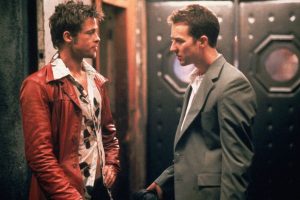
The creation of this sound design involves paying attention to minuscule details that most movie-goers wouldn’t even notice. “Every single sound is vital to the finished product,” Australian-born Oscar nominated sound designer, Ren Klyce (Fight Club) told FilmInk. “I get sounds from the strangest places: bunkers in the middle of the night where you hear water dripping, or pulling off by the side of the road to get the sound of a truck going by. My sound microphone actually looks like a pistol, so I’m always worried that I’ll be arrested! On those odd occasions when I’ve almost gotten into trouble, I’ve learned not to say that I’m working on a David Fincher movie, because then everyone wants to talk to you! If I say that I’m working on a student film, I can get away more quickly!”
The process of creating that sound can be an enormously labour intensive process, even going on for a number of years in the case of the 2013 Australian film, Canopy. Following the travails of a soldier lost and alone in a dense, labyrinthine jungle in the dark days of WW2, the film has barely any dialogue, with the alien sounds of the thick, soupy environment driving the film inexorably forward. “We played around for a few years before we made it and before we did the sound mix,” the film’s director, Aaron Wilson, explained to FilmInk. “For a few years afterwards, during the post-production, I’d go back to Singapore and just re-record different strands of sound textures in the jungle – in the day time, in the night time, in the mangroves, even sometimes near the freeway because there were often interesting mechanical effects mixed with the jungle sounds.”

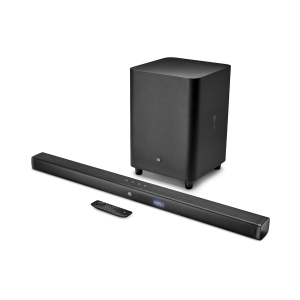
And while the best place to immerse yourself in the sights and, equally importantly, the sounds of film is unquestionably in the cinema itself, the world of home entertainment is quickly catching up. Dedicated to replicating the cinema experience when it comes to sound is JBL, who have become acclaimed for their range of soundbars. Their latest BAR Series boasts the best sound product that the company has produced. JBL’s most expansive soundbar series to date fills any room with theatre-quality sound, offering JBL Signature Sound and Dolby Digital decoding, along with additional speakers to further pump up the aural experience. “With the all-new JBL BAR Series, we redefine the home theatre experience by delivering epic JBL Signature Sound in a sleek and stylish package,” says Marcus Fry, Brand Activation Director. “Designed with the user in mind, it is the ultimate home audio solution for every type of listener, and the perfect accent to any living space.”
The creation of any film’s soundscape is an epic, often uncelebrated art form in itself, and with a home entertainment system that highlights every line of dialogue and every beat of background noise, you can savour it and salute that extraordinary behind-the-scenes work in the way that it so richly deserves.

