


by Nataliia Serebriakova
Worth: $12.00
FilmInk rates movies out of $20 — the score indicates the amount we believe a ticket to the movie to be worth
SXSW
Cast:
Dakota Fanning, Jake Johnson, Cory Michael Smith
Intro:
... is not quite mediocre, but it is a matter of taste.
The film opens with a scene in which Wendy (Dakota Fanning) is about to buy a boat and almost closes the deal. This is followed by a brief meeting with friends, during which one of them tells her that she is pregnant. A short, furious scream in the car suggests that the news has plunged Wendy into despair. And indeed, viewers soon learn that Wendy is dating Jack, a divorced sports journalist with two children. They seem to love each other and have a comfortable relationship, but there is one problem: Jack does not want to start another family or have more children. When Wendy reminds him of this, he proposes an experiment: they should have a six-month break during which she can date other men and look for someone who might be more suitable as a future husband. Jack promises that he will not date anyone during those six months and will wait for her to return if nothing works out.
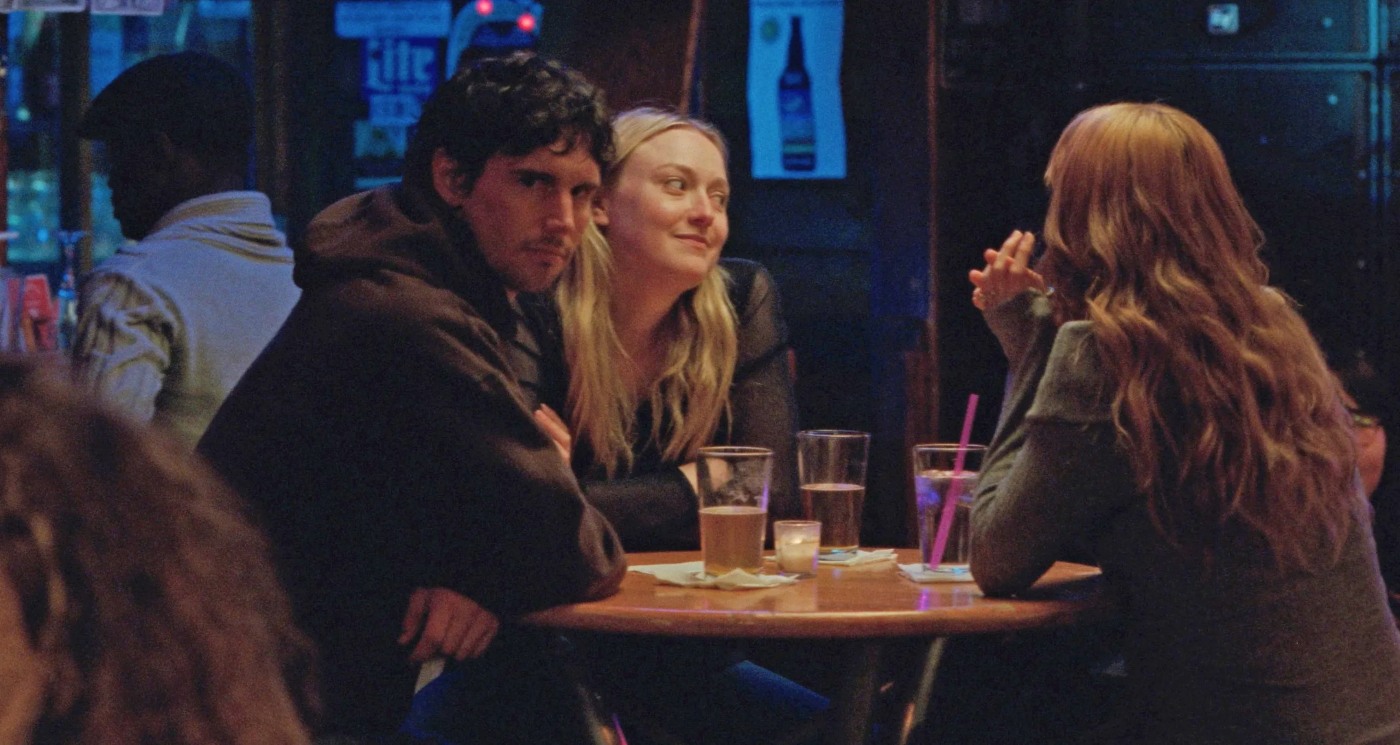
Wendy is confused. She does not want to change anything, but reluctantly agrees to go on a date with a friend. At a bar, she meets her ex-boyfriend Chuck, an attractive, charming pilot. She broke up with him for the same reason: he did not want a family. Wendy gets involved with him again, and Chuck seems equally convincing when he claims that he has changed his mind and is now taking relationships more seriously. He now thinks he wants two children, or perhaps seven. But there is a catch behind all his talk.
There is something reassuring about Joe Swanberg’s commitment to this modest cinematic territory, even if it rarely produces surprises anymore. His films are less concerned with extraordinary events than with the small negotiations through which people construct their lives. Here, Wendy’s dilemma is recognisable: how do you distinguish genuine dissatisfaction from the fear of settling down? Jack offers stability, companionship and an established family life, but Chuck represents the possibility of starting over. Neither option is quite as straightforward as Wendy might wish, and the film finds its humour in the gap between romantic promises and the practical realities of living with another person.
Swanberg, the father of the American mumblecore movement, has been making films almost every year about ordinary, entirely unremarkable people and the ups and downs of their relationships. He fills the screen with dialogue in which the characters describe exactly what they are feeling at any given moment. One of his most successful examples was Drinking Buddies (2013), in which Olivia Wilde, Jake Johnson and Anna Kendrick switched partners and drank a lot of beer. Another, less successful example is Happy Christmas (2014), again starring Anna Kendrick and Lena Dunham: a more family-oriented film that nevertheless also deals with romantic relationships.
Swanberg has carved out a particular niche in American cinema (and perhaps even world cinema): semi-cinephile films for millennials about their entirely unremarkable lives. His new film, which premiered at SXSW and screened at MIFF in Australia, is about normal people in normal relationships, with normal acting. It is not quite mediocre, but it is a matter of taste. Chuck’s character arc is somewhat underdeveloped, and the motivation behind his relationship with Wendy seems to have less to do with romantic nostalgia than with wanting to live rent-free on a couch in Anchorage, the city where the film takes place. This storyline could have been handled more interestingly.
If you are not yet tired of films about love triangles, welcome to Anchorage, Alaska!
