



by Cain Noble-Davies
Worth: $18.00
FilmInk rates movies out of $20 — the score indicates the amount we believe a ticket to the movie to be worth
Cast:
Robert Pattinson, Merritt Wever, Skyler Gisondo, Phoebe Bridgers, Matthew Maher, Alex Winter, Tony Revolori, Jonathan Lipnicki, Anna Faris
Intro:
…a warped and cracked mirror …
In No Jail Time: The Movie, an ‘Op-Doc’ made by Lance Oppenheim for the New York Times in 2017 about ‘sentencing mitigation videos’, attorney and documentarian Doug Passon remarked, “is documentary filmmaking the literal, absolute truth? No, it’s not. What it is, is the emotional truth.” Now, just over the past few days, both Doug and mitigation specialist Katie Carter have spoken out against Oppenheim’s methods in making No Jail Time (which, to give our editor less of a headache, we won’t get into in great detail here), but it’s still fascinating how well Doug managed to sum up Oppenheim’s entire approach to documentary filmmaking with those words.
With a predilection for people seeking (and usually failing) to find fulfilment, Oppenheim’s work up to this point has featured a degree of mood and atmosphere that makes labelling him as a ‘documentarian’ a disservice. Eschewing more matter-of-fact verité filmmaking (save for his upcoming Elizabeth Holmes doco You Can See Everything), he instead leans into the artifice to get a kind of reality that can only be accessed through the right colour washes and edits. Not an absolute depiction of the world, but an attempt to create an honest showing of how that world looks to the people in-frame.
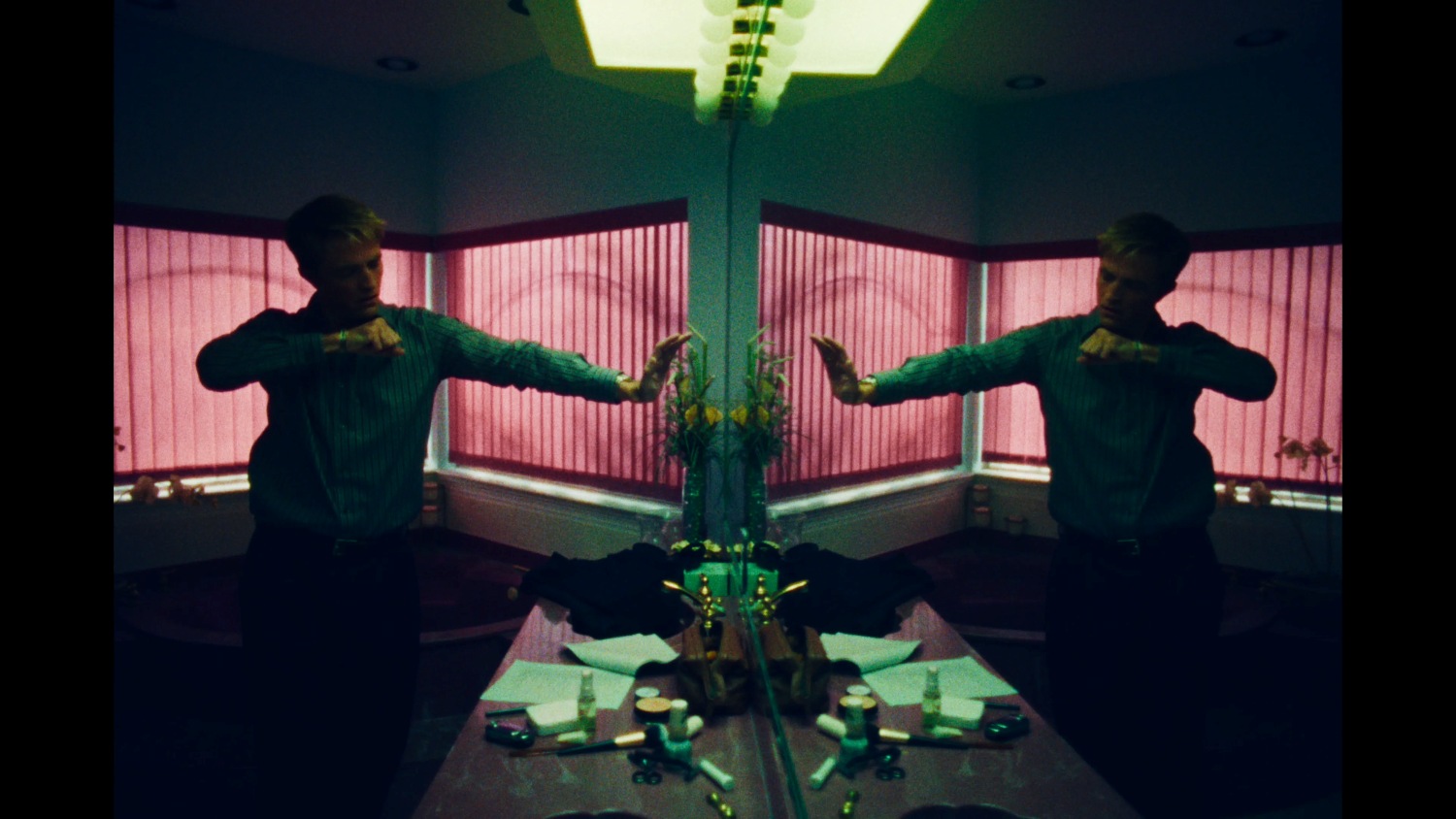
All this considered, Oppenheim deciding to forgo documentary filmmaking entirely and break out with a narrative feature (albeit one based on actual events) makes more sense for him than many other filmmakers who have made the transition. And it’s that thematic admission of not-quite-factuality, of latching onto a person’s internal, psychological reality, that lends Primetime its unnerving power. Through a combination of digitised 16mm film and Digital Video shot on decaying Sony Plumbicons (an old TV standard with a barrel like a Pringles can), there is a persistent barrier between realities on-screen. The mock-ups of To Catch a Predator fit the rickety aesthetics of the actual show, but the world beyond the camera is even more surreal, like a technicolour fever dream where the audience’s own eyes can’t be trusted.
The same can be said for Robert Pattinson’s performance, which ranks as one of the wildest turns of his career to date. His Chris Hansen is a man with an obsessive conviction to fight against an abstract “ancient evil”, who will occasionally break out into bursts of scenery-chewing that would make Nicolas Cage blush. Someone determined to catch predators… but who wants to make sure that he looks and sounds good while doing so.
While the supporting cast are all fantastic, from Anna Faris playing decidedly against type as Chris’ wife Mary Joan, to Merritt Wever’s composite producer Andie bringing entertainment industry cynicism in-between gum chews, the most important presence is that of Skyler Gisondo as ‘Decoy Dan’, an actor hired for the on-camera sting operations. His journey is one of profound discomfort, getting up close and personal with paedophiles and essentially being groomed for the position by the production, all to make a name for himself as an actor. He unwittingly takes a job all about protecting the innocent, and ends up with his own innocence crushed.
As Chris and Dan form a dualistic core for the film around them, Primetime asks alarming questions about what is truly being accomplished with all this, and to what end. Is it a form of televised activism, or is it just the latest attempt to one-up the stakes of what could be considered primetime entertainment? The intention of bringing sexual predators to justice, contrasted with the public humiliation ritual that justice takes in front of the camera.
Every person in-frame, even those targeted by the show for its content, is depicted as flawed in their own ways, but no less human because of that. And through that perspective, alongside its criticisms of the entertainment industry and the dark path that televised journalism and documentary would take as it progressed through the 2000s to today, the film shows how dehumanising this is for both the makers and the consumers. The film never objects to legal justice being brought to perps, but it does question the worth of turning it into a thing of entertainment and spectacle. Given recent discussions about the execution of Nidal Hasan, and initial plans to have it livestreamed for public consumption (which appear to have been cancelled), its comments on the ethics of such practices are timely.
Primetime is a warped and cracked mirror reflecting one of the most controversial television productions in American history. Brought to searing life by Lance Oppenheim and DP David Bolen’s sleep paralysis colour palette, and Robert Pattinson’s committed (in every definition of the word) performance, it swings a camera-sized wrecking ball at U.S. media culture and how much it’s blurred the line between honest journalism and ratings-hungry salaciousness. It sticks to Oppenheim’s penchant for empathising with his subjects, but on a much darker slant, and asks the audience to consider if any crime fits the punishment. Because society is measured just as much by how it punishes its ‘worst’, as it is by how it rewards its ‘best’.
