



Worth: $8.00
FilmInk rates movies out of $20 — the score indicates the amount we believe a ticket to the movie to be worth
Cast:
Denzel Washington, Rami Malek, Jared Leto
Intro:
…it is the gradually increasing pile of little things in Little Things that end up swallowing whatever entertainment value it might have carried.
This is a ‘90s movie. Not because of its period setting, and not because of its genre trappings either, although they certainly add to the forced nostalgia sewn into the film’s overall aesthetic. Rather, it’s because that’s when this script first began life at the hands of writer/director John Lee Hancock, and it has been a long road getting from that first draft in 1993 to its release in 2021. Sticking to one’s guns in the world of art can be a commendable attribute… but was it really worth it in this case?
One of the reasons why Hancock took as long as he did to create this is that, for someone better known these days for The Blind Side and Saving Mr. Banks, he wasn’t comfortable with bringing material this dark to the big screen himself. That turns out to be one of the rare few instincts of his that turned out accurate, as the tone is haphazard at best. It shares a similar problem with 2019’s The Kitchen, where the murky story details and visuals (lingering shots of brutalised female victims) clash with the overall tone (the ‘Black An(g)us Steakhouse’ bit that follows the admittedly-effective opening) and take the bite out of what is right in front of the audience’s collective eyeballs.
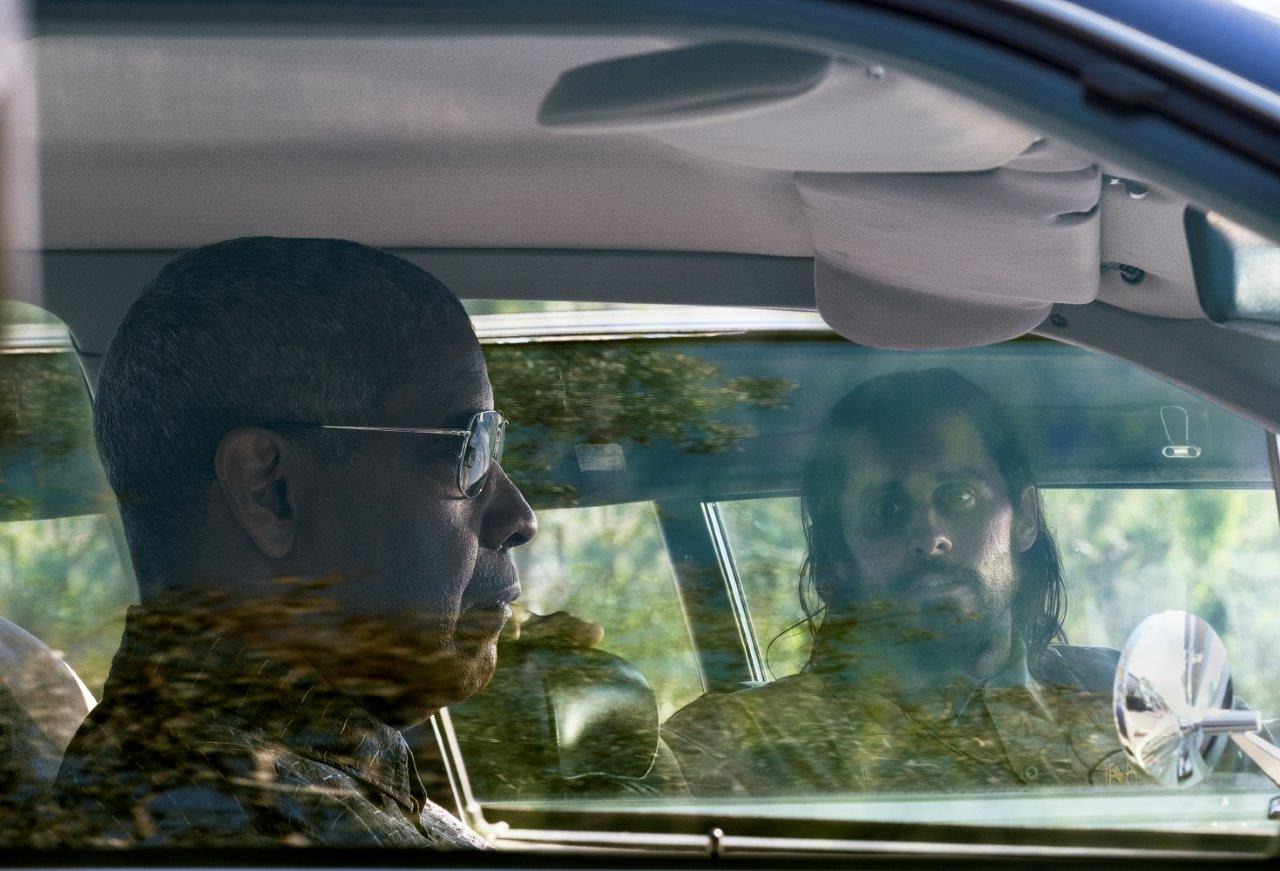
And try as the three stars might to work with the material, there’s something off about each of them, but in completely separate ways. With Denzel Washington, it’s the less-than-ideal handling of his mental trauma. With Rami Malek, it’s how he ends up letting his jawline do most of the emoting. And with Jared Leto, it’s the distracting thoughts of what his version of ‘method acting’ looked like to create a presence this greasy. In their own ways, they all work, but when put together under this narrative banner, they become less than the sum of their respective talents.
To say nothing of the plot itself, where the dated nature of the screenplay results in some head-scratching developments and attitudes regarding police work. It’s a very insular perspective on how psychologically-taxing such work is, while conveniently letting the bigger implications of what they’ve done, and what they haven’t done, slip away into the night. It’s rather tone-deaf, which is doubly unfortunate as the reaction to such things is far stronger than the been-here-done-that tedium of every other little thing in the film.
Indeed, it is the gradually increasing pile of little things in Little Things that end up swallowing whatever entertainment value it might have carried. There’s a depressing irony in the idea that a story about needing to let go of past mistakes would be as reflective of its creator as it is for the characters within.
