


Worth: $18.00
FilmInk rates movies out of $20 — the score indicates the amount we believe a ticket to the movie to be worth
Cast:
Toshio Kashiwagi, Hiroko Kashiwagi, Shiro Hashimoto
Intro:
...offers glimpses at the reasons for why things are the way they are, from prejudices to logistical nightmares, but the motherload it reaches might be the most depressing idea of all: Altruism runs on a deficit.
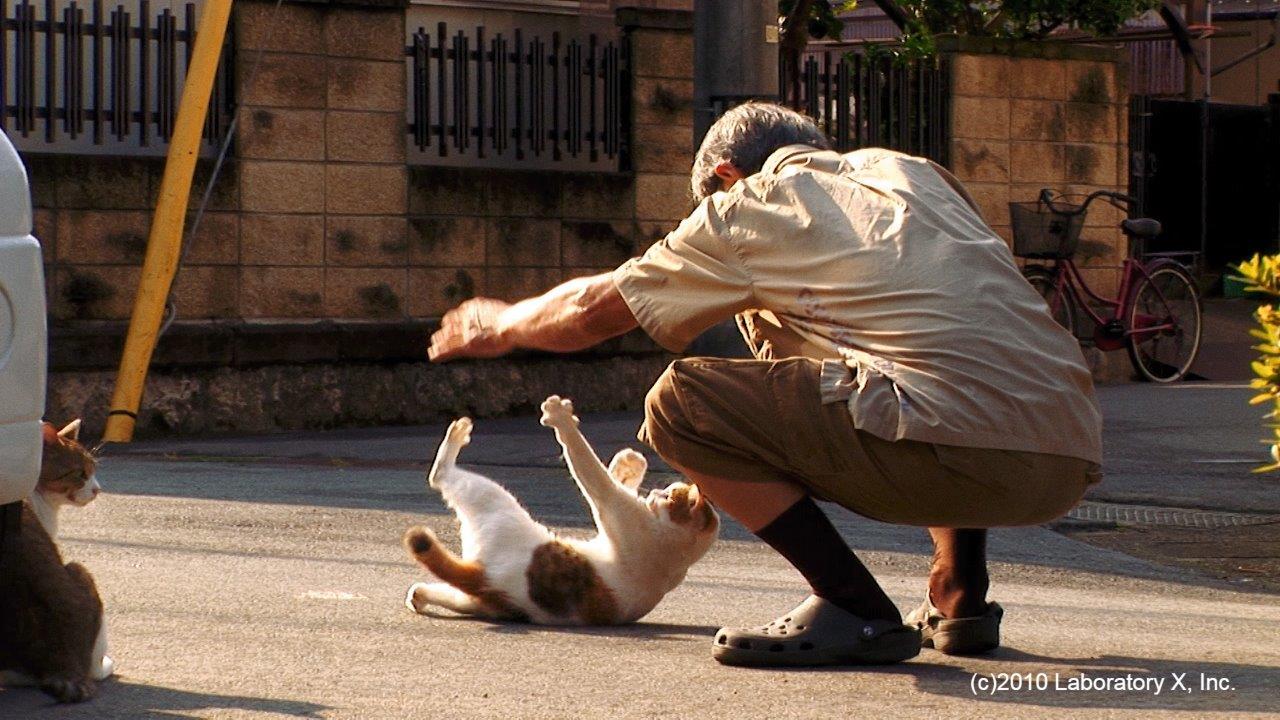
In 2009, Kazuhiro Soda was approached by the DMZ Korean International Documentary Festival to make a 20-minute documentary about peace and coexistence. And if it weren’t for a chance moment of candidly filming his father-in-law Toshio Kashiwagi feeding a destruction of stray cats, he likely wouldn’t have agreed to it. What starts as an innocuous look at a ‘thief cat’ and his frictions against the other cats soon blossoms into a realisation that these aren’t the only strays that Toshio and his wife Hiroki make a habit of caring for.
Playing out like a more personal city symphony for the deaf, Kazuhiro’s singular camera follows Toshio and Hiroko, and in the process the larger scope of the neighbourhood of Okayama and Japan as a whole.
Moving from an outsider cat to the disabled to the elderly, he provokes questions about the state of the welfare system by capturing its cogs in motion. The emotional connection, the sense of duty, the unspoken heartache of abandonment by man and bureaucracy alike; it’s the kind of sadness that can creep up on an audience; a vision of society where human life is worth the price of a postcard, and where those that have been Othered only have other Others to co-exist with.
It offers glimpses at the reasons for why things are the way they are, from prejudices to logistical nightmares, but the motherload it reaches might be the most depressing idea of all: Altruism runs on a deficit. It isn’t something that can be taught, and when Toshio describes just how far in the red he’s gotten as a welfare cab driver, it highlights his own drive to persevere with it as a kind of everyday miracle.
The idea that this scenario is the exception rather than the norm brings a lot of melancholy out of the snapshots of those in the Kashiwagis’ care. A man with a learning disability who recollects turning down a marriage proposal because he thought she would just leave him for someone better, another man trying to find a sensible pair of shoes, not to mention Shiro Hashimoto (whom the film is dedicated in memory of), whose tales of war-time drive home how the disregard for life in Japanese modernity is far from a modern perspective. A man so wise that even his choice of cigarette says much about the idea of peace: As material as a figurative smoke, yet as elusive as trying to catch actual smoke.
Looking back on this feature ten years later, it’s quite confronting at how familiar it remains, even on an international level. But as a pictorial thesis on the need to look out for each other, and how the disabled and the elderly are left behind by ‘polite society’, it gently rubs the heart between a thumb and forefinger wrapped in magnetic tape. Until the thief cat snatches it, that is.
