


by Cain Noble-Davies
Worth: $17.50
FilmInk rates movies out of $20 — the score indicates the amount we believe a ticket to the movie to be worth
Cast:
Jun Gianna, Koo Kyo-hwan, Ji Chang-wook, Seo Young-cheol
Intro:
… a kick-arse ride packing equal parts bombast and brainpower.
Ten years and two days after making his Cannes breakthrough with the fantastic Train to Busan, writer/director Yeon Sang-ho unveiled his latest strain of thoughtful zombie cinema at the festival. While he hasn’t been shy about tangling with the running dead in that interim, building up the Train to Busan cinematic universe with some decent spin-off features, along with applying the same flair to other genre flavours like his unique take on superheroes with Psychokinesis, both Seoul Station and Peninsula never quite made it to the same breathless heights as their big brother.
But what makes Colony work is that, even though Yeon Sang-ho and co-writer Choi Gyu-seok stick to Busan’s winning playbook, there’s effort made to give this film a healthy distinction both from its creators’ predecessors, and even from fellow zombie fare. And this is all in spite of how much it wears its influences on its shredded sleeves.
The main setting of a shopping mall overrun by the undead is all very Dawn Of The Dead, there’s a sequence with killer monkeys like a more action-oriented take on the opening of 28 Days Later, and there’s references throughout not just to Busan but elsewhere in the director’s catalogue, like a bullying sub-plot pulled right out of The King Of Pigs.
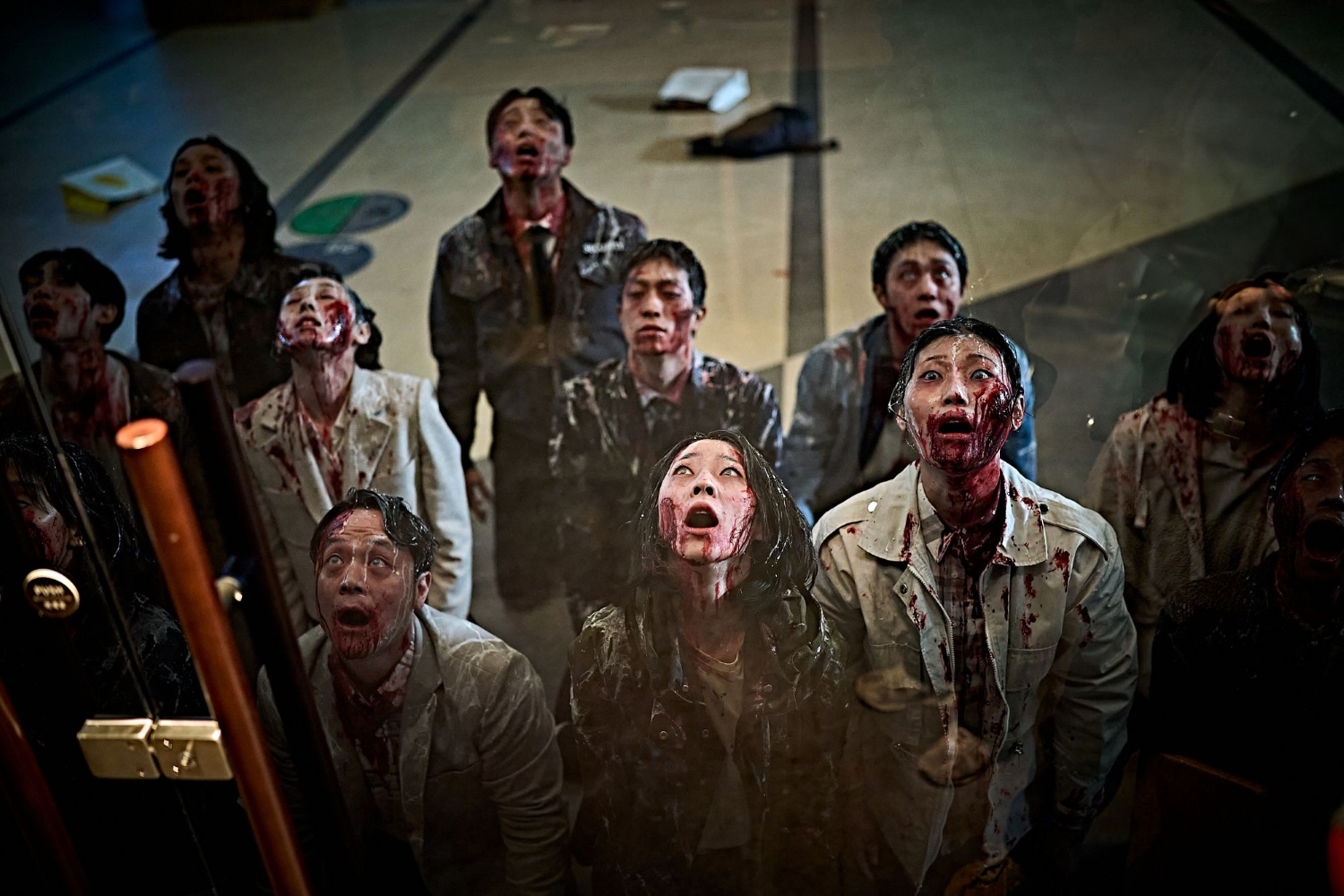
The specific approach to the shuffling horde this time around is both novel and quite timely. Put simply, the zombies here are artificial intelligence with a biohacking makeover. Creatures that look relatively human-like at first glance, but still considerably not (like a wonky generative portrait), that are shown to gradually learn and adapt over time as they are fed psychic prompts (courtesy of scientist Seo Young-cheol, who essentially gave himself the T-Veronica virus), as part of a larger neural network that connects all of them like an ant colony.
From their flashmob-reminiscent movements to the bigger commentary on authority and the nature of individuality, to the intensely creepy design for the zombies and the webs of slime they leave in their wake, those looking for something fresh in the rotten meat will get their maggoty fill here.
Then there’s the central characters, made up of another cross-section of the South Korean class system much like the cast of Busan, and in keeping with the Resident Evil influences in the mechanics of the virus, the characters show quite a bit of gamer grit in keeping one step ahead of the infected. Zombies aren’t here just to get cut or slammed or blown up like in most flicks; as satisfying as the action beats are, the more interesting moments come from how humans strategise to outmanoeuvre the slime-slicked masses. It arguably goes even harder than Busan in that regard, bringing a lot of thought into the classic horror nerd debate of what it would actually take to survive the zombie apocalypse. Or hell, even just one encounter when all you’ve got is a bottle of perfume and a cardboard cut-out.
Colony is a kick-arse ride packing equal parts bombast and brainpower. It is as much a welcome switch-up from the norm within the zombie horror genre, as it is a remarkable example of video game-inspired cinema (an aesthetic translation, rather than just “here is that IP you remember”). While its flashiness and sense of visual scale keeps it from the quieter intimacy that allowed for Train to Busan’s greatest moments, the way it appraises the importance of individuality against an assimilationist collective mindset while still highlighting the dangers of selfish thinking is a remarkable and impressive balancing act. That it effectively breaks down modern anxieties about A.I., without being too direct about it as most A.I.-aiming mainstream films tend to be nowadays, is just the cherry on top.
