



by FilmInk Staff
Brisbane-based filmmaker Haruki Ryles began writing the screenplay for 100% Pure Rage when he was 17, during his final year of high school. Fast forward 4 years, with a TAFE diploma and just completed degree from Griffith Film School under his belt, and that script is now his debut feature film, selected to screen at SXSW Sydney.
The film was made guerilla-style over 23 months, in hours snatched around work in a sushi bar and university studies. Cast and crew were drawn from Ryles’s high school, TAFE, and Griffith cohorts, the latter including Finn Williams, who came on as producer.
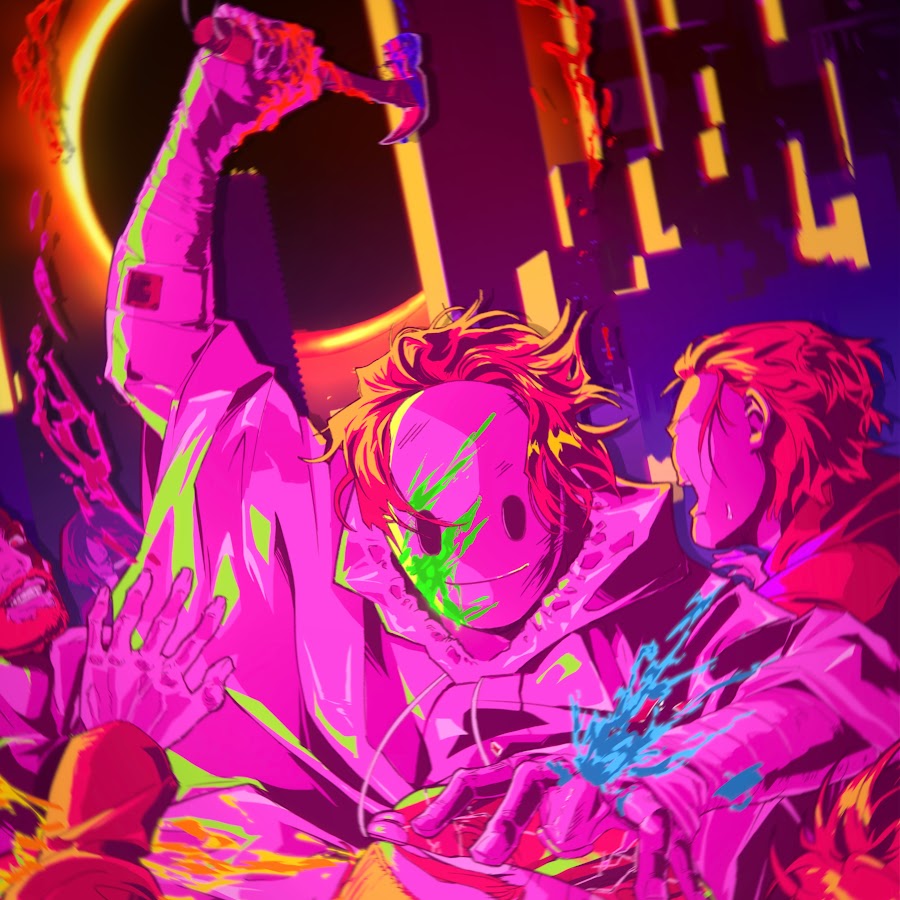
They describe Rage as an action, dark comedy, sci-fi, with Brisbane reimagined as the ‘void’. The film follows Ricky, a wannabe writer who earns side money couriering a banned substance called ‘spores’. When a delivery to local crime lord, King Goldstein, goes bloodily wrong, Ricky is enlisted by masked vigilante Hammertime and ex-con Anton.
Together, they try to take down a doomsday cult called the Red Cell, led by messianic leader Rajar. He’s trying to trigger the ‘Rejuvenation’, where the moon blocks the sun, freezing Earth over.
Ryles explains the inspiration for 100% Pure Rage: “Growing up in a Japanese household, I was exposed to a wealth of Asian cinema and I wanted to create something akin to the Hong Kong and Japanese action films I’d grown up with, such as Wong Kar Wai’s Fallen Angels and Takeshi Kitano’s Sonatine, while still delivering a story that I believe resonates with my generation.”
True to genre, the film is full of dynamic fight scenes, several of which involve Ryles as the character Kruger. Ryles is martial arts trained, with Williams an experienced gymnast. Additional choreography came from Ryles’s high school friend, Kaleb Stokan. Ryles explains: “I have been training in Karate since I was 11. I also have experience in boxing and Muay Thai. Many of those in the fight scenes had been recruited from my background, which I think significantly elevated those scenes.”
The film also employs stylised graphics, which Ryles explains: “are used to introduce characters in a manner similar to graphic novels, further enhancing the film’s hyper-stylised reality.” All visual effects were done by Ryles, as well as additional cinematography, sound design, mix and grade.
Around the fight scenes, car chases and sometimes extreme violence, the film has moments of intimacy and quiet reflection. Along with the dark humour.
“I think the comedy is very important”, says Ryles, “but I didn’t want it to detract from the overall serious tone, especially near the end. A lot of the humour came from just chucking the characters into increasingly absurd situations where the jokes began writing themselves. Also, allowing the freedom for the actors to improvise created quite a few unexpected moments and humour that would have never been thought of in writing.”
On top of the many friends who filled cast and crew roles, the film has an original score, from two Griffith peers, Nick McDonald and Cole Forfang Phan, along with cast member Cuba Gabriel.
“To me, the score of a film plays a big part in its overall identity”, explains Ryles, “and because of this, I felt it would be a lot of fun to construct the score from scratch and figure out what this film would sound like. I was very lucky to have been surrounded by some incredibly talented friends who were keen on writing music for the film and helping find its sound.”
The film was Executive Produced by BAFTA-winning producer Richard Fabb, who works at Griffith Film School, and mentored the filmmakers. Fabb was intrigued and impressed when the then first year film students – including cinematographer Clancy Ellerman-Miller – came to see him. “Making a feature film during undergraduate study is almost unheard of and I was impressed by the ambition of the project. They showed me a couple of scenes, which suggested a skillset and maturity way ahead of where you might imagine first year students to be. Not only visually compelling but funny, with strong performances. Haruki’s talent as a writer was clear. I was also impressed by how collaborative their process was.”
With the first two acts of the film finished, a work in progress was screened to friends and family, cast and crew, with feedback incorporated into the script for the third act, including the film’s final twist.
All up, the film was made for just $3000. As is often the case, budget limitations bred creativity. Williams explains that “Each location/scene was approached as its own short film. Adapting the script, editing and filming concurrently brought its own unique challenges but also advantages. It allowed us to adapt the story depending on what we were able to access with our limited resources and time. At the end of the day, time, resources and relationships were the real currency behind how this film was made possible.”
For a movie started by teenager filmmakers, getting into SXSW Sydney is a huge validation. Williams: “As an emerging filmmaker I hope that Rage will be as successful as it can possibly be. What does success mean to me? I want to see how far it can go. In a world where society is dominated by the internet and shaped by social media, I hope to see it succeed in this space and in the local film industry. We are proud to be able to represent Queensland and be a part of the Queensland indie scene.”
For Ryles, “SXSW Sydney has been a massive step for all of us. I would have never imagined this project to get as far as it has. This will be my first ever film festival but as I am just graduating, hopefully this screening helps get my name out there and possibly open up some opportunities.”
100% Pure Rage screens at SXSW Sydney on Wednesday October 15th 3.30pm at Palace Central Cinemas
