


by Dov Kornits
You’ve made short films before, how do you feel that Devourer is a progression from your previous work?
“Devourer feels like the first short [film that I’ve made] where I’ve finally started to figure out what my voice is as a filmmaker. I’ve made a few shorts in the past and while they were all great learning experiences, I never really explored having a personal or emotional connection to the work. They were more films I made for fun with my mates to learn the basics of the craft.
“When I sat down to write my next film, I knew I wanted to make something that felt a bit more personal and connected to who I am. I naturally drew on my experiences growing up South Asian in Australia, particularly the intergenerational and familial conflicts that come with that. I’m a big fan of Ari Aster’s work and how he takes these deeply personal family dynamics and turns them into something absolutely horrific. That really inspired me to think about horror as more than just scares, but as a way of exploring something emotionally complex.
“Through watching a lot of emotionally grounded horror and sharing drafts of the script with others, I started to realise there was something unique about bringing my South Asian perspective to the genre. So, I think the biggest progression for me has been going from making films simply because it’s fun to developing a distinct artistic voice and understanding what I actually want to say through the medium.”
Can you explain the South Asian mythology aspects that are the enigmatic and horror components of the film?
“I don’t want to explain too much because I really think the mystery is part of what makes the film compelling!
“But when I was writing Devourer, I spent a lot of time researching Hindu mythology, which has an incredibly rich tapestry of gods, monsters, demons and folklore. In the same way that a lot of Western kids grow up hearing fairytales, many of us South Asians grow up with these stories of gods, demons and mythical beings.
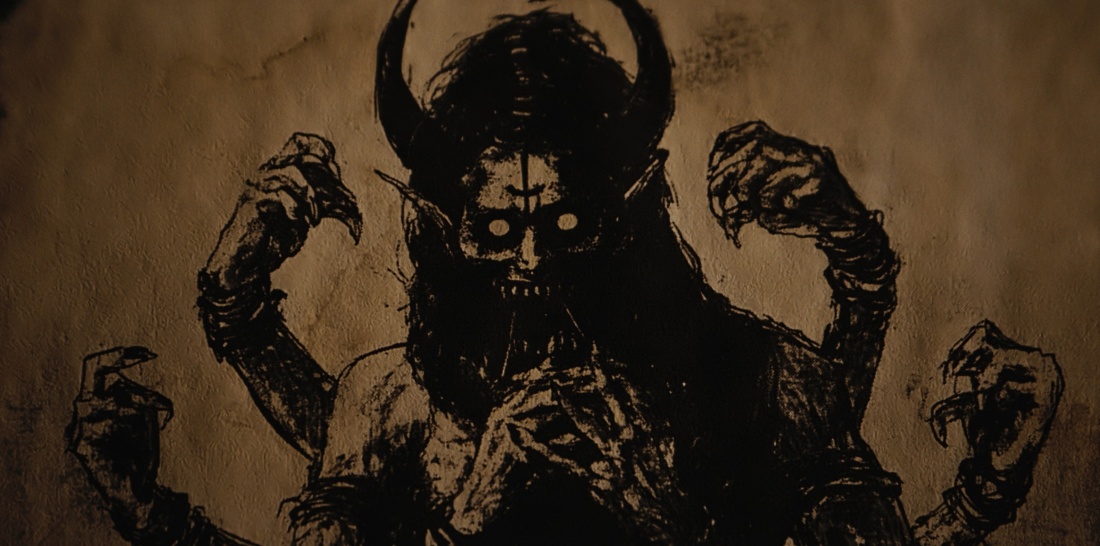
“One story that fascinated me was that of Bakasura and Krishna, which features in the book our protagonist reads at the beginning of the film. Bakasura is a demon known for his insatiable appetite, while Krishna is a revered Hindu deity associated with divine protection. I was really drawn to the story of this monstrous, insatiable hunger and how that could become something much more sinister within the context of a family dynamic. That idea of an appetite that can never be satisfied became a big inspiration for the horror at the heart of Devourer and how these stories we grow up hearing can take on a life of their own. Although I’ve definitely taken my own liberties with the mythology!”
Who’s the devourer?
“The Devourer is Bakasura, a demon who personifies this idea of endless consumption. But on another level, the Devourer is also a metaphor for how your ancestral culture can slowly be consumed by Western society, and how parts of your cultural identity can get lost or swallowed up in the process of assimilation. That’s something I’ve only really scratched the surface of in the short, and a theme I’d love to explore further in the feature.”
Do you see the short films that you’re making as a progression to something bigger?
“100%! I think short films are such a great way to develop your craft as an emerging filmmaker and while Devourer very much stands on its own as a short, I also see it as a proof of concept for something bigger.
“I’m currently developing a feature adaptation of Devourer, although it’s not necessarily just a longer version of the short. I’ve always found that when horror shorts get adapted into features, they can sometimes lose what made the original so effective. So, I’m approaching the feature as more of an evolution of the short, with a much deeper exploration of cultural dissonance within immigrant families, particularly the tension between parents who hold tightly to their traditions and children who have grown up assimilating into Western society. I’m really interested in how religion, cultural expectations and identity can clash within the family home and how those conflicts can manifest into horror.
“I’m also developing two other shorts: Belly, a drama with actor Sunny S. Walia (Shantaram, Together) and Senescence, a biotech vampire horror.”
The film has been embraced by horror film festivals – is that how you view the film, or is it something else?
“I love that the film is getting eaten up by horror festivals, it’s been such a great way to platform South Asian horror to reach wider audiences.
“But I’ll always remember a piece of advice I once heard from a horror producer: ‘What’s the Sundance drama behind your horror short?’ That really stuck with me.
“When I set out to write Devourer, I always saw it as a family drama that gradually descends into horror. Some of my favourite horror films, like Hereditary and The Babadook, are essentially family dramas that use horror to heighten and give physical form to their deeper emotional themes. As that’s also the approach I took with Devourer, I wouldn’t necessarily call it a pure horror film but more a drama/horror.”
