



by FilmInk Staff
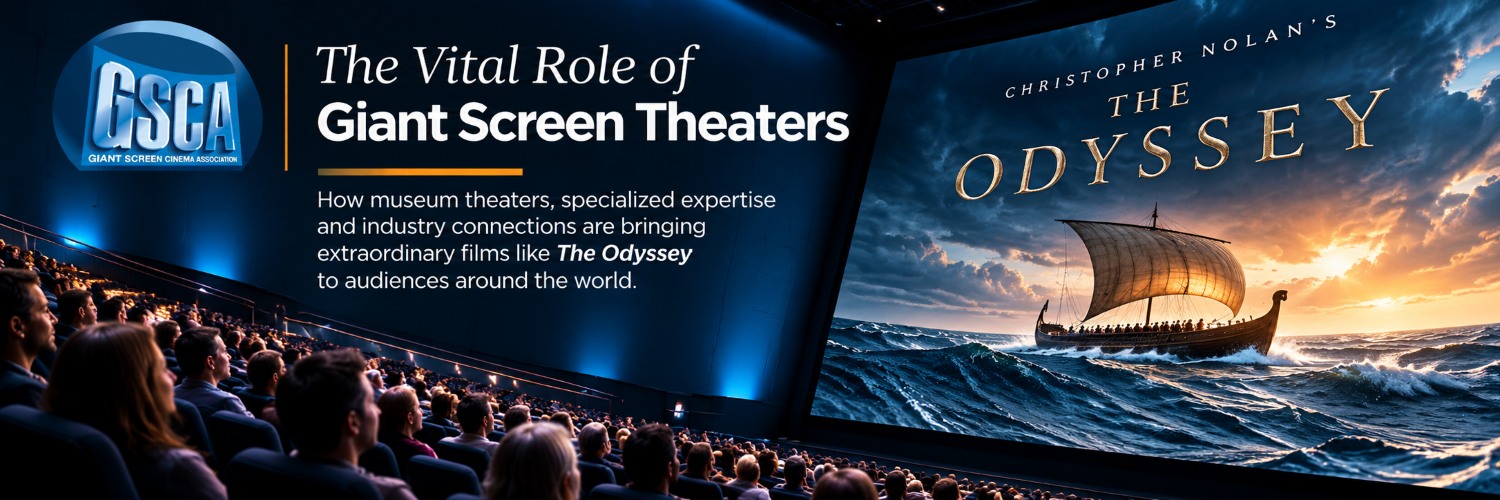
Six of the 41 theatres presenting The Odyssey on IMAX 70mm film were operated by GSCA-member organisations, illustrating the value of museum screens, specialised expertise and industry connections.
Christopher Nolan’s The Odyssey has been a global cinematic event, and some of its most remarkable success stories have unfolded inside museums, science centres and an aquarium. For the Giant Screen Cinema Association (GSCA), the film illuminates a bigger opportunity: cultural institutions can use their theatres to attract new audiences, build revenue and create experiences that visitors cannot find anywhere else.
Among the 41 theatres worldwide selected to present The Odyssey on IMAX 70mm film, also known as 15/70mm, seven were operated by GSCA-member organisations. Six are part of cultural institutions, and the seventh is Pathé Odysseum in Montpellier, France, operated by GSCA member Pathé Cinemas.
The six institutional theatres are:
- IMAX Melbourne at Museums Victoria, Australia
- The Kramer IMAX Theatre at Saskatchewan Science Centre, Canada
- The Ronson Theatre at London’s Science Museum, United Kingdom
- The AutoNation IMAX Theater at the Museum of Discovery and Science, Fort Lauderdale, Florida
- The IMAX Theater at the Indiana State Museum, Indianapolis, Indiana
- The Tennessee Aquarium IMAX Theater, Chattanooga, Tennessee
The response has been extraordinary. IMAX Melbourne had sold more than 74,000 tickets by July 23, according to Time Out Melbourne. At the Museum of Discovery and Science in Fort Lauderdale, The Odyssey surpassed 57,200 admissions by August 13, breaking a theater record that had stood for more than 16 years.
“That success creates opportunity: to introduce new audiences to the non-profit museum, generate revenue that supports our educational mission, and build relationships that last beyond a single film,” said Joe Cox, president and CEO of the Museum of Discovery and Science.
The story is also about the people behind the image. IMAX 15/70mm screenings depend on projectionists and technical teams with specialised skills to maintain and operate increasingly rare film equipment. At the Tennessee Aquarium, the return of its IMAX 70mm film projector after a decade out of service helped bring sold-out audiences back to the format. “These theatres show what’s possible when you combine great programming with people who know how to deliver an exceptional experience,” said Tammy Barrett, GSCA Executive Director. “Our role is to help members learn from one another—whether they’re preparing for a global blockbuster or looking for ways to bring more visitors through the doors on a Tuesday afternoon.”
GSCA’s relevance goes beyond the relatively small number of theatres equipped for 15/70mm. Across flat-screen and dome theatres, members work to choose compelling programs, strengthen marketing and improve the visitor experience. Through its international conference, professional development, research and peer connections, GSCA helps theatre teams share practical expertise and make informed decisions.
“The broad exposure to industry professionals from around the world provides us with the context that we need to make better operational decisions,” said Ryan Holota, COO of the Saskatchewan Science Centre in Regina, Canada.
The lesson of The Odyssey is not that every museum needs a 15/70mm projector. It is that a thoughtfully programmed, well-operated theater can be an important asset to a cultural institution—and that no theatre team needs to solve every challenge on its own. GSCA invites museums, science centres, aquariums, planetariums and other cultural organisations to explore the expertise and connections available through its community.
About the Giant Screen Cinema Association
The Giant Screen Cinema Association (GSCA) is an international network of theatres, filmmakers, distributors, suppliers and other professionals working to advance the giant screen cinema experience and strengthen the success of member organisations. Learn more at www.giantscreencinema.com.
