


by Dov Kornits
After a successful career as an actress, New Zealand-based Nat Boltt turns director with the warm and winning Holy Days, which follows three nuns (Judy Davis, Jacki Weaver, Miriam Margolyes) and their young charge (Elijah Tamati) on a road trip.
Though born in South Africa, Nat Boltt is a true international, having worked consistently in Australia, New Zealand and the US as an actress and TV and short film director. Boltt has been acting since the late 1980s, with roles in everything from Neill Blomkamp’s sci-fi modern classic District 9 through to the popular NZ-shot children’s show The Wotwots. More recently, Boltt has featured in the cult US series Riverdale, the Erik Thomson starrer 800 Words, and the TV movie The Secrets of Bella Vista. In between all of that, Boltt has also been slowly, surely establishing herself as a director via a series of shorts and TV episodes.
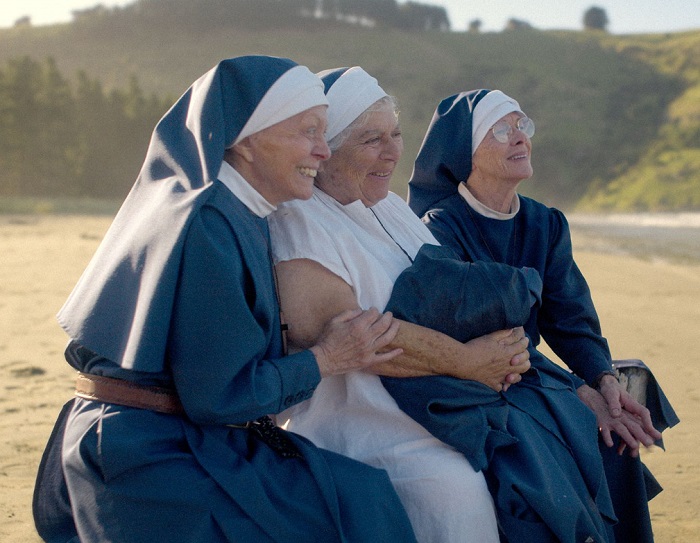
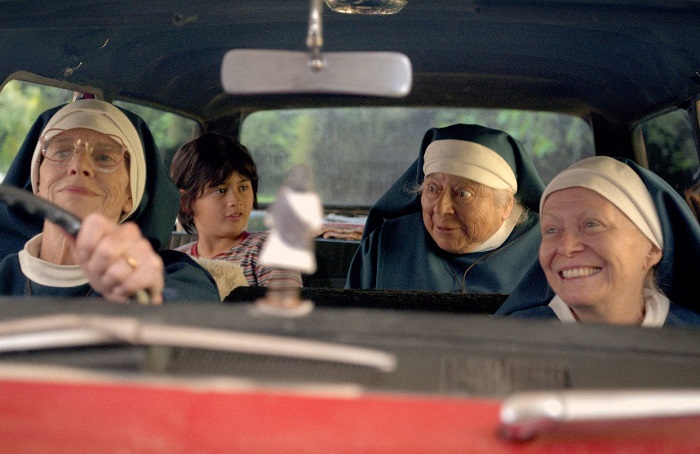
And now, with the heartwarming charmer Holy Days, Nat Boltt makes a most auspicious big screen directorial debut. Set in 1970s New Zealand, the comedic and heartwarming road movie follows young Maori boy Brian (newcomer Elijah Tamati), who winds up at a ramshackle old convent after a family tragedy. When the convent is threatened with closure, Brian teams up with three caring, kindly and slightly freewheeling elderly nuns to save it.
Despite her status as a debutante, Nat Boltt was able to corral three extraordinary actresses to play Sisters Agnes, Mary Clare and Luke: Aussie legends and Oscar nominees Judy Davis and Jacki Weaver, and British-born part-time Aussie actress Miriam Margolyes, who has lately been busy with her series of down under TV specials. With this incredible casting coup in place, Nat Boltt just had to hang tight and make the most of it…

What has your journey been as a creative up to this point now as a director?
“How long have you got? I was a dancer, and then because I suffered from stage-fright, I decided to get behind the camera where you don’t have to face hundreds of people staring at you. But I’ve always been a writer, and a journalist. I did years of writing in South Africa… I was born in Johannesburg. I eventually broke into the acting world. I did pretty well and travelled around internationally. When I was auditioning, I was surrounded by actors complaining about how the project wasn’t what they’d hoped it would be. There was just a lot of complaining… and I found myself doing the same thing.
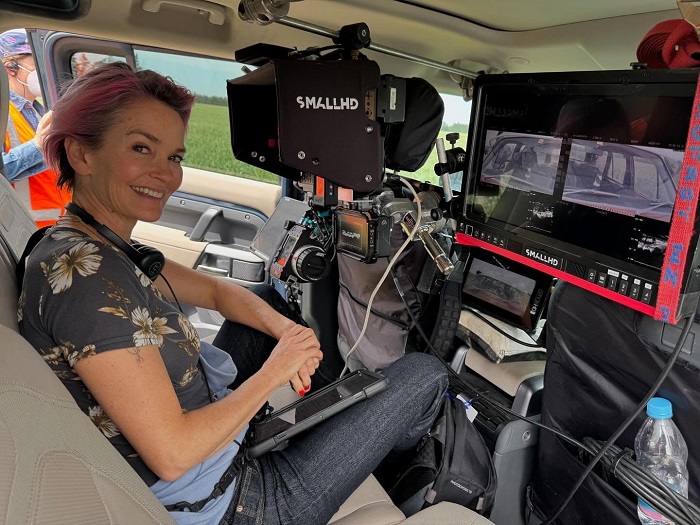
“Then a little voice in my head said, ‘Well, if you’re so unhappy, then just do better. If you think you can make a better film, then write a film and make a film.’ In 2012, I was presented with the opportunity with a friend of mine to make a film called The Silk, which was based on a short story by Joy Cowley, who is an icon in New Zealand. I very quickly discovered that making a film is really, really difficult. I developed a whole new respect for filmmakers. Anything that makes it onto the screen is a miracle. There are so many things that have to go right to get to that point. I practiced more, I wrote more films, I made short films, I made a web series, I made music videos, and I continued acting.”
And The Silk actually connects back to Holy Days?
“Yes! I was lucky enough to have The Silk be quite successful and win a number of awards. And I said to Joy, ‘What if I made a feature of one of your novels?’ And she said, ‘Well, Holy Days is the one, no question.’ And I thought, ‘Wow, nuns on a road trip! That wasn’t really what I was expecting.’ I thought I would make something else. I’m not sure what I thought I would make, but it was probably going to be more around my interests, which were kind of clubs and cool kids and bank heists.”
Your secret life!
“Yeah! I was a fan of Lock, Stock and Two Smoking Barrels and those sorts of films. But then when I was about to write the film, Joy said, ‘Make it the film you want it to be.’ So, I decided to combine my love of adventure and action and comedy with her book to make it almost like a Blues Brothers-style mission. Nuns who race cars, nuns who are naughty, nuns who are real and flawed, and they’re on a road trip with a little boy who is going to teach them probably as much as they teach him… it’s also a bit like Little Miss Sunshine, which is one of my favourite films. And so it became this collaboration of her book and my weird sense of humour. And then when the producers came on board, they encouraged me to really push the adventure angle.”
It differs quite a bit from the book?
“The book is wonderful and it certainly has all the same characters, but in terms of the urgency and the intrigue and the road trip and the car chases, that’s Nat Boltt. Encouraged by Joy and blessed by Joy. I was very lucky.”
You’ve got such as amazing cast! Two incredible Australians in Judy Davis and Jacki Weaver, and an honorary Australian in Miriam Margolyes…
“That was really a coincidence. I was in New Zealand when I first wrote it, and I’d watched a lot of Miriam and her documentaries. She’s so wild, and Sister Luke just does whatever she wants. Joy has some really funny stories about the nuns she has known, and they’re hardly the pious goody-two-shoes types you’d expect. She had met some fun nuns, and I’d met some fun nuns in Wellington too. I’d watch Miriam and go, ‘She would be great, wouldn’t she? But how am I going to get to her?’ It was all about getting past the gatekeepers and getting the script to the agents. I needed them to believe in the script so much that they could take a chance on a first-time feature director. I think the thing with big names is that they often don’t get the really good scripts that they would love to do because their agents don’t let them through.”
Pay to play…
“Yeah, exactly. We were dealing with all of that and we were dealing with it during Covid too. There was so much risk, but Miriam came on board anyway. One day you get the call and Miriam Margolyes has said yes.”
And what about Judy? She’s one of the great actors in the world. How did you secure her for the role?
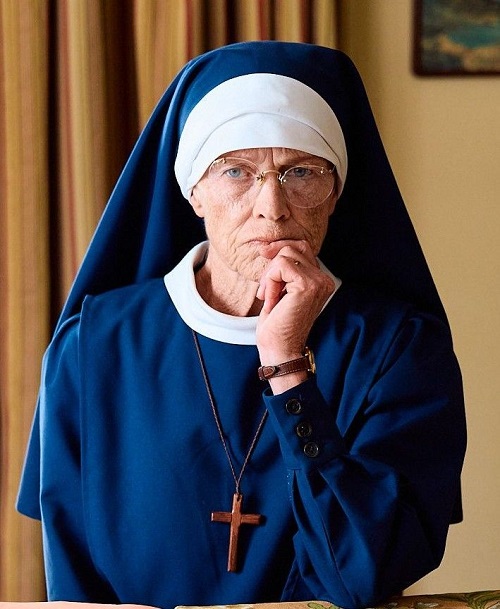
“The Dressmaker was the most recent film that I’d seen of hers and she’s just brilliant. She can do almost nothing yet be so hilarious. She’s just got that X-factor. You don’t know what she’s doing, but it’s brilliant. It can be a little slight twitch of the corner of her mouth or whatever Judy does. It’s just magic. I thought she’d be so good because she’s got that regal quality, but she’s also got to have that warmth because it’s a comedy. We reached out to her and she said, ‘I’ll come on board with Miriam because then we’re keeping it all at an A-level.’ I met her and she was wonderful.
“Miriam and Judy both instantly had ideas. Judy wanted to do an Irish accent based on her experiences with the nuns that she had met that she’d actually liked. And Miriam wanted to do a slight Scottish accent based on her grandfather. And of course, as soon as they do them, you’re like, ‘Whatever you want to do, I’m certainly not going to argue.’ I had been chasing Jacki Weaver for years and she came on right at the end. She really made me sweat. She’s very, very busy, a big name… she’s a massive Australian icon who’s made it huge in the States. We were just so lucky that she happened to be available just in time when the film was greenlit.”
Judy’s reputation precedes her. Was it a bit intimidating working with these actresses?
“Yeah, exactly. No pressure! I come from an acting background, and I’ve worked with actors at every level. I’ve found that it’s the less experienced actors, the young actors who are suddenly famous, who are much more difficult to direct. I’ve dealt with that insecurity. They don’t have the context of how difficult it is and what a privilege it is. And in the case of all three of these ladies, they all came from theatre backgrounds as well. That makes such a difference. This is full body acting. It’s not head and shoulders. They’ve had the real training. All I could do was go in and listen and absorb the things that worked.
“Judy has a lot of questions. They’re all very clever. They’re all very good questions. She wants to know why… and you need to have the answers! And because I wrote the script, I had the answers. If something didn’t work, I could change it straight away, which is a blessing. Judy and I spoke a lot about the deeper themes. Judy is one of those actors who, as soon as she nods, as soon as she has enough information having answered the question, you stop talking. You walk away. She’s ready.
“And then Jacki is playful and gentle and loves to laugh. She came in with a completely different energy. She’s brilliant, of course, but in her own way. And Miriam is a perfectionist. Miriam is as wild as you would expect. She says whatever comes into her mind. But when it comes to the actual scene, she wants to be absolutely word-perfect. She wants to hit her marks. She wants to be technically perfect. I didn’t have to do much with Miriam because she’s so hard on herself. I encouraged Miriam a lot; that she was being amazing and that we loved everything she did. Everybody had their own process.”
You’re in the film too!
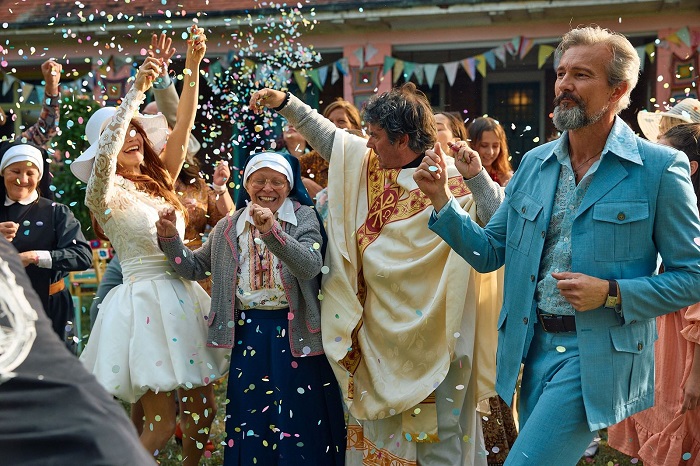
“I’m cheap and malleable! I’ve acted in my own projects several times. And no matter what anybody tells you, it’s really difficult because you’re splitting your brain! You’re putting yourself behind and then in front of the camera, trying to be in the role and perform and then jumping back in and watching yourself. It’s very difficult, so I didn’t want to have a bigger role than what I had. I was more with the New Zealand actors, and I knew them well. New Zealand actors are all just so talented. They’re so down to earth… I knew I could relax with them.”
And along with these three legends, you have young Elijah Tamati as the other lead principal in the film…
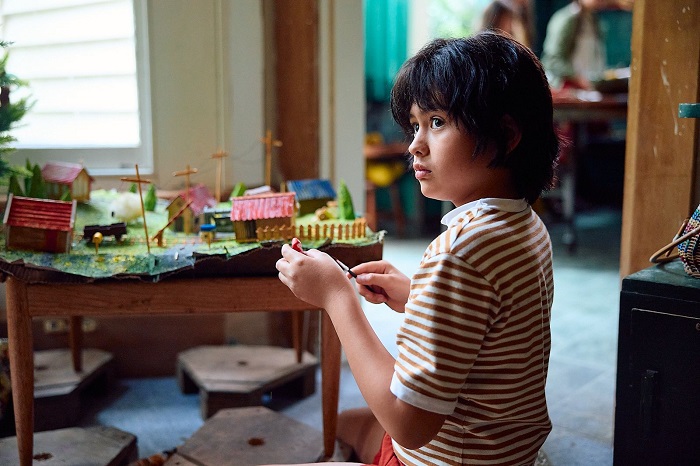
“Judy, Jacki and Miriam came in knowing that they needed to help him… they needed to help him and support him… they needed to lift him up and teach him too. That brought the perfect balance to the set. That was one of the miracles that just helped this film be made and be what it became. There’s magic in the room. I think that’s because we were in New Zealand and I have always worked this way.
“Our Maori producers, Tainui Stephens and Micah Winiata and Roxi Bull, led from the Maori cultural approach to filmmaking. Young Elijah, of course, is Maori and so is his mum, Rene. Everywhere we went, we would do a karakia, which is a blessing to each location. It’s about asking the ancestors to help us have a good day and to do things in honour of the ancestral stewardship of the land and the moment. And as soon as you do that, things go well because you’ve asked permission rather than marched in with your own ideas. That melds the nuns on the one hand and Maori cultural beliefs on the other hand. I wanted my story to bring out the best in everyone. I wanted it to accentuate the things that we have in common, and the way we can find our humanity and our friendship across any barrier. That’s in the story, and it was part of our day-to-day as well.”
Congratulations on your success with the film. Are you working on a whole bunch of new projects?
“It’s taken over ten years getting Holy Days up thanks to Covid and other things. I was writing other projects as well right through the whole process. I have a range of projects from sci-fi to a lot of comedy. There’s another road trip comedy coming up called Sweet Child of Mine, which will probably be my next feature. This time it’s zombies in the apocalypse!”
Will you be shooting in New Zealand, or wherever it takes you?
“Wherever it takes us… it’ll be the beautiful apocalypse because I’m going to make it beautiful!”
Holy Days is released in cinemas on August 6.
