



by Nataliia Serebriakova
A familiar story, a crucial decision
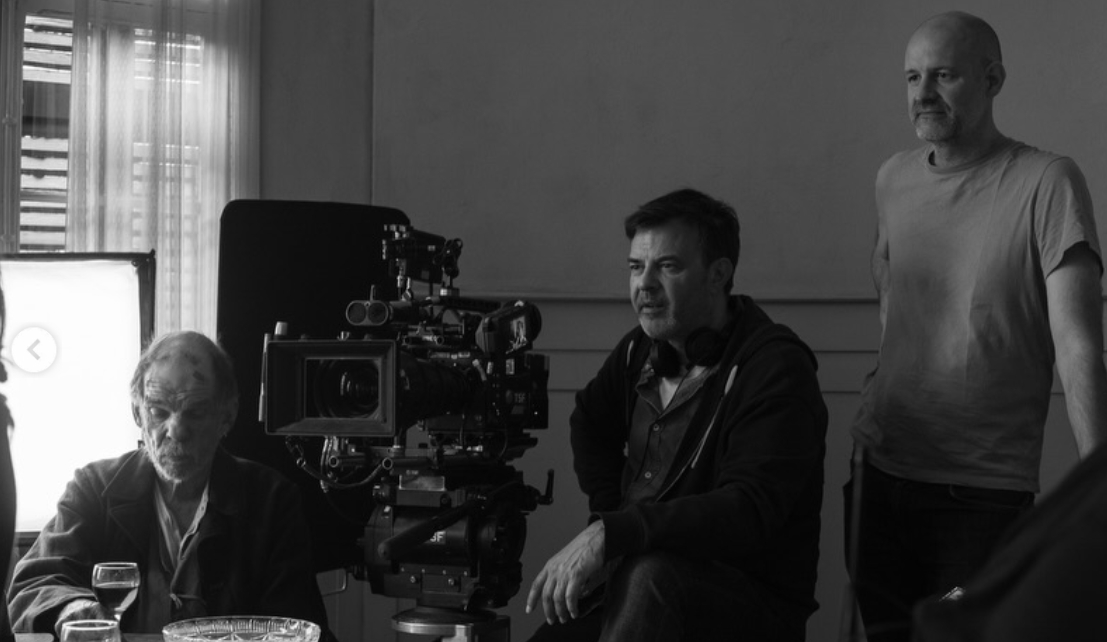
When Manu Dacosse first read the script for François Ozon’s The Stranger, the material was already deeply familiar. “I have known François for a long time now, almost ten years,” he says, adding that he had read Albert Camus’s novel “when I was a teenager, a very long time ago.” The adaptation did not surprise him narratively, but it immediately raised a key visual question: “the main question, from the very beginning, was whether to shoot in colour or in black and white.”
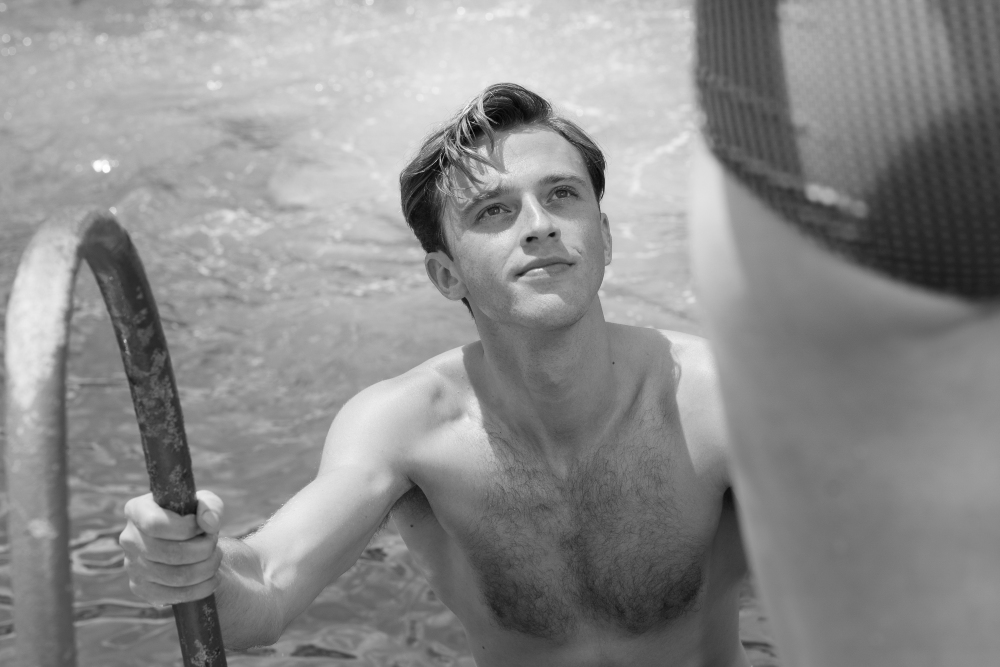
That decision would ultimately define the film. “At first, I think we both wanted to shoot in black and white, but François was not completely sure,” Dacosse recalls. His own position, however, was clear from the outset: “I said very clearly that I wanted to shoot in black and white.” Once agreed, the choice became foundational rather than stylistic. “All the archival footage from that period is in black and white, and in our collective memory, the 1930s and 1940s exist in black and white as well.”
Staying close: static images and wide angles
Visually, The Stranger is built on restraint. Dacosse describes a process shaped in close collaboration with Ozon: “My assistant director of photography and I work very closely with François, especially on the shot list.” The guiding principle was intimacy: “the idea was to stay very close to the character.”
This translated into specific technical choices. “We also used a lot of wide-angle lenses,” he explains, combined with a preference for stillness: “the main idea was to create very static shots, almost like photographs.” Movement entered the film gradually, as Ozon began to explore it during production: “later on, François started to enjoy panning and changing the framing.” Yet the core remained unchanged — proximity, wide angles, and controlled composition.
From comedy to austerity: working across genres
Dacosse’s collaboration with Ozon spans radically different films, and this project marked another shift. “It is completely different,” he says. What he values most in their partnership is precisely this variability: “I can move between very different genres.”
He traces this trajectory through their previous work: “By the Grace of God was very realistic, more like a journalistic story… then My Crimes was a full comedy, with a lot of light and brightness.” In contrast, The Stranger demanded a stripped-down, almost ascetic visual language.
For Dacosse, this constant reinvention is essential: “each film requires a completely different approach.” It is also what sustains his engagement with the craft.
Morocco and the illusion of sunlight
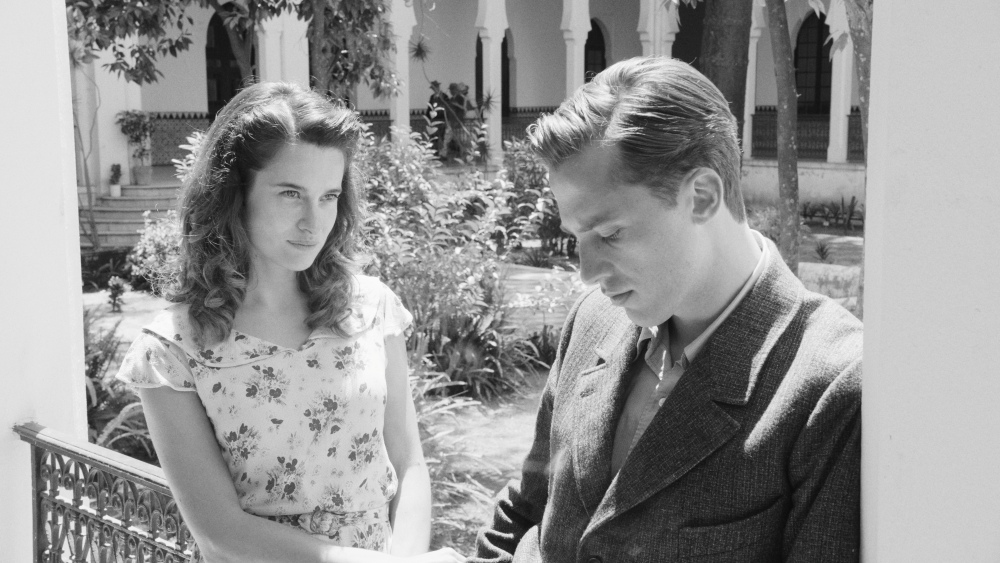
The film was shot in Morocco, a location chosen for its resemblance to colonial Algeria. “I always wanted to shoot in Morocco, because Tangier looks a bit like Algiers,” Dacosse notes. The expectation was clear: “we expected to have beautiful sunlight.”
Reality, however, intervened. “In the end, it was very cloudy,” he says. This forced a shift in strategy: “I had to add much more artificial light in the streets.” Even exterior scenes required intervention. “Sometimes, for exterior scenes, we shot very early in the morning and used strong artificial light to create the effect of sunlight.”
The result is a carefully constructed naturalism — an image that appears effortless but is, in fact, highly controlled.
The turning point: pushing the image
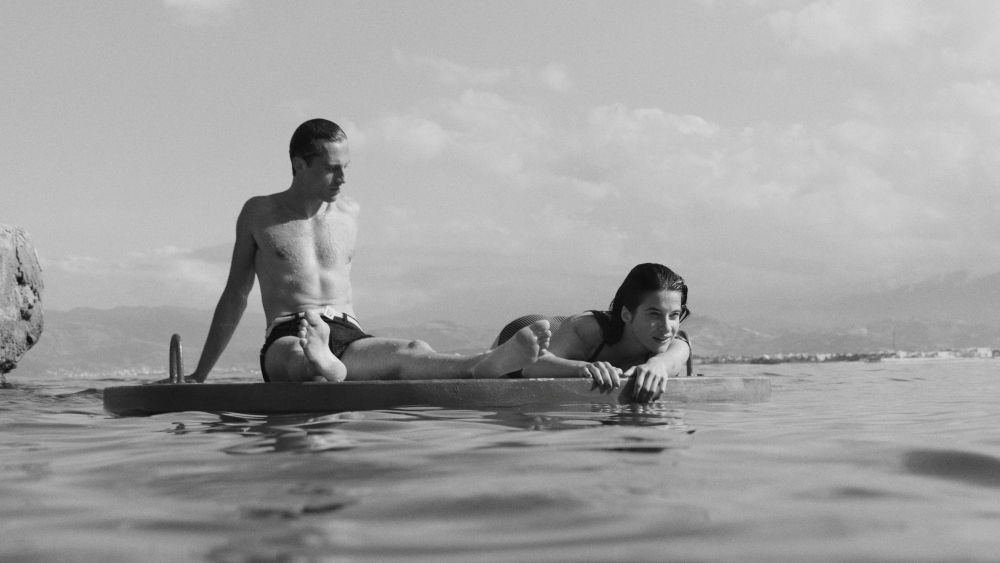
The film’s most intense sequence — the moment when the protagonist commits murder — became a site of visual experimentation. “It was the moment when the main character kills the Arab,” Dacosse says. “Because we used many techniques there.”
Among them were stylistic departures: “we applied a warm colour effect and used a drone.” The build-up to the scene also involved dynamic camera work: “we also used a Steadicam on the beach. We pushed the angle a lot.”
Dacosse emphasises his own role in shaping the scene: “I really pushed François to frame the shot in that specific way… very deliberately.” The reason lies in the narrative weight of the moment: “this is also the turning point of the story, so you really have to push it visually.”
Even the drone was used in an unconventional way. “We used the drone like a crane,” he explains. Rather than dramatic heights, he preferred subtle elevation: “not shooting from ten metres high, but from about six metres.” The goal was not spectacle but precision.
Tools and simplicity
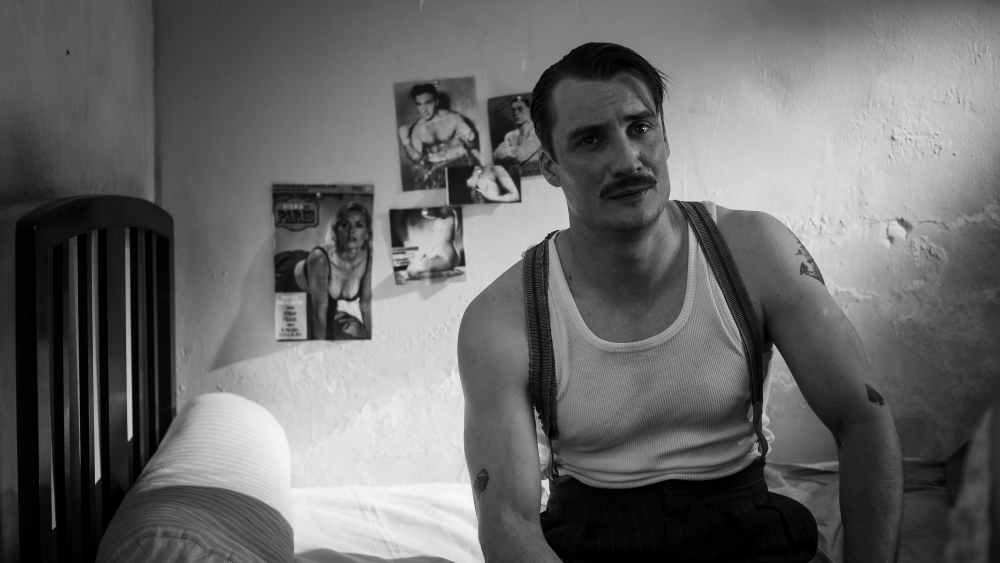
Despite the film’s formal rigour, Dacosse describes his technical approach as minimal. “It was quite simple,” he says. The film was shot on the Alexa 35 — “it was my first time discovering that camera… and I was really impressed by it”—using zoom lenses.
This choice reflects a compromise. “I usually prefer prime lenses,” he admits, “but François likes to work fast, and with a zoom lens you move much faster.” Efficiency, in this case, becomes part of the aesthetic.
Interpretation and resistance
The film has generated varied interpretations, particularly around its central scene. Some critics have suggested a homoerotic subtext. Dacosse is aware of this reading: “Yes, I know that interpretation… Why not?”
At the same time, he resists reductive conclusions. “What I do not like is that because François is gay, people immediately label the scene as homoerotic,” he says. “I do not agree with that.” For him, the image remains open rather than fixed.
Between experimental and mainstream cinema
Dacosse’s career moves fluidly between radically different cinematic worlds. He has worked on highly stylised, sensory films (for example on The Strange Color of Your Body’s Tears with Bruno Forzani and Hélène Cattet) as well as more classical productions. This duality is not a contradiction but a motivation. “That is exactly why I love my job,” he states.
He describes long-standing collaborations with experimental filmmakers: “I shot with them twenty years ago, we went to film school together.” These projects offer a different kind of engagement: “With them, I enjoy making more experiential, sensory films.”
At the same time, he values returning to more conventional cinema. “Then I can come back to more mainstream films with François,” he says. The ability to alternate between these modes is essential: “I really like changing styles and atmospheres.”
On cinema, influence, and learning
Dacosse remains open in his cinematic tastes. “I am very open,” he says, citing recent films he admired. What matters most is the experience itself: “I love going to the movie theatre because I think it is very important to keep going to cinemas.”
His influences are equally diverse. Among the cinematographers he admires, Vittorio Storaro, Gordon Willis, Roger Deakins, and Agnès Godard, among others — figures whose work has shaped modern visual language.
For younger cinematographers, his advice is grounded in curiosity and practice. “Always stay open to new techniques,” he says, pointing to emerging technologies like artificial intelligence. At the same time, the fundamentals remain unchanged: “watch a lot of films… and do not be afraid to make mistakes.”
Because, as his own career demonstrates, cinematography is not about a fixed style — but about the ability to reinvent it, film by film.
The Stranger is screening now.
