


by Nataliia Serebriakova
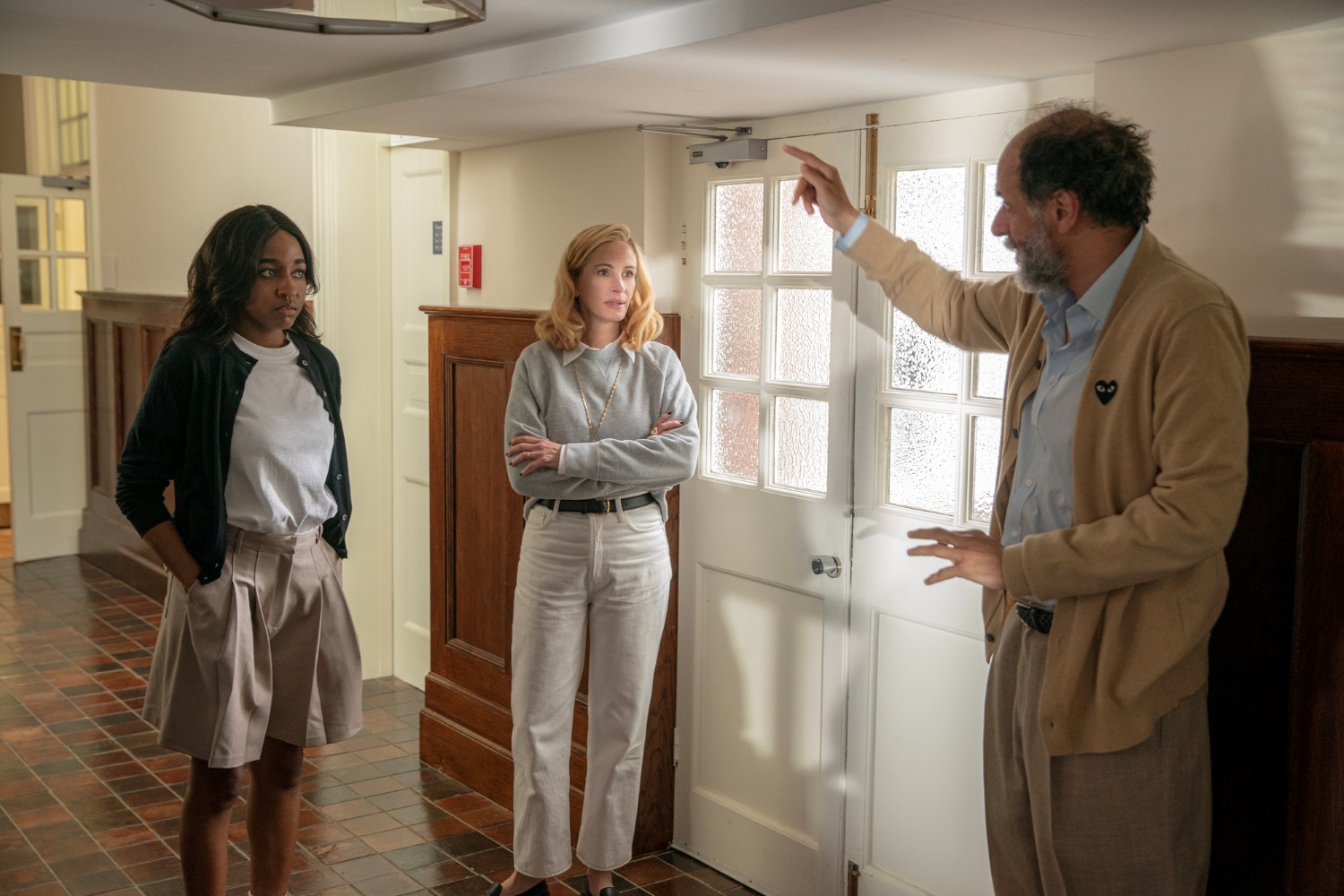
When Julia Roberts walked into the press room to discuss After the Hunt, she was ready to make fun of herself — and of Luca Guadagnino. “Well — I hate sitting next to Luca only when I have to talk about Luca. Otherwise, I really enjoy it,” she laughed. “It’s so fun getting to be in the orbit of someone who’s so interested in people and curious and in love with why we do the things we do or don’t.”
After the Hunt marks Roberts’ first collaboration with Guadagnino, and she spoke about how the Italian Call Me by Your Name director’s curiosity pulled her toward Alma, a role that she initially found “foreign and complicated and challenging.
“Talking to him about Alma… he made me feel so excited at the possibilities of this kind of portrayal but deeply encouraged and supported and just was believing in me before I even knew what we were doing,” Roberts admits.
“It was almost like he would start to see the panic or the doubt in my eyes.”
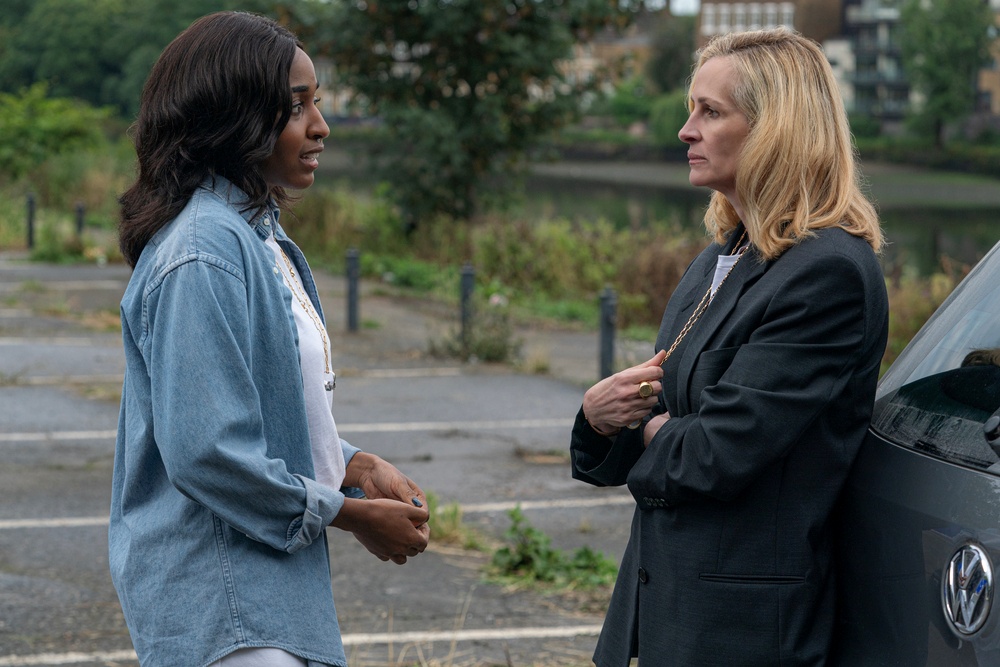
Sitting nearby, Ayo Edebiri — who plays Maggie in the drama — admitted that she was equally caught off guard by the script. “I just couldn’t get it out of my head,” she says. After her first conversation with Guadagnino, Edebiri was struck by “the precision of Nora’s language [writer Nora Garrett], but I felt like there was also such precision in your thoughts and in your questions and interrogations. But also, that was met by a real freedom,” she says about working with Guadagnino.
“I feel like Maggie, for me, was also very foreign, and I realised, because of speaking with Luca, that I had a lot more judgments,” she continues. “There was something that was really intriguing to me about trying to find this person and meet this person without judgment and with honesty for myself.”
Guadagnino himself described what drew him to the script. “The greatness of the dialogue written by Nora is that it’s people speaking in a lingo that is impenetrable by design, but witnessing it or looking at it, watching it, it’s entertaining,” he explains. “Because of course, we don’t care about what they’re saying or the philosophy. We could care if we’re curious about Foucault, stuff like that. But what is interesting is these masks they are wearing, and the way they talk is almost like a tug-of-war of power. Who’s going to be the most brilliant in the room? I felt that was quite striking, because you always are with them, understanding what they’re meaning, even if you don’t need to fully comprehend the meaning of the philosophy they’re talking about. It was very funny. Very, very entertaining.”
That power play extended into the film’s visual identity. Guadagnino broke down the thought process behind the characters’ looks: “One was to make sure that when you see them, you understand the way they behave in the context of where they live. And particularly for Alma, she kind of wants to make sure that the message is delivered, who is in power. And so the silhouette is the most important thing. The colour or the colour block, or the absence of colour is complete confidence. Maggie mirrors that in her aim to be like her, or to be with her.”
Each character’s visual world carried meaning. “Frederik [played by Michael Stuhlbarg] is soft, and likes sexiness. And then Hank [played by Andrew Garfield] has this kind of energy that is almost like blue-collar energy affirming itself. I like the idea that we have played with a sort of repetition, because all the women in the movie have some kind of incarnation of the same idea of self. Also, Chloe [Sevigny] wears this big jacket. But there is a difference in the fact that Chloe wears a very large jacket where Alma is more controlled.”
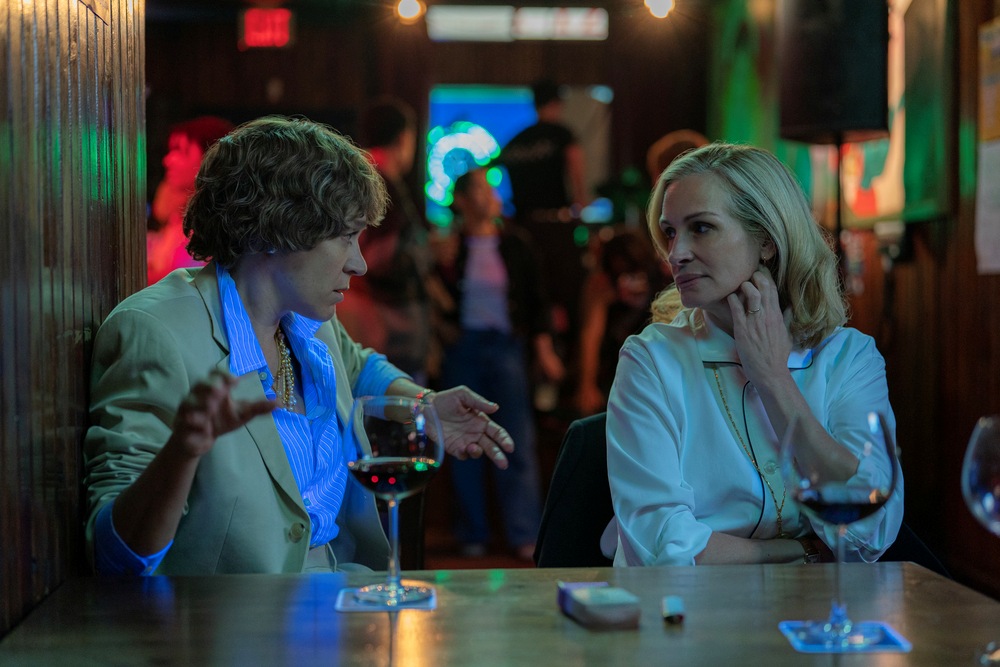
He gives special credit to his collaborators. “The other element is the love that both Giulia Piersanti, who is the costume designer, and I have for the incredible work of [Christopher Nolan collaborator] Jeffrey Kurland, a costume designer that we worship. And we feel that Jeffrey’s work has been a guideline for us. But I want to add that, to the concept of costume, the amazing concept of makeup and hair in this movie,” he adds. “Because the idea of the conflict between these characters unravels, and it becomes faster and faster, and so the degradation of the self and the sense of self becomes impactful on the faces of these people. Fernanda Perez was fantastic in creating that design.”
Roberts has long been asked about how women are represented on screen. When asked if After the Hunt signals a shift in the kinds of stories being told about women, the actress demurs. “It’s funny because people do try to talk a lot about the evolution of women in film. Nobody ever talks about the evolution or de-evolution of men in film,” she says. “ I get a little harumphy about it because I don’t really know what it means. People, characters are so different and flawed and some are empowered and powerful and evolved and some are truncated and lost. And it can be 1920, and it can be 2004, and we can have these same things. And what this movie will do or not do in that capacity, it’s beyond my understanding at this moment.”
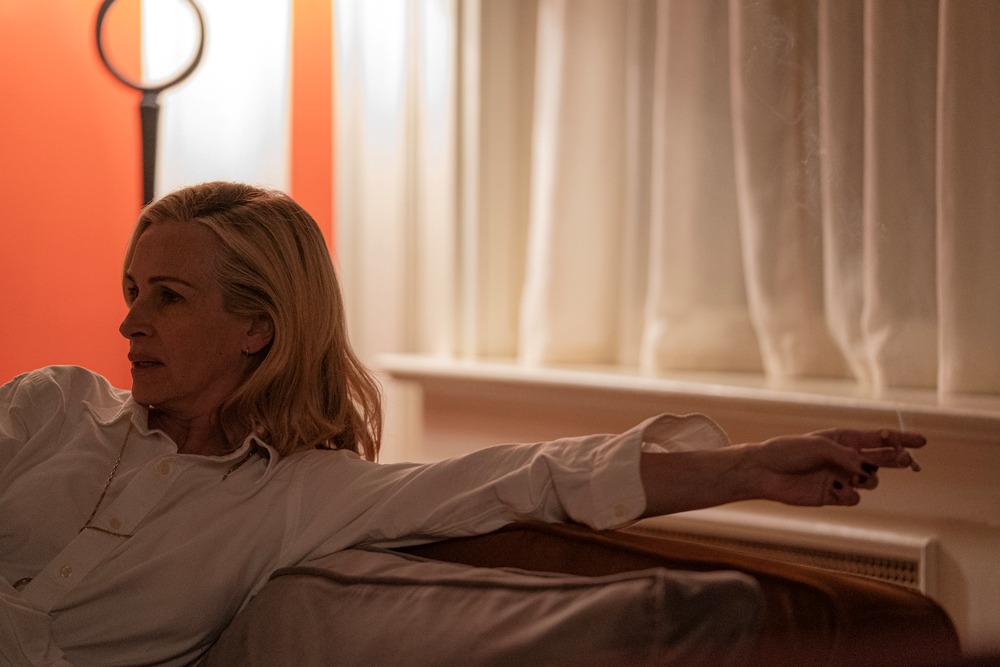
Later, we ask Roberts if she learns something about herself in every role. “I think what I learn has less to do with some internal psychological part of me. It’s more to do with just believing in myself and being confident and putting as much trust in myself as I do in Luca. Because it is really hard and really challenging,” she replies. “And the less I work, coming back, all those fears that I have every time I make a movie come back even stronger, especially because I’m really picky and so, I wait for something that’s gonna be really, really hard to do, and then you get there and think, ‘oh, now I have to do it.’ It’s that part between taking a part and doing a part, that’s the sweet spot where you just go, ‘yeah, I’ve got this great movie with Luca Guadagnino, and I haven’t had to do anything yet.’ And you just kind of bask in that, and then you have to do all the hard work. It’s just realising that it’s all in there and I just have to believe in myself.”
Her co-stars also reflect on their characters. Asked whether she’d be friends with her character Maggie in real life, Edebiri is sceptical. “What do you mean? I don’t know if Maggie would even be friends with me, to be honest. Because I think she’s very deliberate about who she surrounds herself with and why, and why not,” she says.
Roberts is more playful about Alma. “Well, I think I would like to sit next to her at a dinner party and just have a smarty pants off with her. I think that would be sporting and enjoyable. But friends? What do you think, Luca?” she asks. Guadagnino smiles: “I think Alma would be jealous of you.”
After the Hunt is in cinemas 16 October 2025
