


by Nataliia Serebriakova
Set against the backdrop of Russia’s full-scale invasion of Ukraine, the film follows a queer couple whose relationship is tested when one partner undergoes a gender transition.
Blending an intimate story of love and identity with the reality of wartime Ukraine, the film explores what happens when personal freedom, social expectations and history collide.
We spoke with Isabelle Stever and Anna Melikova about making the film in Ukraine, working with non-professional actors and finding new ways to capture a country living through war.
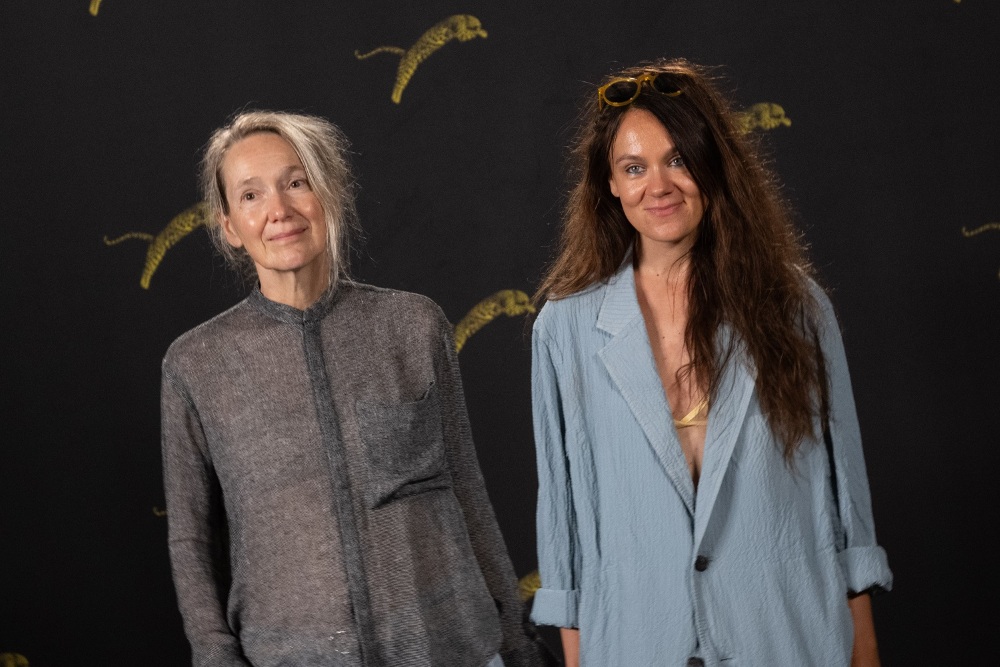
Anna, you mentioned earlier that the screenplay was inspired by the story of some close friends of yours.
 Anna: “Yes, this story is based on real events. I’d wanted to write about my friends even before the full-scale invasion. At first, I thought it would be a story centred on the gender transition of one of the partners in this queer couple. It seemed to me that, on the one hand, this was a unique story with a very specific conflict. But on the other hand, many people in long-term relationships, regardless of their sexual orientation, will be able to relate to this situation.
“After all, each of us changes over the course of a relationship – whether outwardly or inwardly – and it isn’t always easy for partners to accept these changes straight away. But then the full-scale invasion happened, and I realised that this would no longer be just a private story. It took on a historical, political and social dimension. When I started writing the screenplay, I already knew it would combine two major themes: gender transition and war.
“Of course, this isn’t a documentary. In other words, I fictionalised this couple’s story, adding details or minor subplots drawn from the experiences of many of my other friends who lived through the full-scale invasion. So to say every detail in the screenplay comes from reality, but not everything comes from this couple’s experience. I then continued working on the project in screenwriting workshops at the Berlinale and Sarajevo film festivals.”
Isabelle, why did you decide to make this Ukrainian story? What challenges did you foresee, given that you don’t speak Ukrainian? What was the most difficult thing for you?
Isabelle: “Anna and I had already worked together on a previous film, where Anna was the screenwriter and I was the director. It was an enriching experience for both of us — being married, creating a film together as a creative couple, as a team. When Anna came up with the idea for this project, of course, it was a huge question for me — could I be part of this story?
“On the one hand, Anna wanted me specifically to be the director, because it was important to her not just to write the screenplay and hand it over to someone she didn’t know, and then wait for the finished film to appear. She wanted to be involved from the very start of the preparation process right through to the film’s completion. She was actively involved in the directing process and the creative decisions. I was also involved in working on the script. We worked very closely together on this film.
“But there were other reasons why I decided to be a part of this project. Firstly, there was an emotional connection. When the full-scale invasion began, I felt emotionally involved. I’d been to Kyiv several times with Anna before that and developed a connection with the city’s spirit and I had found friends there. So the full-scale invasion had a personal impact on me.
“Furthermore, this project explores themes that interest me both as a director and as a person. These include gender roles in society, as well as situations where personal freedom clashes with convention and societal expectations. There’s also a certain personal connection to my own life journey. Before Anna and I got married, I’d been in relationships with men. And for me, gender is just one of the many small characteristics that define a person. But that has changed, as has my own perception of how society might view me differently. And that’s also one of the themes of this film.
“As for the challenges: one of them was that I had to adapt the screenplay into a film in a country whose language I don’t know, nor am I familiar with its cultural or social characteristics. My idea was to create a space and allow reality to enter that space by involving the actors, the crew, Anna, her friends and the people she spoke to whilst writing the script. They filled that space with their own experiences. And my task was to turn that space into a film.”
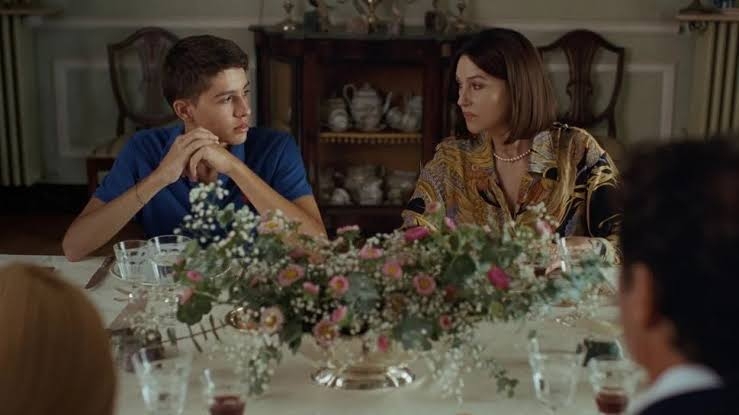
You’ve really succeeded in capturing the Ukrainian spirit. The film looks very realistic. We also like your visual style. It seems to echo your previous work, “Grand Jeté”. We’d particularly like to ask about one mise-en-scène — the long shot at the market. And also about the scene before that — the queue at the border. It reminded us of Chantal Akerman’s film From the East. Did you have that film in mind whilst working on this?
Isabelle: “Yes, cinematographer Volodymyr Usyk mentioned Akerman’s film. We discussed how the film depicts the inevitability of time.”
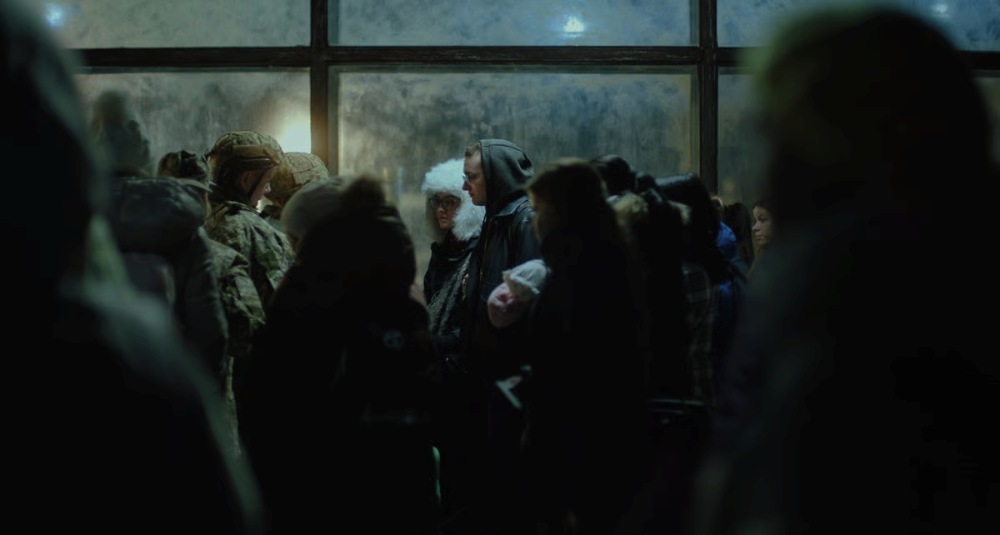
Anna: “In the scene at the border, we show, as it were, almost by accident, a portrait of society during those days of war. The camera moves constantly in one direction. The main characters are trying to keep up with the movement, appearing in the frame one moment and disappearing from it the next.”
Isabelle: “And later, in the market scene, the camera doesn’t move at all.”
Anna: “It’s as if time has stood still. Here, the collective portrait of society is presented as a static image framing our characters, as they seem to be stuck in this atmosphere.”
Isabelle: “I’d also like to talk in more detail about the scene at the border. For me, it was important how the extras behaved, what they were wearing, the lighting, and the overall atmosphere of the scene. The initial inspiration for this scene came to me on the train. We’d travelled to Kyiv many times: holding auditions, rehearsing with the actors, scouting locations, and preparing for filming. And when we were leaving Ukraine by train for Poland, the whole carriage was filled with women aged roughly between 20 and 30 — precisely the age when women can have children. A lot of them were with children. For me, it was a very emotionally powerful image. It felt as though the fertility of this country was being temporarily transported to a safe place, so that it could return once safety was restored and carry on with life.
“And I wanted to convey that feeling in the scene at the border. So I asked Kostya Moroz, who did a great job with the actors and actresses for the crowd scenes, to ensure that the people leaving the country were specifically women of that age and children. I also had associations with some photographs I’d seen from these situations. I felt something almost religious about them — in shades of blue and red. I wanted the women and kids to have their heads covered. I explained this to Asya Sutyagina, who did a great job enriching the film in a double-challenge as the costume designer and make-up artist.
“Besides, this was already embedded in Anna’s script. There was a calm atmosphere: people looked after one another, respected each other’s personal space, and there was solidarity between them. And this, to a certain extent, was the opposite of the stereotypes that might immediately spring to mind. Not chaos, not panic.
“Also, the cinematographer Volodymyr Usyk who enriched the film with his craft on many levels worked meticulously with the lighting in this scene. The people who are walking to the border see a light ahead of them; it’s as if they’re striving to reach it. But it’s a cold light. And then, after our protagonists are not allowed to cross the border, we first only see the shadows of people going in the direction of the border. Then the light kind of spits out our main characters into the frame going into the other direction – to Ukraine. They cease to be mere shadows — they become real people once more. They return to the country.
“And from that moment on, the atmosphere becomes more vibrant. People from western Ukraine turn up, bringing coffee, water and food to those who are waiting. There’s a queue of people who stick together. And this atmosphere of actively helping one another finds its way into the film.”
[Actress] Dasha Plakhtiy was the casting director. That’s interesting; we didn’t know she was involved in casting.
Isabelle: “Yes, and she did a brilliant job. Dasha suggested lots of interesting actors and actresses to me, and I had the chance to think about who would be best suited to each role. As for the parents of the protagonist, Olia — there really wasn’t any other option for me but Viktor Zhdanov and Iryna Mak. The only question was whether they’d agree to work with me on this project. For a director it was a big pleasure to have such talented, powerful actors in supporting roles. I’d love to make another film with them in the lead roles, and I nudged Anna to come up with a script for them.
“But I’d also like to mention Alina Matotchkina, the film’s creative coordinator, and who began first working on the casting. She brought many team members on board for the project, such as for example Dasha Plakhtiy, whom you just mentioned; she even handled the casting of the dogs, worked as the editing assistant in the postproduction and served – which is next to all her contribution the most precious – as the film’s music consultant.
“But it was Anna who found the two lead actors — Tanya Myronyshena and Marcus Bright.”
We’d like to ask about the Ukrainian folk song that the characters sing in the car on their way to the border. It seems that this song isn’t very well known. How did you find it?
Isabelle: “First of all, I should mention that the German producers – Uwe Schott and Tom Tykwer – were very brave to agree to realise this film in Ukraine. It was a difficult decision due to security concerns. Tom Tykwer composes the music for his films himself. He and Uwe were very surprised when they found out that I never use score music – music composed specifically for the film – but work exclusively with source music, that is, music that plays on screen and which the characters can hear.
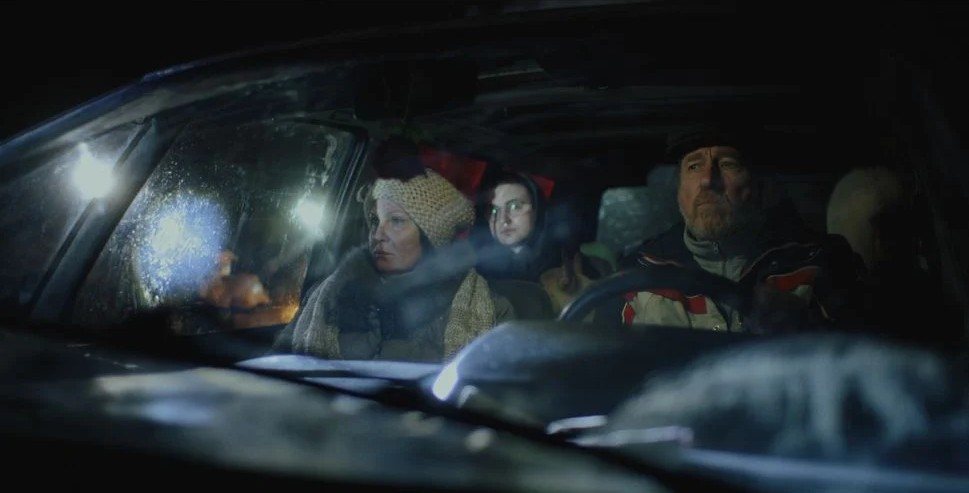
“They asked me: ‘Will there really be so little music in the film?’ Uwe even suggested precisely to have a scene with singing. He said that people can sing when they are afraid to encourage themselves. This inspired me to think about a moment where the viewer can breathe after the tension. The characters are living in constant fear and survival mode, but for a moment it seems to them that everything is under control, and they sing. Nevertheless, the danger they are still in did not vanish: their car is heading into a dark forest. They don’t actually know what comes next.
“I wanted to find a song they could sing together. And I’d like to point out that Ukrainian folk songs are incredible. They’re very poetic. You can listen to them many times and find a different meaning each time. They’re rich and multi-layered. We tried out several different songs. The lyrics of this song are in a way linked to the film’s story. And that was what was important to me.”
We spoke to the lead actors about your working method. They told us that you didn’t give them a script. Is this your usual way of working with actors, or was it just for this film?
Isabelle: “Tanya and Markus were given an extended synopsis and understood what they were getting involved in. But for me, the decision not to give them the full script wasn’t a way of hiding anything precious from them. On the contrary — I wanted to give them space to bring themselves into the film to enrich it with their own personalities.
“If I’d given them the full script with all the dialogue and all the scenes, it might have been too much information for them to stay playful. They would have been more preoccupied with the question: ‘How am I supposed to play all these scenes?’ So we gave them small sections bit by bit. They were able to adapt them to their own understanding. They could be inspired, rather than overwhelmed by the sheer volume of details and text. And they agreed to work in this way. There is even a scene in the film which came directly out of improvisation. On one rehearsal day they had to improvise a fight with strong emotions, even yelling at each other. After this, I felt that the atmosphere between them was so tense, I wanted to give them the space to calm down before they go home.
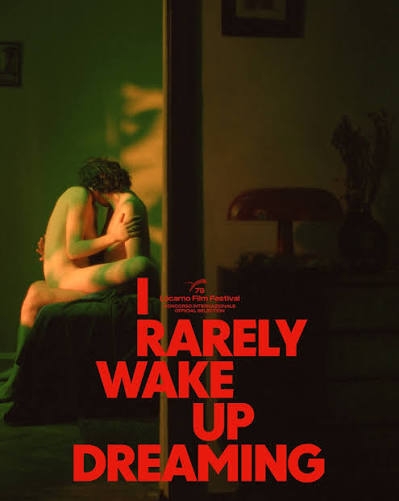
“So, I had the idea about an improvisation, where they lay in bed and read the future in each other’s hands. Doing this, they improvised dialogue. Anna liked this dialogue so much that she put it in the screenplay. And now the image of this scene is even the key image for our film.
“Also, a very useful tool for working with actors emerged quite by chance during the rehearsal process. For one rehearsal day, I wrote a scene to try out working with dialogue. There wasn’t enough time to translate it into Ukrainian. So, in the evening, I sent them the text in English, and they translated it themselves. By doing so, they weren’t just learning the words, but adapting the whole situation to their personality, while not knowing how the partner had translated the other part of the dialogue.”
Anna: “Something unpredictable emerged.”
Isabelle: “Yes, something alive emerged, something that might surprise them. It was a good way to keep the space for playfulness and inspiration during the filming.”
Anna: “But that was for non-professional actors. Professional actors and actresses were given the script.”
A question about safety. Weren’t you really afraid to travel from Berlin to film in Ukraine? How did you organise things during the air raid alerts and everything else?
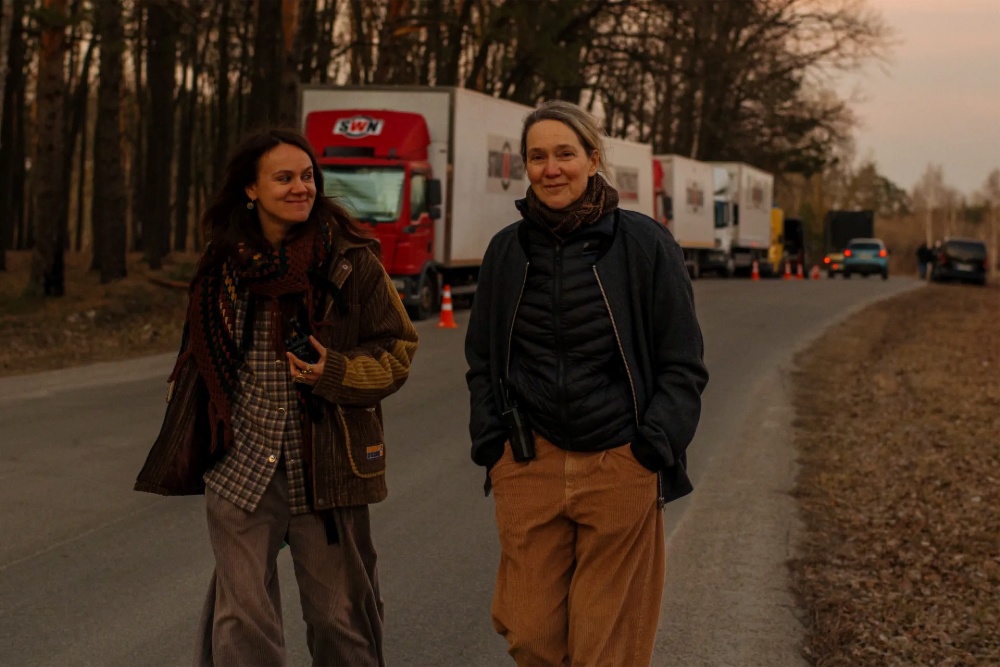
Anna: “We were, you could say, lucky, because the situation back then wasn’t as dangerous as it is now. Of course, whilst we were filming, there were air raid alerts almost every night. At first you get scared, but then you gradually get used to it. Sometimes we heard explosions. But when you know you’re in the middle of filming, that you need to have the energy to work tomorrow, sometimes you decide to stay in bed to get some sleep and ignore the alarm. But it’s important to note here that Isabelle and I were in a privileged position: throughout our stay, we lived in a hotel that had a bomb shelter. There was always electricity, the heating worked, and in the summer, the air conditioning was on. Most members of our film crew didn’t have such comforts. The war, of course, complicated the production process. Take the scene at the border, for example. Naturally, we didn’t film at a real border — we built one. The German set designer Mirko Rachor collaborated with his Ukrainian colleague Iurii Denissenko. We had 110 extras, cars, animals, and the whole crew. And we had to plan in advance what we would do if, at the very moment of filming, Russia were to attack that part of Ukraine. So, naturally, the Ukrainian co-producer Natalia Libet and line producer Alexandra Bratyshchenko, together with location manager Viktor Shevchenko, had to work out an evacuation plan.
“What’s more, due to the air raid alerts, the GPS sometimes malfunctioned in an attempt to throw Russian drones off the scent. As a result, some members of the crew ended up at the wrong location. The scene with the song in the car, which we’ve already mentioned, was supposed to take place during the day. But because of this delay, we moved it to the evening, when it was almost dark. And now we’re glad we did, because it fits the film better that way.
“Nevertheless, in spite of all the challenges, it was important for us to film in Ukraine. Not only to get authenticity in the picture, but also because our German producers and us wanted to support the Ukrainian film community. They’re having a very tough time at the moment. Lots of documentaries are being made, but rarely few fiction films, so many people are out of work. They were very happy to be back on set.”
Isabelle: “When you’re directing a film, you immerse yourself in it completely. You could even say you become obsessed with the project. You’re so focused that anything which has nothing to do with the film seems to fade into the background.
“But this was a different situation, because we were working in a war zone. There’s the danger to people. Not so much for you personally, but for the crew, for everyone around you. So, you have to keep that in mind at all times.”
Anna: “We also had night shoots. For example, we filmed the New Year’s Eve party scene over two nights, which meant we were filming during the curfew. At one point, a drone attack began. And, whilst filming on the balcony, we could hear explosions. Naturally, we stopped filming and suggested that anyone who wanted to could go and take shelter. Nobody went.”
Isabelle: “But it was very important for me to ensure that everyone understood that it was perfectly normal to seek shelter; no one should have stayed on set simply because of the pressure to keep filming.”
They say this war is the first in which people, when leaving the country, have taken their pets with them en masse. And you have a scene like that. What does it mean to you?
Isabelle: “Yes, when we saw on the news or asked our friends about people leaving Ukraine, animals were a very important part of these stories of flight and emigration. People either took their animals with them or were forced to leave them at home – and that’s incredibly painful. That’s when I had the idea to include portraits of animals in the scene at the border. Because they are obviously innocent of this situation. And through them, the viewer can feel the pain of what is happening. It’s a moment when you can take a breath and simply feel the emotion. This scene with the animals is a moment of mourning.”
