


by Stephen Vagg
Australian feature filmmaking was, basically, a desert from 1940 until the late 1960s – three decades where you’d get one or two movies a year, if you were lucky. The frustrating thing about that period is that there were times when it seemed that circumstances might change – activity would spur up, projects were announced, then it would all fall over. A case in point was the late 1950s.
Around that period, there was a bubble of filmmaking activity in Australia, mostly powered by Britain but also Hollywood, and even a little local capital: The Shiralee, Robbery Under Arms, Smiley Gets a Gun, Summer of the Seventeenth Doll), the Rafferty-Robinson efforts, On the Beach, Whiplash, The Siege of Fort Pinchgut, The Flying Doctor TV series (mostly shot in Britain but with some second unit here), The Bungala Boys, Shadow of the Boomerang and The Sundowners. We’re not sure why this was the case – probably a combination of a few things, including the stardom of Peter Finch, the popularity of some Australian-set IP (notably The Doll and The Sundowners) and the raised profile of Australia from the 1956 Summer Olympics.
During this period, a number of projects were announced for filming in Australia but which did not get made, including Dig (a biopic on Burke and Wills for Tony Quayle written by Ralph Peterson); a version of Naked Under Capricorn, the novel by Olaf Ruhen; a TV series based on the Stingaree novels; Inward Bound, a film about British migrants from a script by Ted Willis; The Wrecker, from a story by Robert Louis Stevenson, from the team of Launder and Gilliat; and Sara Dane. Of these projects, the latter is perhaps the most frustrating because it could have been a blockbuster.
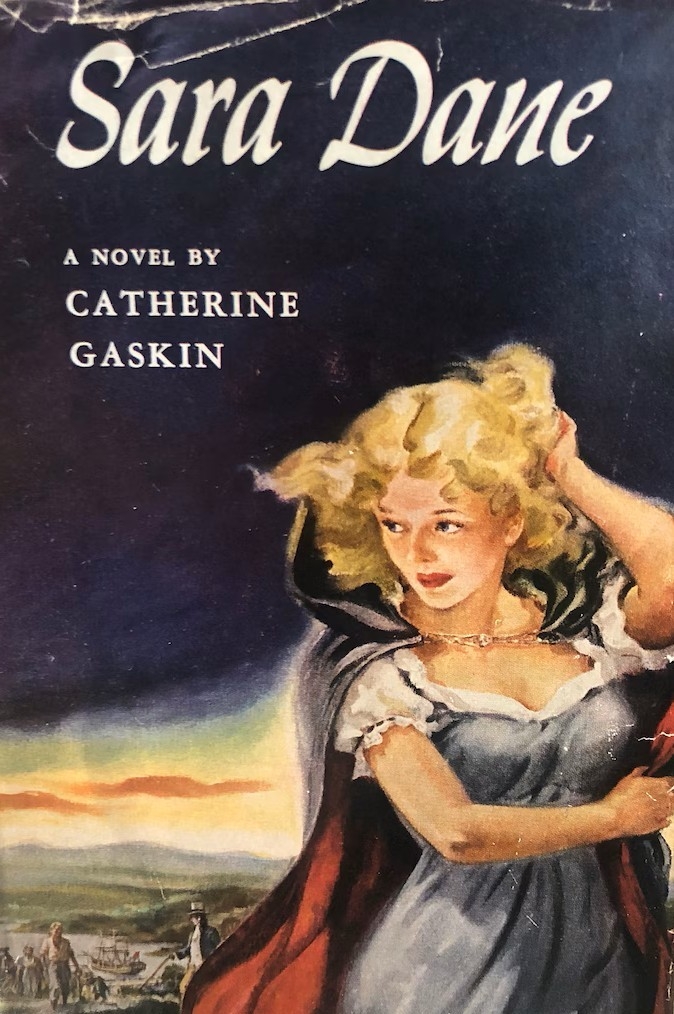
It was based on a 1955 novel by Irish-Australian author Catherine Gaskin, not hugely well remembered but a big deal in her day. Born in 1929, Gaskin wrote her first novel (This Other Eden) when just fifteen; it was published when she was seventeen and sold well enough to enable her to turn professional.
Her most famous novel was probably Sara Dane, her sixth, which Gaskin wrote when she was 24. It told the story of the eponymous character, a poor but beautiful governess who is transported to the colony of New South Wales in the late 18th century for a crime that she didn’t commit. Sara has four men chasing after her – aristocrat Peter, Irish rebel Jeremy, Frenchman Louis and Scottish sailor Andrew. She endures convict rebellion, famine, flood and the death of loved ones, and makes lots of money. The character was based on convict Mary Reiby, whose life inspired various dramatisations including the musical Pardon Miss Westcott.
Sara Dane was described as an Australian Gone with the Wind and that wasn’t inaccurate – both were historical romances about a woman struggling against the odds during an interesting period in history, having various men fight over her and surviving action sequences. Sara Dane sold over two million copies and was adapted for radio.
There was, not surprisingly, film interest in the book almost immediately. In the 1940s, Sara would have been perfect for say Lana Turner (who once made a New Zealand-set version of this type of story, Green Dolphin Street) or Phyllis Calvert/Margaret Lockwood. By the late 1950s, films of this genre – female-focused, based on best-selling novels – were less popular, but there was still a market for them if well cast (eg Giant, Raintree County, The Inn of the Sixth Happiness) and if the filmmakers remembered to keep the focus on the female lead rather than the male lead (the mistake of movies such as Ice Palace and the 1961 Cimarron).
Film rights for Sara Dane were snapped up by Romanian-British producer Marcel Hellman who made movies for his company Excelsior and released them through Associated British, often with imported American stars eg Happy Go Lovely, Duel in the Jungle, Let’s Be Happy. Associated was one of the biggest companies in Britain, although it was a little on the stingy side; like most British film studios of the 1950s, its bread and butter was in war movies (The Dambusters, Ice Cold in Alex) and comedies, but it did make some popular female-skewed movies such as No Time for Tears, Yield to the Night and Now and Forever.
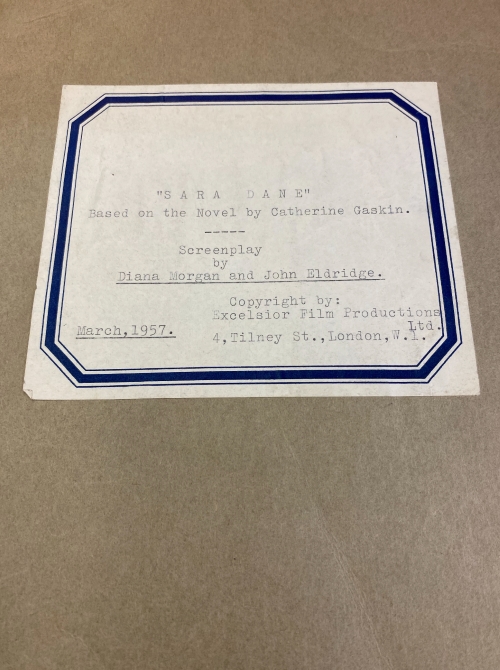 Sara Dane was never made but we managed to secure a copy of a script based on the book at the Bill Douglas Museum, at the University of Exeter. The script was dated March 1957 and credited to Diana Morgan and John Eldridge – we’re not sure if it was written in collaboration or one of them rewrote the other. Morgan was a leading writer of her day, responsible for many revues in collaboration with her husband Robert MacDermott; she also wrote plays, novels and screenplays for film and television, and had a stint in Hollywood. Eldridge was a director and writer with a background in documentaries (including one about Australia called Three Dawns to Sydney which may have helped him get the Sara Dane gig).
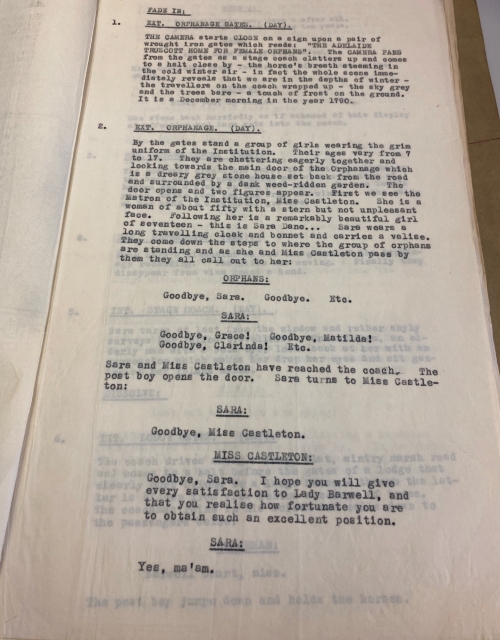
The Morgan-Eldridge script is first-rate melodrama, full of action and intrigue. It cuts the key character of Louis which was a good change as there’s plenty going on with just three leading men – Andrew, Jeremy, Richard – and Sara. The script is a little flabby – it clocks in at 189 pages – but it is easy to see where it could be trimmed. There are several scenes involving water which would have been expensive to film but these could have been amended to be made more budget-friendly while still hitting the necessary story beats. The most crucial thing is the core of the story works. Sara is an immensely likeable heroine, giving birth, fighting off men, being widowed, turning into a tycoon; the three leading males are all different (stiff but decent Andrew, dashing Jeremy who pines for Sara, dastardly Richard); there is a genuine epic sweep, plus cameos from real figures like William Bligh and Joseph Foveaux. Aboriginal people are pretty much entirely ignored, as per the genre conventions of the time, but the script does touch on the Irish political question (Jeremy is Irish).
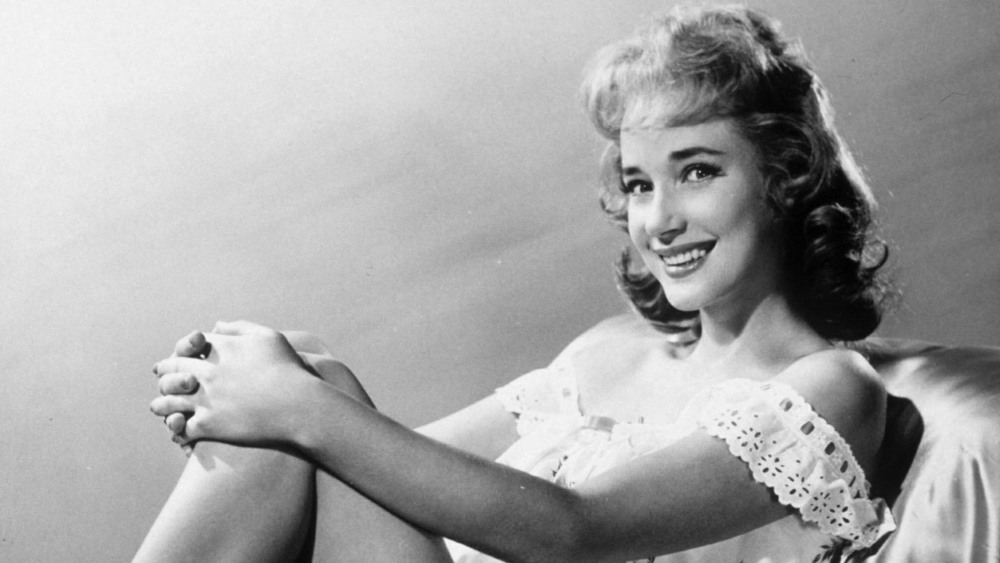
 In October 1957, it was announced that the film of Sara Dane would be made starring Sylvia Syms, who had just made No Time for Tears for Associated and would go on to make Ice Cold in Alex and Woman in a Dressing Gown for that studio. We’re not sure who was down to co-star and/or direct. Associated had some fantastic directors at the time like Michael Anderson and J. Lee Thompson, as well as journeymen.
We’re not sure how far plans progressed to make the movie after the script was done but Associated was likely turned off filming in Australia after the failure of The Siege of Fort Pinchgut, which was shot in Sydney (made by Ealing and released through Associated British). Also, the fact that the movie would have been expensive, with its period setting, floods and what-not – and while Sylvia Syms was clearly an exciting new name, she wasn’t Elizabeth Taylor.
The movie could have gotten made with sufficiently big male star(s) to play the love interest(s) and it’s not hard to picture several that would have been perfect (Richard Todd, Peter Finch, John Mills, Tony Quayle, Michael Craig, Alan White, Richard Harris) – however, it’s also not too tricky to see male movie stars being too egotistical to appear in a film named after a female.
Hellman appears to have hung on to the rights until around 1977 – we assume that he tried to get the movie made with stars other than Sylvia Syms but for whatever reason (most likely a combination of cost and his own lack of hits at the end of his career), it never happened. He probably needed one of the few names that could have triggered finance – Elizabeth Taylor, say, or Deborah Kerr, Jean Simmons. You know who would’ve been perfect? Diana Dors, who was in several great movies for Associated – a bigger draw than Syms, though not at the top rank. But any decent female star could have played it regardless of nationality – it’s a wonderful part.
The novel of Sara Dane kept selling – 7,000 copies in Australia each year – and in the late 1970s, film rights were obtained by the South Australian Film Corporation, which, under Jock Blair, was on a “making mini-series based on classic novels” binge. One of these was an 8-hour version of Sara Dane, made for $1.5 million with Juliet Jordan in the title role from a script by Alan Seymour. This was popular and was repeated the following year. (The SAFC also made mini-series out of the novels Robbery Under Arms and Under Capricorn.)
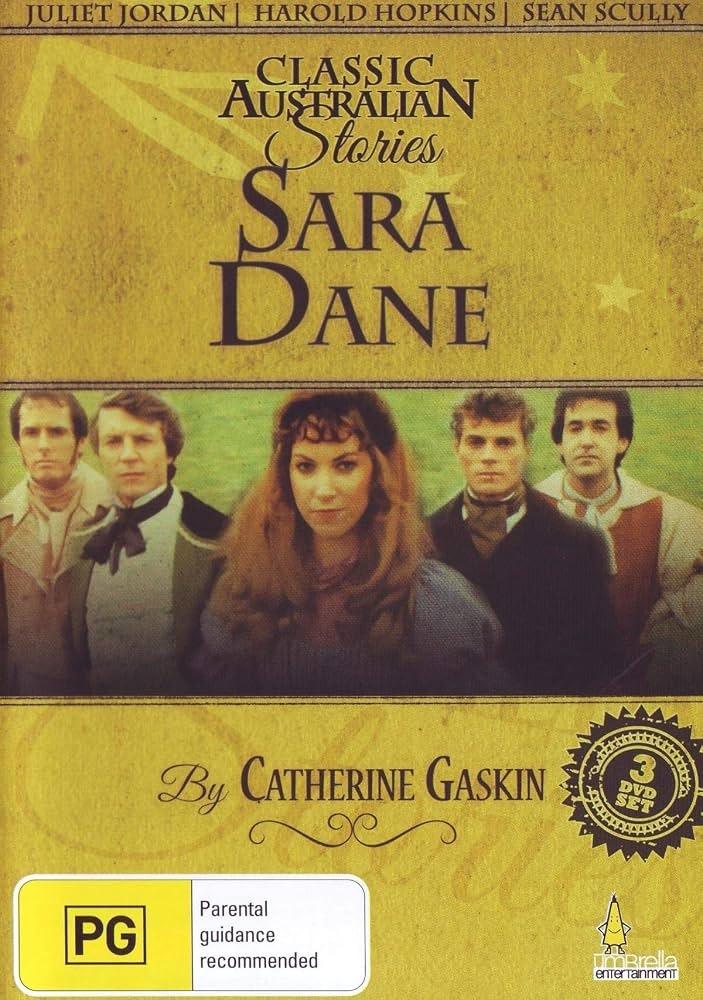
As of writing, the mini-series of Sara Dane is, remarkably, the only Gaskin novel ever filmed in Australia – although her book The File on Devlin was shot for US TV in 1969 and several of her works were adapted for radio. She had a long happy marriage and career, and died in 2009. Of all the unmade Australian films of the late 1950s, Sara Dane was the most frustrating because it could have been great. However, at least it got a chance to be seen.
The author would like to thank the staff at the Bill Douglas Cinema Museum, University of Exeter. Unless otherwise specified, all opinions are those of the author.
