

by Stephen Vagg
Stephen Vagg’s series on dodgy film versions of potentially great Aussie stories takes aim at 1959’s Summer of the Seventeenth Doll.
Ray Lawler’s death last year drew attention once more to the remarkable contribution made to Australian theatre by his play The Summer of the Seventeenth Doll. It wasn’t the first Australian stage play, or even the first successful one, here or overseas – but it still deserves its fame because of its unicorn status: an unrepentantly local work, by and about Australians, set in Australia that was an immediate popular success throughout Australia and in England.
To appreciate why that achievement was so remarkable, it has to be understood that in the 1950s, Australian playwrights were generally loathed, routinely and passionately dismissed by commercial management, professional critics and other cultural gatekeepers (audiences didn’t get much of a chance to decide outside of amateur theatres). There was a truly endless parade of people here telling Australians how second rate they were, and how better things were in Europe.
The blockbuster success of The Doll with the public made these gatekeepers shut up for at least two seconds, enabling a bunch of other Australian plays to sneak through the system and receive professional productions: works like The Shifting Heart, The One Day of the Year, Lola Montez, The Bastard Country, Life of the Party, The Multi Coloured Umbrella, The Slaughter of St Teresa’s Day. Eventually, the forces of anti-Australian writing rebounded and tried their best to crush Australian playwriting in the 1960s (not because they were prejudiced, oh of course not, it was just “concerns for quality, anything else would be patronising, and by the way, here’s a production of Salad Days for you to watch instead, hilarious”) and almost succeeded until subsidies and quotas ensured at least an industry would survive in some form.
Anyway, The Doll came to notice via winning a competition held by the Playwrights Advisory Board. It was produced at the Union Theatre in Melbourne, and picked up for a professional production by the Elizabethan Theatre Trust, who toured it around the country and made a pile from enthusiastic audiences. The play was presented in the West End by Laurence Olivier, where it repeated its critical and commercial success. (A synopsis of it is here.) The film rights were sold to Hecht Hill Lancaster (HHL), the production company formed by Burt Lancaster and his agent Harold Hecht, and later joined by executive James Hill. For a time there, HHL had an incredible run, mixing commercial vehicles like The Flame and the Arrow with more arty stuff like Marty that hit the zeitgeist. It was probably the classiest Hollywood based production company at the time.
The Doll offered a great part for Lancaster: the cane cutter Roo who, with his mate Barney, holidays every year in the city, FIFO-style (for five months!); Roo has a situationship with barmaid Olive, but their seventeenth summer together turns out to be different. The role of Olive was to be played by Rita Hayworth, wife of James Hill, who’d just teamed with Lancaster in HHL’s Separate Tables.

HHL announced their film of The Doll would be part of a 12-picture slate to be released through United Artists; other movies included Take a Giant Step, The Devil’s Disciple, The Unforgiven, The Rabbit Trap and Cry Tough. The original director was Carol Reed, with James Cagney floated as a possible Barney; the script was by John Dighton, best known for Ealing comedies, who was also working on Devil’s Disciple for HHL.
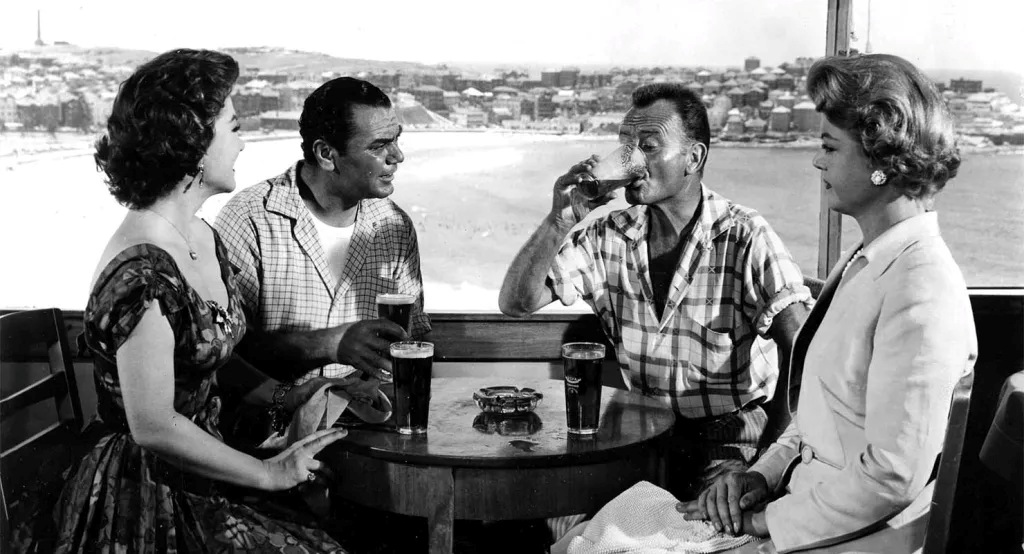
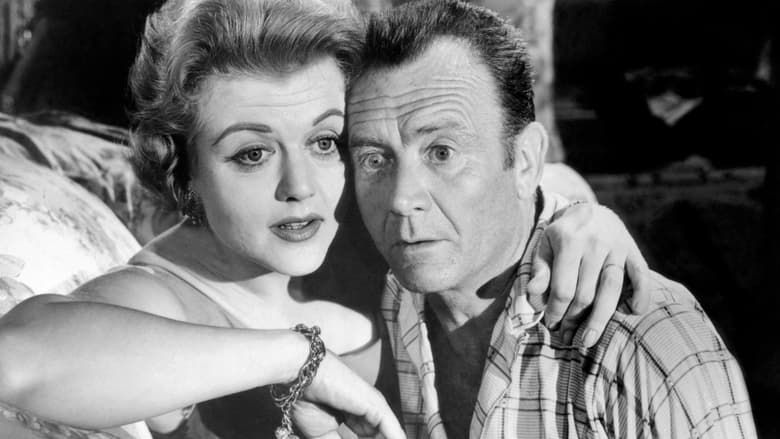
The Doll then premiered on Broadway in January 1958, with the same cast as the West End production, but only ran for 29 performances. Everyone had a theory as to why, most prominent being that no one understood the accents. Lancaster and Hayworth both pulled out of the film; the budget was slashed, which meant it would be shot in black and white with no cane cutting scenes shot in Queensland (as had been originally announced), and led to the departure of Reed. Lancaster was replaced by Ernest Borgnine (who’d won an Oscar in HHL’s Marty), Hayward’s role was taken by Anne Baxter, and the director became Leslie Norman, a British filmmaker who’d just made The Shiralee in Australia. The role of Barney was taken by John Mills, who’d come on board when Lancaster was attached (no idea how serious the idea of Cagney’s casting was – it sounds a little pie in the sky, but you never know). The second female lead went to Angela Lansbury (as Pearl, who considers a relationship with Barney), while several key supports were played by Aussies – Vincent Ball (as Dowd, the young cane cutter), Janette Craig (as Bubba, a neighbour to Olive who hooks up with Dowd), and Ethel Gabriel (as Emma, Olive’s mother).
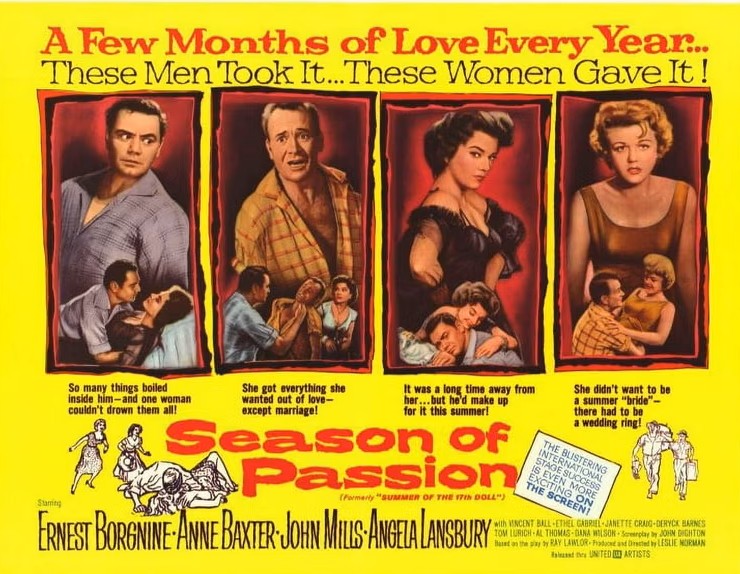
So, it wasn’t quite the “A” list, but it wasn’t a bad cast and director, at least on paper: the Ozmovies website called it “the second eleven”, but it wasn’t the “B” list either and the unit did travel to Australia. The film commenced shooting in Sydney in late 1958 and finished in February 1959. It was released in Australia later that year, but not in the UK until March 1960, and not in the US until October 1961 (under the title Season of Passion). This was a considerable delay, indicating UA had issues with the final movie. These turned out to be well founded as the film flopped pretty much everywhere. (Indeed, the commercial failure of The Doll and a string of HHL films resulted in the end of that company.)
Reviews for The Doll were generally better overseas than they were in Australia, although the negative overseas reviews were the ones eagerly reported by Australian press. Leslie Norman responded to the film’s failure in later years via the time-honoured method of blaming the studio; in his case, he said that they made him “cut out all the Australian-isms” and “giving it a more upbeat ending”.
We would argue that the movie’s failure had nothing to do with Australian-isms but rather lay in three main areas:
a) unsexy male stars
b) weird combination of accents, and
c) script.

Let’s look at (a). Part of the reason The Doll did well on stage was its frank sexual content. Various unsexy actors have played Roo onstage (eg Kenneth Warren, Lloyd Berrell) but film is a different medium and, apologies to Ernest Borgnine groupies out there, casting him in the lead put the movie behind the eight ball from the beginning. The core of The Doll is the fact that Roo and Olive have sex so hot that for five months of the year that they can’t stop thinking about it for the other seven months – and, sorry, we don’t get that from Ernest Borgnine and Anne Baxter. John Mills doesn’t help things either – he was a perfectly pleasant looking man, but he wasn’t captain sexy, and we point to the rest of his filmography as proof, as we do with Borgnine. Anne Baxter and Angela Lansbury could generate on-screen heat with the right partners, but they don’t have them in the film of Summer of the Seventeenth Doll and that hurt it at the box office. And if you say that we’re shallow for writing that, maybe you’re correct, but it doesn’t mean we are wrong. Perhaps the filmmakers sensed this, which is why more screen time was given to Dowd and Bubba than in the play – but that doesn’t fix the problem, it just creates another problem (adjusting emphasis).
It’s not as though there weren’t other possible options who could’ve played Roo at the time and satisfied Hollywood financiers – names like Robert Mitchum (who soon after went to Australia to make The Sundowners), or Kirk Douglas (who was making Devil’s Disciple for HHL), or if you wanted to go cheaper, Victor Mature (don’t laugh, he could’ve pulled it off), Jeff Chandler (ditto), or even Aldo Ray (who did come out to Australia to make The Siege of Pinchgut), or if you wanted to go British, maybe Stanley Baker or Jack Hawkins. Roo doesn’t have to be pretty, but he has to be sexy.
Of course, the most perfect replacement for Lancaster would’ve been Peter Finch, who was the right age, an Aussie, and had just made The Shiralee for Leslie Norman – we don’t know if he was ever considered. Ron Randell was also the right age, though probably not considered a big enough name. Rod Taylor had just made Separate Tables for HHL; he would’ve been too young for Barney or Roo but perfect for Dowd – we don’t know if he was in the running.
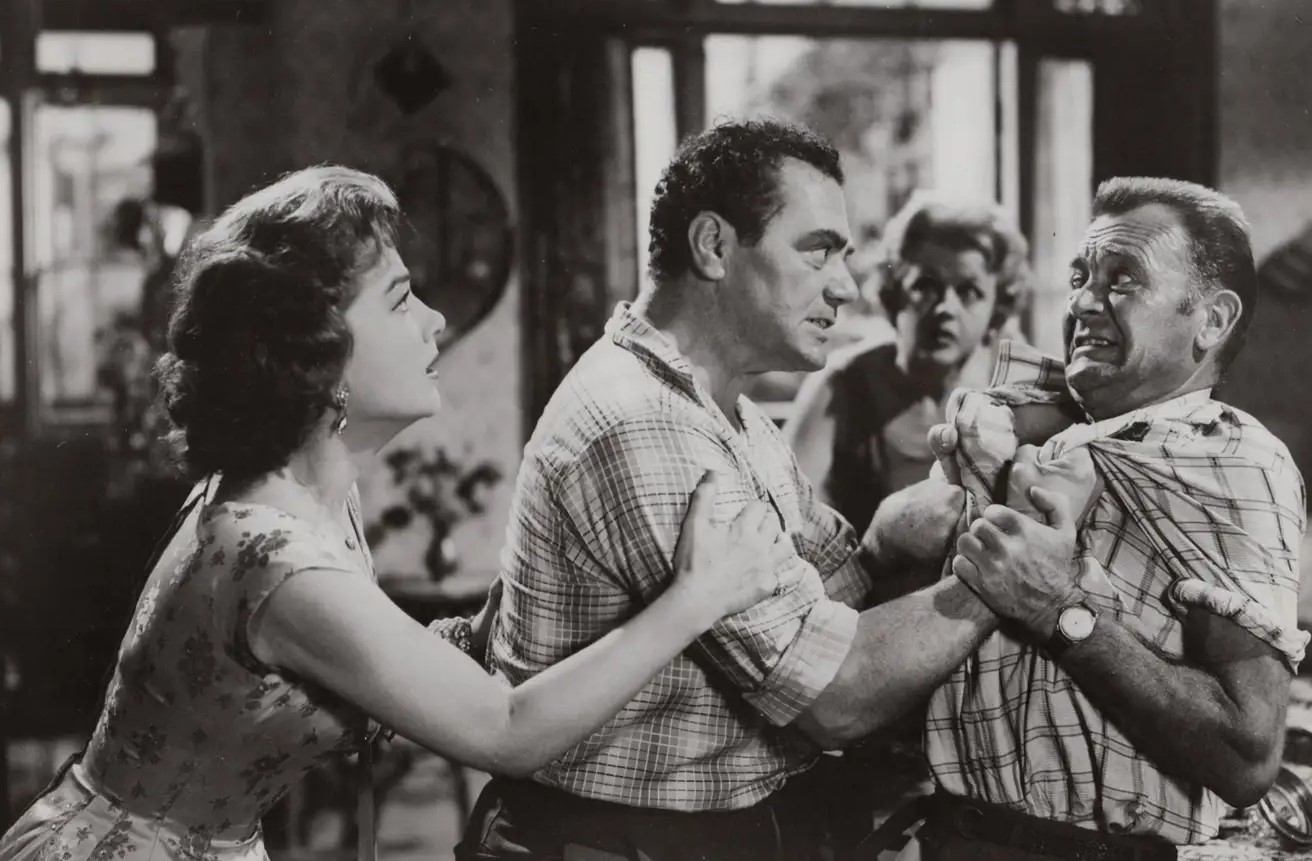
As for Part (b). The Australian accent is one of the hardest to do for foreign actors. We have grown up watching scores of weird and wonderful versions of it. Among the most wonderful include Kaitlyn Dever’s astonishingly superb work in Apple Cider Vinegar. The weirdest would be 1959 Summer of the Seventeen Doll’s collection of accents – specifically those from Baxter, Borgnine and Mills.
Look, we are as patriotic as the next Aussie, and The Doll is an iconic piece of Australian literature, but sorry, the accents of that trio are so distracting that it damages the film. Faced with all those weird noises, which sounded like cats being strangled, Norman should have thanked the actors for their hard work, and either (a) just had them perform in their natural accents, putting in a line about Roo and Olive being Americans who stayed after the war or (b) had them do British-Irish accents which are easier (eg The Sundowners). Yes, it would’ve been a shame to have foreign characters in The Doll but then at least we might’ve been able to focus on the dilemmas of those characters rather than their accents.
(Sidenote: we would buy the characters in The Doll as Italians, which cracks open casting possibilities – imagine Vittorio Gassman, Anna Magnani, or Sophia Loren, all making Hollywood movies at the time. Even for The Doll, acting and authenticity is more important than accents.)
Leslie Norman made a bunch of films in Australia as producer and/or director that, if flawed, were at least all tonally consistent: The Shiralee, Bitter Springs, Eureka Stockade. The Doll is all over the place in terms of tone. Norman was an effective director under the protective shield of Ealing Studios, but was out of his element tackling Hollywood studios. Richard Todd, who worked with Norman on The Long and Short and the Tall, called him “a nice man but indecisive” and The Doll feels like it was made by a nice, indecisive person.
Finally, there is (c). Ah, the script. In John Dighton’s defence, he did warn everyone well before filming he was going to damage it when in April 1958 he declared:
“The two barmaids and the old woman are good characters, but a little more colour is needed in the development of the relationship between the two cane-cutters. In its construction, Lawler’s play runs downhill all the way. This, I feel, was a weakness. I intend to give the film version what I regard as a necessary build-up to a dramatic peak in the middle.”
Dighton made good on his threat: the final film adds this weird, pointless middle section where everyone goes to Luna Park on New Year’s Eve, and has a fine old time – Dowd canoodles with Bubba, Dowd gives Roo his job back, Roo takes part in a boxing match, there’s cuteness with Roo and the kid from The Shiralee, Roo and Olive are happy, and it’s high fives and smiles all around. That’s not a dramatic peak! That’s a twelve-minute sequence of people being happy that has nothing to do with the play. There’s nothing wrong with getting out of the house and opening up the action, but it’s got to have a point.
To make time for all the aforementioned codswallop, Dighton takes garden shears to other, far more vital scenes. For instance, in the stage play, the relationship between Barney and Pearl is full of nuance and complexity, and Pearl is a fascinating character who is a crucial counter point to Olive, but that’s all truncated to a dumb comic subplot where Barney proposes to Pearl and regrets it. The Bubba-Dowd quasi-romance is shorn of all its interesting parallels between Olive and Roo (particularly how Bubba views male-female romantic relationships) and instead, given the stock juvenile romance treatment. Scenes that would flesh out the character of Roo involving Bubba and Emma are removed. The part of Emma, a valuable contributor to the play, is completely gutted in the film.
We get that you can’t include everything from Lawler’s work, but Dighton could have included a lot more than he does here. He also shifts the scene of Roo smashing the Doll – one of the great moments in Australian theatre – right up to the end, meaning that there’s barely any time to play out the consequences.
We have a theory – this is a guess but an educated one: in their heart of hearts, Dighton and Norman were uneasy adapting such an open, emotional work as Summer of the Seventeenth Doll and tended to veer away from that emotion. There are admittedly some big meaty scenes in the final film (they’re the best thing about it), but not as many as the stage play. We wonder if Dighton especially, whose background was mostly in comedy (The Happiest Days of Our Lives, Kind Hearts and Coronets), couldn’t resist putting in some laughs and happiness, and Leslie Norman went along with it because the scenes had some bright colour and movement.
The other big change made by the film from the play was the upbeat ending. Now, in his defence, Norman says the studios forced him to do this and that’s the sort of thing one can easily imagine bad executives asking for: “Give it a happy ending. The play would’ve worked on Broadway with a happy ending.” But the ending of The Doll movie, routinely described by critics as “happy”, actually isn’t that happy: Roo and Barney split up, Roo goes to see Olive at the pub, she tells him to go away and he doesn’t, she gives him a beer, he toasts her and smiles, she smiles a little but through tears. Sorry, everyone, that’s not that happy or even upbeat. Maybe you could argue it’s optimistic, but we find it depressing.
It also isn’t powerful. The stage play has a devastating ending: Roo proposes, Olive gives out a primal scream and tells him to get stuffed, Roo is shocked, and Barney leads his mate away in a daze. It’s amazingly effective and could have worked a treat on film. What’s in the film isn’t amazing, or effective, or happy. It’s just wet. Basically, an incredibly powerful, albeit depressing, ending that is true to the characters has been replaced by an ending that is depressing but has no power and is not true to the characters. Norman and Dighton should have fought harder to keep the play’s ending (they could have shorn off the last couple of minutes) or come up with an upbeat ending that was actually upbeat.
 As a side note, some critics have argued another key flaw of the film was changing the location from Carlton to Sydney. We recognise how that might have upset Melbourne critics who dominate cinema studies in Australia, but can’t see how that adjustment really matters. If the filmmakers went all that way to Australia to make the movie, you can’t be surprised that they wanted to shoot a few scenes on Sydney harbour, and at the beach.
The 1959 film version of Summer of the Seventeenth Doll is one of the most frustrating movies ever made in Australia. It had terrific source material, the backing of a Hollywood studio, a decent group of filmmakers. If only it had used a more appropriate male star like Lancaster or Finch, if only they’d come up with a decent policy on accents, and most of all, if only they’d used a proper script.
There was a 1964 British television version which is frustratingly hard to see, but the cast sounds perfect (Grant Taylor as Roo). A stage version was filmed for Australian TV in 1978.
But a proper film version has yet to be done.
Come on, Rusty. It’s not too late.
