



by Stephen Vagg
Colin Petersen passed away last week with most obituaries focusing on the fact he was the original drummer with the Bee Gees. That was actually Act Two of Petersen’s showbiz career – Act One being his stint as a child star, starting with the 1956 movie Smiley, which established him as a genuine box office draw and led to starring roles in two more films, one of which was essentially devised as a vehicle for him.
Stephen Vagg looks back on the short, yet spectacular movie star career of Colin Petersen.
Petersen was born in 1946 at Kingaroy in Queensland. His family moved to Margate, near Redcliffe, where Colin attended Humpybong State School, and played drums in various bands (once even meeting a touring Gene Kupra). In 1955, Petersen’s mum read an article about a film company looking for kid actors to appear in a movie being filmed in Australia. This article would change Petersen’s life.
Smiley was based on the 1945 novel of the same name by Moore Raymond, an Australian-born Britain-based journalist and film critic. The novel concerned the adventures of a rascally-but-basically-good little boy, Smiley, and his best mate Joey, in the fictional outback town of Murrumbilla; this town was based on Augathella in Queensland, where Raymond had grown up, with Joey and Smiley inspired by the real-life adventures of Raymond and his mate Didie Creevey. The novel was commonly described, not inaccurately, as an Australian Tom Sawyer/Huckleberry Finn and was very popular in Australia and Britain – it was serialised here.
Film rights were snapped up by British producer Alexander Korda, who had a keen eye for a literary property, and a strong track record in making films featuring child protagonists in colourful locations: for instance, he had turned Sabu into a star with Elephant Boy (1937), The Drum (1938) and Thief of Bagdad (1940), and would subsequently make movies like The Fallen Idol (1948), The Winslow Boy (1948), The Wonder Kid (1952), The Belles of St Trinian’s (1954) and A Kid for Two Farthings (1955).
In June 1946, Korda announced he would make Smiley in Australia, presumably emboldened by the (temporary as it turned out) revival of Australia as a movie production centre towards the end of World War Two, resulting in pictures such as Smithy and The Overlanders. Moore Raymond arrived in Australia in November to find possible child actors and locations. Raymond returned to Britain in April 1947, by which time the project was postponed, reportedly because of difficulty finding a suitable director, but more likely due to financial issues – these often plagued Korda, and by then the British film industry was also mired in a volatile trade war with Hollywood.
However, Korda did not give up on Smiley, no doubt encouraged by the success of another Australian-shot children’s film, Bush Christmas (1947). He assigned the project to Anthony Kimmins, a writer-director not very well remembered now, but who had a decent reputation at the time, chiefly due to a string of successful George Formby comedies. Kimmins had gone to work for Korda after the war, making such films as the acclaimed drama Mine Own Executioner (1947) and the disastrous epic Bonnie Prince Charlie (1948). Kimmins was English, but had spent 14 months in Australia during the war working for the British navy, and developed genuine affection for the country and its inhabitants. He arrived in Australia in March 1950 to scout locations and look for actors for Smiley, aiming to film it later that year. This visit coincided with another (temporary as it turned out) revival of Australia as a film production centre, which would include Bitter Springs, The Kangaroo Kid and Kangaroo. However, financial problems once again emerged, and Smiley was postponed a second time.
To give him his due, Korda did not give up on the project, undoubtedly aware of the continued popularity of child-driven films at the British box office (Mandy, Hunted, The Kidnappers, The Yellow Balloon, A Kid for Two Farthings). Kimmins’ stocks rose, too, when he enjoyed a hit with The Captain’s Paradise (1953), a rare British comedy to make decent money in the US (the story was by an Australian, Alec Coppel).
Korda eventually raised the budget for Smiley in collaboration with the American studio, 20th Century Fox. Fox had put money into Kangaroo (1952) and was willing to invest in Smiley, using funds that had been “frozen” in Australia due to currency restrictions. Fox was likely attracted by the opportunity to show off its widescreen process, CinemaScope – at the time, the studio was filming a rash of projects in exotic locations (Love is a Many Splendored Thing, Untamed, Boy on a Dolphin, Heaven Knows Mr Allison, Island in the Sun), and Smiley fitted in with this. Not that the final journey to production was easy – after all, Smiley was not some sexy epic with juicy star roles but a kids’ film, which then tended to have a limited “earnings ceiling”. According to Alex Korda’s nephew, Michael, the producer “took extraordinary steps to finance” Smiley “perhaps because he was impatient to get the production underway. He suspected that it was to be his last film, and he was not about to have it delayed.” Korda’s biographer, Paul Tabori, says Smiley had a budget shortfall of 8000 pounds but Korda got around this by going into production without a completion guarantee: a risky manoeuvre for a film shot on location on the other side of the world.
Kimmins returned to Australia in 1955 to commence pre-production on Smiley. The unit was based at Pagewood Studios in Sydney, with the township of Murrumbilla built at Camden, just outside of Sydney. This would turn out to be an inspired decision as it meant filming conditions were contained, and the cast and crew did not have to travel too far from Sydney.
Kimmins auditioned over 2,000 boys throughout Australia to play the title role, which led to him meeting Colin Petersen. The young boy attended a casting call held at a cinema in Brisbane; he turned up in his best clothes carrying a scrap book of photos featuring articles about himself, but this did not impress the director. Petersen went back to his grandmother’s house, got changed, and played marbles with a friend, getting dirty in the process. He decided to return to the cinema to have a sticky beak and stumbled upon Kimmins having a smoke in the outside laneway. The director didn’t recognise Petersen from earlier and gave the boy an impromptu audition, which ultimately led to him being cast as Smiley.
Melbournian Bruce Archer was cast as Smiley’s best friend Joey. Incidentally, Kimmins’ eye was dead on – both would be perfect for their roles: natural, lively and unaffected. (Looking back, the track record of the British film industry of the 1940s and 1950s in casting child actors was spot-on. All the kid performers in British-financed films shot in Australia around this time – The Overlanders, Bush Christmas, Smiley, The Shiralee – were splendid. Ditto child actors in British films eg. Oliver Twist, Great Expectations)
Smiley featured three above-the-title adult film stars, none really “big box office”, but all distinguished names. Ralph Richardson, a highly experienced British stage and screen actor who was touring Australia in a play at the time, was cast as a friendly local pastor (Smiley put great emphasis on the importance of religion to country town life). John McCallum, a dashing Australian leading man who had emigrated to England and enjoyed success in films, was also touring Australia in a play (alongside his British wife, Googie Withers); he was cast as the film’s villain, a drug-dealing publican who gets Smiley to act as his courier. Chips Rafferty, the iconic Aussie star of local films, played the town copper, who is both exasperated by and supportive of Smiley, and is not very good at solving crimes (he’s also involved in a love triangle with John McCallum and Jocelyn Hernfield, who plays the local schoolteacher).
Filming began in October 1955 and took 41 days, finishing on time and under budget: Kimmins knew his business (the fact that he’d been working on the project for at least five years helped clarify exactly what the director wanted). The footage was sent back to England for editing; Alex Korda was about to start watching rushes in London when he died of a heart attack in January 1956. Smiley was thus the last movie made under the supervision of the legendary producer, who had done so much to establish a world class film industry in Britain. (Although Korda’s career was littered with spectacular successes and high-profile flops, he ended it on an atypical streak of medium budgeted, profitable releases: The Belles of St Trinian’s, Raising a Riot, The Constant Husband, Summertime, Storm Over the Nile, Richard III and Smiley.)
Smiley was released in London in June 1956 to positive reviews, including raves for Petersen’s performance. Despite the presence of Richardson, McCallum and Rafferty, it was Petersen’s image that was used to promote the film – a picture of the little actor grinning from under his hat was plastered everywhere. The movie was financially successful – although oddly it wasn’t included in Kinematograph Weekly’s list of the biggest films of 1956 (which included British movies like Reach for the Sky, Private’s Progress, The Baby and the Battleship, Cockleshell Heroes, It’s Great to Be Young, The Ladykillers, Man Who Never, Sailor Beware! and A Town Like Alice). However, there was a sequel, so it obviously made money, and it was still playing in cinemas in the 1960s.
Smiley is a delightful film. The ten year delay in reaching the screen turned out to be a good thing because this enabled the movie to be shot in colour and CinemaScope, and Ted Scaife’s photography captures the beauty of the Australian bush. Country life is depicted with charm and affection, although its less appealing aspects are not shied away from. These include an astute dramatisation of small town class divisions (reverends and school principals at the top, poor white families down towards the bottom, Chinese beneath them, Aboriginal people at the very bottom). The depiction of the Aboriginal camp on the outskirts of town was the first (we believe) in world cinema. There is a crime subplot with McCallum dealing “opium” in the area and enlisting Smiley to unknowingly deliver drugs to the Aboriginal township; some critics thought this plot was a little “Hollywood”, but the logistics of the business (supply lines from the city, the use of commercial travellers as couriers, etc) is believably conveyed. The characterisation of Smiley’s dad (played by Reg Lye) is startlingly bleak: he’s an alcoholic, untrustworthy, neglectful gambling addict, who is barely home, who steals money off his own son to play two-up, leading to Smiley attacking him.
All this darkness gave the film a sense of verisimilitude and honesty, that made the heartwarming moments (such as the townsfolk all looking for Smiley at the end) even more effective.
Some aspects of Smiley have not aged entirely well: Smiley chatting about different ways he’d commit suicide; the casual use of racist language (however accurate for the time); the depiction of the only two significant characters of colour, a Chinese shop owner and the Aboriginal King Billy, as drug dealers. In the Aboriginal camp, Smiley briefly says hello to a friend, Jacky, in passing, but that’s all the time we spend with that character; it’s a shame that Kimmins didn’t do more with Jacky – it would have fleshed out the world of the township even more, and given the Aboriginal characters far more dimension. Incidentally, the role of King Billy is played by Bob Simms, a boomerang manufacturer based at La Perouse (most of the Aboriginal extras came from that suburb and the Simms’ family were quite famous).
Smiley’s release in America was delayed when the film was refused a seal of approval by the Motion Picture Production Code because of the scene where Smiley unknowingly delivers opium. This absurd decision was much mocked at the time, though overshadowed by fights that the Code was having on The Man with the Golden Arm and Bigger Than Life. The issue was resolved, and the film was released in the US in March 1957.
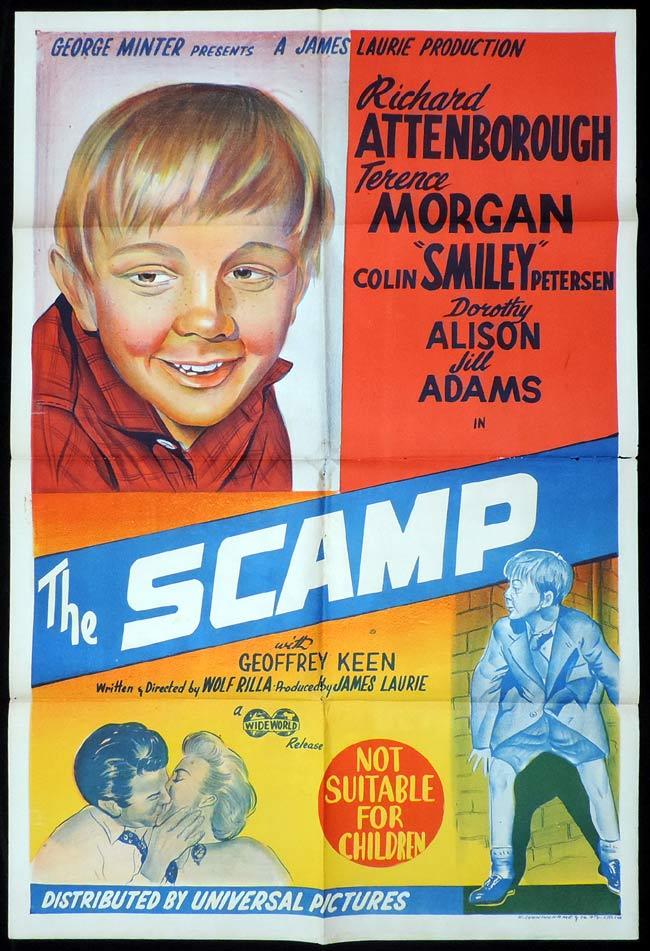 Colin Petersen kept the momentum going on his acting career: he appeared in a pantomime, as well as a radio show, Christmas Fanfare (1956). He received an offer to go to England to star in a film called The Scamp (1957). This little-remembered effort from director Wolf Rilla was based on a stage play, Uncertain Joy by Charlotte Hastings, about a married couple who take in a troubled boy. Although the film featured well-known actors such as Richard Attenborough and Terence Morgan, the material was reworked to become a vehicle for Petersen; in just his second movie, Colin Petersen was appearing in starring vehicles.
The Scamp was shot very much under the radar, for an odd reason: according to British Home Office rules at the time, no child under 13 was allowed to appear in a film. This rule was routinely ignored by studios, and the Home Office didn’t kick up a stink about it, as long as no publicity was given to the actor during filming and all adequate safeguards were taken. This may explain why Petersen is billed in The Scamp as “Colin (Smiley) Petersen” – the producers presumably wanted to make sure everyone knew who he was, in the absence of any publicity during the actual shoot.
The Scamp shares a lot of similarities with Smiley: Petersen plays a working class rapscallion who gets into trouble and fist fights but is basically good; he has a nice schoolteacher (Attenborough) and dead-beat drunken dad (Morgan), who Smiley knocks out and thinks that he’s killed, causing him to run away (in The Scamp the dad actually dies, which is pretty full on). The Scamp isn’t as good as Smiley – it’s not as fun, and Attenborough’s character has this weird vibe that isn’t really explored – but there are good moments and Petersen is marvellous once again: energetic, cheeky, natural. Director Wolf Rilla was smart enough to let the actor use his Australian accent and he devised several scenes where Petersen shows off his real-life drumming skills.
Kinematograph Weekly listed The Scamp as being “in the money” at the British box office for 1957 and included Petersen on its list of the most popular stars at the British box office that year. For the record, this list comprised of Kenneth More, Dirk Bogarde, Richard Todd, Frank Sinatra, Norman Wisdom, Ian Carmichael, Tommy Steele, Frankie Vaughan, Marlon Brando, Yul Brynner, Colin (‘Smiley’) Petersen, Deborah Kerr, Ingrid Bergman, Brigitte Bardot and Sophia Loren. So, after only two movies, Petersen was considered a genuine box office star.
Plans were made for a Smiley sequel, based on Raymond’s 1947 book, Smiley Gets a Gun. It was expected that Petersen would reprise his titular role, but in August 1957 Kimmins reported that the film would be without Petersen as “we haven’t been able to come to terms with his father.”
Kimmins launched another talent quest in Australia to find a new Smiley – he wound up with Keith Calvert for Smiley Gets a Gun (1958), which otherwise features many of the same cast as the original (Bruce Archer, Chips Rafferty, Reg Lye). Keith Calvert is, like the movie itself, absolutely fine, just not as good as the original. The edges are softened for the sequel (for instance Smiley’s dad isn’t as loathsome), but there are plenty of things to enjoy, particularly the local colour and the acting.
In May 1958, Kimmins reported that he was working on a third Smiley film, this one set against the background of the Australia-England cricket series (Kimmins’ son Scott played first class cricket for Kent). A third Smiley book was published in 1959, Smiley Roams the Road. However, Smiley Gets a Gun did not do well at the box office and there were no further Smiley films.
Would Petersen’s presence in Smiley Gets a Gun have made the difference? We think so. They should’ve just paid Petersen’s dad the extra money (or signed Petersen to a stronger contract for the first movie, obliging him to make a sequel).
Sidebar: In March 1957, Kimmins announced that he would make a half-hour TV series in Australia about a family of detectives, the O’Briens. It never came to fruition. However, Kimmins did write a novel set in Australia, Lugs O’Leary which was published in 1960. The writer-director died in 1964.
Petersen stayed in England and went into a third film, Cry from the Streets (1958), a drama from director Lewis Gilbert that launched singer Max Bygraves as a movie actor. The story has Bygraves playing an electrician who gets involved with a social worker (Barbara Murray) dealing with troubled foster kids; the actors who play these include Petersen and another Australian child star, Dana Wilson, who had just leapt to fame as Peter Finch’s daughter in The Shiralee (1957). Cry from the Streets isn’t very well remembered, but it’s skilfully made by Gilbert, Bygraves is charming, and Petersen and Wilson are terrific. The movie was one of the biggest hits of the year at the British box office. So basically, Petersen was batting three for three. You can currently see the film on Tubi.
Petersen says he was then offered the role of a child who witnesses a murder in Tiger Bay, a film starring John Mills and directed by J. Lee Thompson. However, Petersen’s family turned it down, wanting their son to focus on his education; the family subsequently went back to Brisbane and Petersen’s acting career screeched to a halt.
Thompson wound up meeting Mills’ daughter Hayley and was so impressed that he decided to change the role offered to Petersen from a boy to a girl and cast her instead; and thus was launched the career of one of the biggest child stars of the 1960s. Over the next five years, Petersen presumably felt a sting every time a new Hayley Mills film came out.
To rub it in, Margaret Christensen, who played Smiley’s mother in the films, had moved to England with her son, Sean Scully; Sean was cast in a British television play needing an Australian actor, which led to him being given the title role in Disney’s The Prince and the Pauper – a role that Petersen might have played. Colin Petersen, the great lost Disney star…
But, as mentioned, Petersen’s movie stardom was only Act One of his career. Act Two happened when he moved back to England in the mid ‘60s to reactivate his acting career. By this stage, Petersen had begun regularly playing in bands and become friendly with the Gibb brothers – Barry, Maurice and Robin (apparently Smiley was one of the reasons the Gibb family originally emigrated to Australia in 1958).
When the Gibb boys arrived in England in February 1967, they offered Petersen a job as a drummer in their band, the Bee Gees.
Petersen’s time in the Bee Gees was highly eventful. Shortly after he joined, the band exploded from obscurity to being one of the biggest in the country within a few months, with hits such as the New York Mining Disaster 1941 and Massachusetts (it was that quick – albeit coming off the back of years of hard yakka in Australia). Petersen and fellow Australian-non-Gibb-brother band member Vince Melouney were then threatened with deportation from Britain for not having the right work visa; the Gibb brothers threatened to leave with them out of solidarity, which caused the government (wanting to protect its Bee Gees-derived tax revenues) to back off.
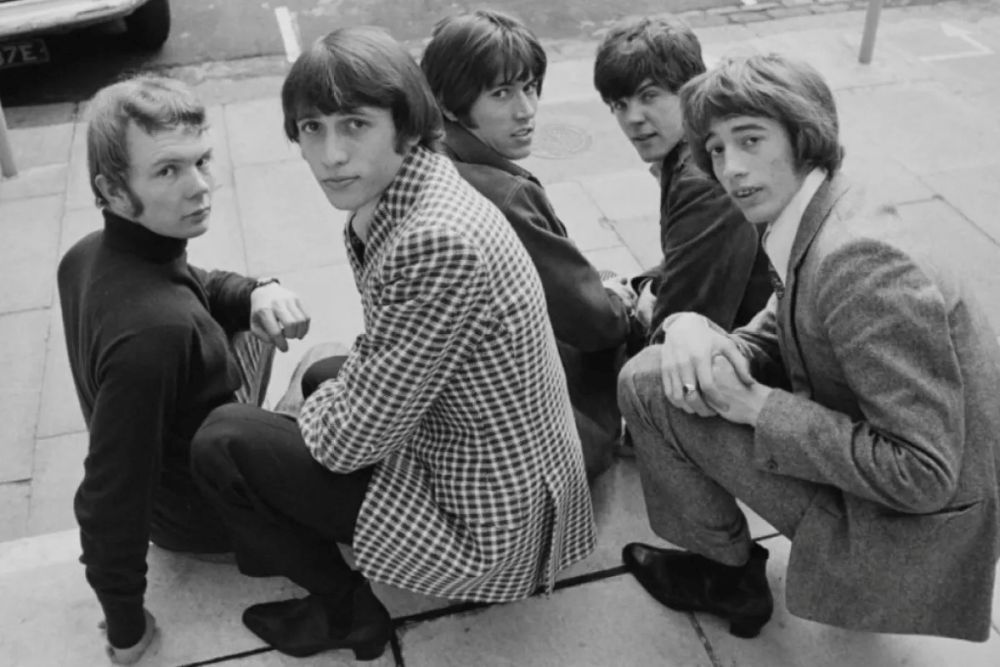
Petersen married Joanne Newfield, Brian Epstein’s former assistant. Colin did an interview towards the end of the 1960s, where he expressed interest in getting back into acting with the ultimate goal of becoming a director; he was excited about an upcoming film that the Bee Gees were going to star in, Lord Kitchener’s Little Drummer Boys. That movie was never made, however – indeed, all this success was causing troubles within the band: Vince Melouney quit, then Robin Gibb, then Barry bailed on the film. The remaining three members – Colin, Barry and Maurice – started making a TV special, Cucumber Castle; during filming, in August 1969, Petersen was sacked from the group (apparently at the behest of the Bee Gees’ manager, Robert Stigwood) and all his scenes were removed. Petersen sued in court, seeking to use the name “Bee Gees” but was unsuccessful. His stint as a Bee Gee was a little under three years – around the same length of time that he was a film actor.
So basically, Colin Petersen had managed to become one of the biggest film stars in Britain, and then a member of one of the biggest bands in the world – and had both careers terminated without his consent.
Petersen went on to be a manager and record producer, and returned to acting briefly when he guest starred on some episodes of The Restless Years. Here’s a 1980 interview with him.
It was a rich life full of adventure – one of those adventures being when for a brief period he was one of the biggest stars in the British film industry.
The author would like to thank Graham Shirley for his assistance with this article. All opinions are the author’s.
