



by Stephen Vagg
A 1949 horse racing melodrama with music
In an earlier piece in this series, we discussed how the McCreadie brothers, Tom and Alec, managed to make their first feature Always Another Dawn in 1947. That did well enough commercially and critically for them to cobble together finance for a second feature, Into the Straight, which used many of the same team – writer Zelma Roberts returned, as did Charles Tingwell, and a number of crew; Tom McCreadie directed again, while Alec once more served as executive producer.
Into the Straight is an entirely decent, honest melodrama set in the world of horse training – the sort of bread and butter picture that they routinely made in Hollywood and Britain, given a strong Australian flavour (including a finale at the Melbourne Cup); it benefits from Tom McCreadie’s excellent direction, strong location work and an excellent cast. Its main problem, as with Always Another Dawn, was the script. However, while the McCreadies’ first film suffered from not having enough story, Into the Straight has far too much.
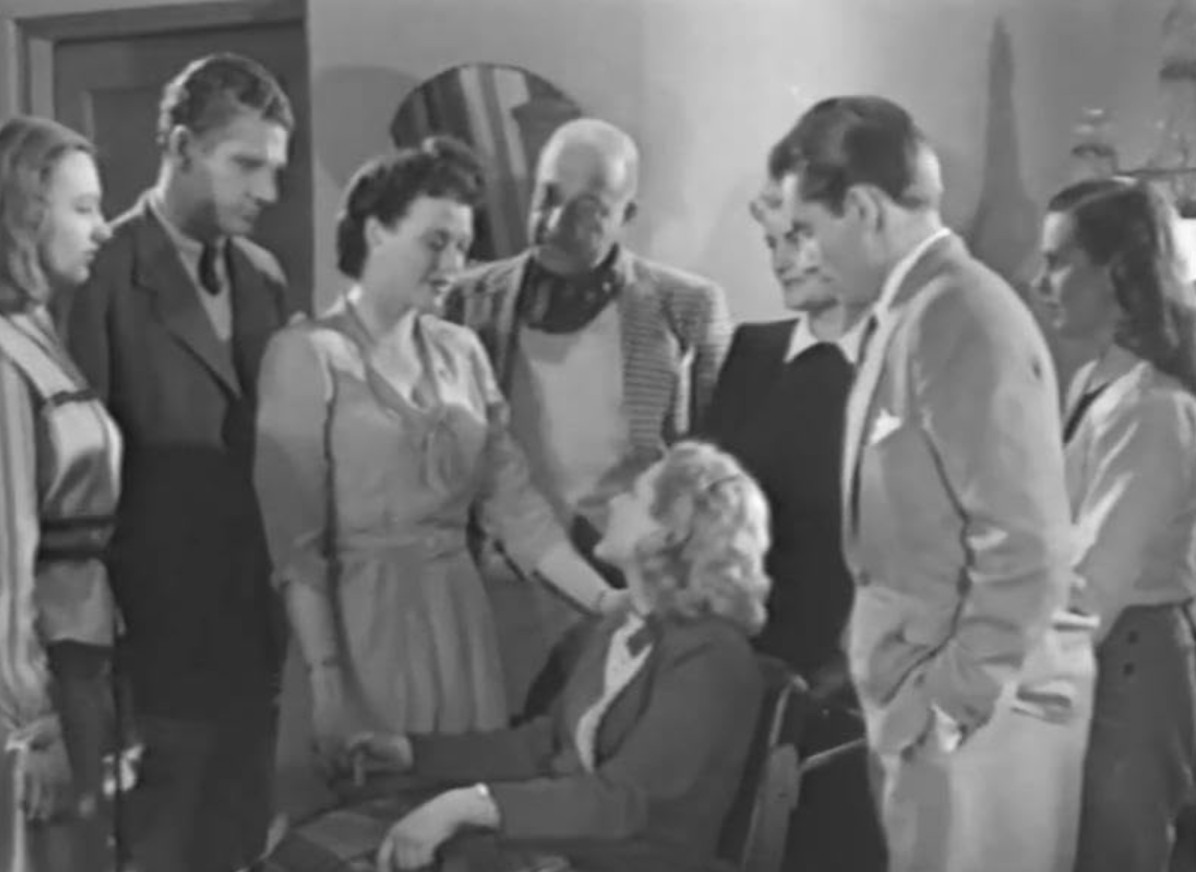
How’s this for plot… George Randall and Muriel Steinbeck are a couple running a horse stud with three children, Nonie Peifer, Shirley Hall and Charles Tingwell (we’re just going to use actors’ names rather than character ones). Randall visits England and meets horse trainer James Workman and his son Alan White, who come out to Australia to work for Randall and Steinbeck. White and Peifer have a romance, but then she has an accident and winds up in a wheelchair, after which White kind of shoots through but doesn’t. Then Tingwell gets in debt due to gambling and has a girlfriend (Margo Lee) who sings in nightclubs, and who he brings to the family horse stud. Some money goes missing and everyone thinks it might be White but it’s Tingwell, but everyone forgives him. James Workman and Peifer fall in love, she performs a concerto, then regains the ability to walk, and the family horse wins the Melbourne Cup.
Phew.
Look, none of this material is bad, it’s got everything that you need to make a strong, emotionally engaging narrative (paraplegia, horses, comedy, family drama, love triangles, a climactic race), it just needed focusing. It’s never clear, for instance, who the leading character is or what the main story is: it should be Peifer’s film, really, seeing as she’s in a wheelchair and takes part in a love triangle, but then she goes off into a piano concerto plot, and then there’s horse racing, and comic maids, and people come and go. The characters played by Muriel Steinbeck and George Randall could be combined into the one person – as could the characters of Charles Tingwell and Alan White, come to think of it – the film doesn’t need two cads. You could also combine the character of Shirley Hall, who plays the wisecracking sister, with that of the actress who plays the wisecracking maid, and there’s no real point for Margo Lee’s character to be in the film other than to sing a song and add a little glamour (why not tie this in with Nonie Peifer’s plot? She plays a musician).
If the writers wanted to keep this big cast, which was their right, they needed to differentiate the characters more and/or give everyone more to do – although there’s a lot of story, much of it feels underserviced and the movie still only clocks in at 77 minutes, despite including several music sequences. It also pulls its punches, reluctant to make villains of White, Tingwell or Lee, who are natural antagonists – as Ken G Hall knew, movies need baddies. Everyone here is too nice.
Still, there is much to enjoy about Into the Straight. The photography is gorgeous, helped by extensive location work (the Melbourne Cup, the horse stud). Tom McCreadie directs briskly, we quite enjoyed the musical interludes (Margo Lee singing in a nightclub, Peifer performing the piano) and the cast is excellent. Charles Tingwell makes an excellent n’er do well, as does Alan White, an accomplished actor who was one of the leading names on Sydney radio and later moved to England (though he never quite became the star that it seemed he would become at one stage). James Workman isn’t good looking enough for his part, but his acting is fine; incidentally, he later became a top radio and TV writer, his credits including Reflections in Dark Glasses starring Muriel Steinbeck.
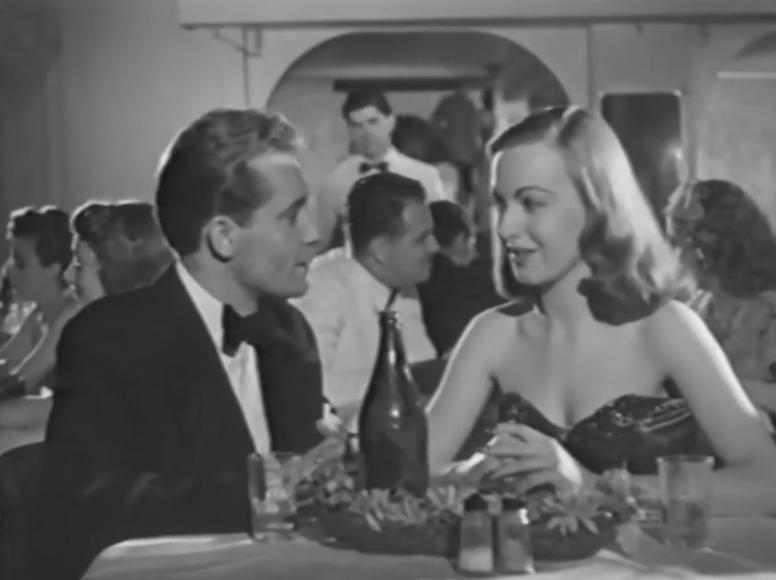
Margo Lee [above with TIngwell] is always fun, even if her character is kind of pointless; ditto Muriel Steinbeck, who is wasted in her role – she probably should have played Peifer’s part (this would have made more sense commercially too, as Steinbeck was coming off two successful films, Smithy and A Son is Born, and was the “queen of Sydney radio” at the time). Having said that, we enjoyed Peifer, a spirited, pretty performer who later changed her name to Nonie Piper, and appeared in Bitter Springs (1950). She married Michael Bialoguski, a doctor and music conductor who acted as a spy for ASIO during the Petrov Affair, and wrote a book about it that was filmed for television in Britain in 1965 (where he was played by Lee Montague) and America in 1956 (where he was played by Sanford Meisner), but not Australian television until 1986 (where he was played by Swawomir Wabik). All this has nothing to do with Into the Straight, we just put it in for interest to remind people that British and Americans were often more interested in telling Australian stories than Australian cultural institutions, who are often dominated by people who secretly wish they were in Britain and America (the ABC could have shown the 1965 British TV play about the Petrov affair, but Neil Hutchison, a leading executive who consistently demonstrated his dislike for Australian stories throughout his career refused to screen it on the grounds of quality). Anyway, we digress…
Based on contemporary newspaper advertisements, Into the Straight had a decent run in Australian cinemas and was released in Britain as a support feature. The film demonstrated a sharp increase in quality from Always Another Dawn and it is likely that Tom McCreadie would have continued to improve as a director, had he had the chance; however, he and his brother only produced one more feature, The Kangaroo Kid (1950), which American Lesley Selander directed. The MCreadies were one of many potentially great filmmakers from this period (others including Noel Monkman and Eric Porter), whose careers were wrecked by government inaction. Still, three features is better than none.
The author would like to thank Graham Shirley for his assistance with this article. Unless otherwise specified, all opinions are those of the author.
