


by Gill Pringle at Tribeca
Gaysorn Thavat’s The Justice of Bunny King is a heart-wrenching, triumphant film which premiered at the Tribeca Film Festival. Starring The Babadook’s Essie Davis as the eponymous heroine, Bunny spends her days washing car windshields on a busy street – a “squeegee bandit” – pocketing the change she earns in tips.
Couch-surfing between family and friends, Bunny is saving up for a place of her own because family services won’t allow her to be reunited with her two children – who’ve been placed in foster care – until she finds her own house.
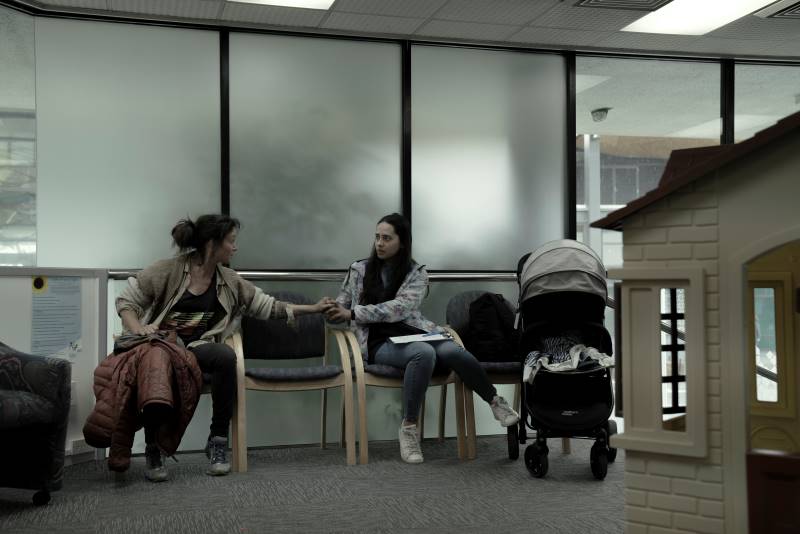
When a plan that would finally allow Bunny to bring her kids home falls apart, she is forced to become a champion not only for herself and her children but also for her teenage niece Tonya (Thomasin McKenzie), who’s desperate for her help.
A deeply affecting film about a woman refusing to back down from a system that’s stacked against her, each step of Bunny’s journey is grounded in her pain and passion, and thanks to Essie Davis’ fearless work, Bunny becomes an indomitable hero and a testament to resilience in the face of adversity, where sometimes you just have to take justice into your own hands.
We spoke with Essie Davis about what the role of Bunny King means to her and society in general.
How much research did you do into the “squeegee bandit” culture?
“Well, we still see it around Sydney and New Zealand. I spent a lot of time at some intersections, giving people in their cars a spray and wash, and learning how to use my squeegee. But also, I spent a lot of time with women who have been in this kind of situation on the poverty line; survivors of domestic violence and in a system where they can’t prove enough to the government about their viability as a mother. It’s really an incredibly important story for women who are on the poverty line and who are survivors of domestic violence, just trying to be a good parent to their children. Nearly all the female extras who worked on the film, between takes, they would tell me, ‘That’s my story’. I would be in wardrobe – getting changed in the quarter of the bus that we had divided between all of us! – when someone would tell me how they lost their kids because there’s so much that you have to prove for the government, and how it’s really swayed in the wrong way. I certainly know that’s true in New Zealand and Australia and I imagine that it is true in many western cultures.”
Did anyone recognise you during your ‘squeegee bandit’ research?
“No, no-one recognised me. I looked like Bunny King! And I spent hours and so long working on that accent too, so I found it really hard not to speak in that accent. I have to concentrate!”
This is such a heart-breaking story, all the more so because, as women, we know this happens all the time. Did it make you want to get further involved in the issue, or was making this film enough?
“It does and it makes me feel horrified by the powerlessness of these women and I have friends in the same situation. What’s so fantastic about Bunny is how you see her in the government office trying to help other women; she says, ‘Get a complaint form, fill it in and keep on fighting’. Because it’s actually something that certainly a lot more people in more affluent and safe situations should be getting on the bandwagon about and supporting. I learned a lot about this character because, certainly the first time I read this script, you make so many judgements about her as you start watching. And that’s what we do in life – we make judgements about people because they’re a ‘squeegee bandit’ or because they walk on the streets with their bag or because they’re dressed weird or don’t look that great or because they’re couch-surfing and all of that. And then their children are out of their care. What have they done? There are so many judgements that we make, and through this film, I feel like all of those judgements get blown apart as you realise what a good woman she is. She’s a great woman, and she’s not gonna let anything bad happen to her niece and she doesn’t believe that she’s not the best mother for her children. She’s saved her daughter’s life too. I also think it’s just high time, certainly I’ve noticed in Australia now, particularly with Grace Tame being named “Australian of the Year”, that there’s really a wonderful spotlight being shone on domestic violence and how hidden it is and everything’s behind closed doors and I just think that this is an incredibly important film for women who haven’t had a voice. And so, for people who do have a voice to suddenly put themselves into someone else’s shoes and go, ‘Oh my God, maybe I’ve been judgmental and maybe I could help’. And maybe our government policies need to change.”
The Justice of Bunny King is not the first time you’ve taken a chance on a first-time feature film director. I’m thinking about your roles in Shannon Murphy’s Babyteeth and also Jennifer Kent’s The Babadook. What persuaded you to take a chance with Gaysorn Thavat on The Justice of Bunny King?
“I hadn’t met Gaysorn before. I was sent the script and I just loved it. That was about a year before we filmed, and it still needed a couple of drafts to massage it into a better place, but we just got straight on zoom, and I just liked her immediately. She’s really straightforward and down-to-earth and very mature with a great understanding of what the whole world was as well as insights and ways of approaching thoughts that aren’t necessarily in my head. We both definitely had the same vision, so I just had to trust her – as you do when you work with a director, especially if you’re really, really feel passionate about something and you know that you’re on the same page. I really loved working with Gaysorn, she was outstanding and, as a woman and as a first-time director, she had to jump through a helluva lot of hoops too and fight some good fights and win a few, lose a few. So, wow, she won all those fights to make this great film, and I love her.”
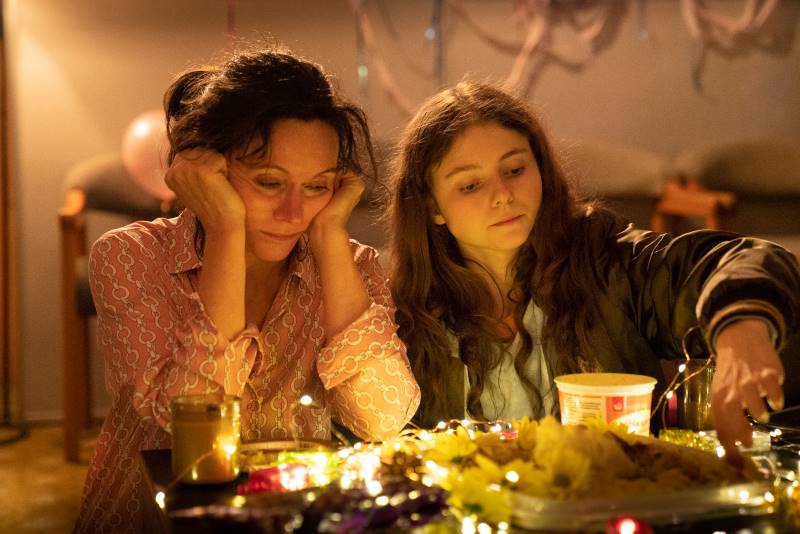
How did you connect with Thomasin McKenzie in the role of Bunny’s niece? Especially as a mother yourself, you must have felt very protective?
“Well, it was lovely because we first worked together on the True History of the Kelly Gang where my character loathed her character, so it was really lovely to then be working together with her in this as someone who loves her. She’s a teenager who doesn’t really want much attention, but it was just delightful, and we had good fun.”
The Justice of Bunny King shows a very different version of New Zealand than audiences are accustomed to seeing through the lens of Lord of the Rings with all the beauty of nature, lush landscape and mountains. What’s your take on this other version of New Zealand?
“Well that’s like any Western country really. There are so many beautiful parts of nature. Nature always wins, right? And it’s only what humans have done to the planet to fuck it up.”
The Justice of Bunny King will screen at the Sydney Film Festival, November 3 – 21, 2021
