



by Shayley Blair
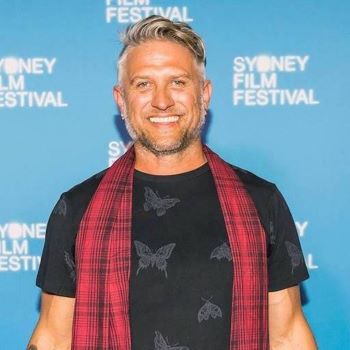 Doctor Grant Leigh Saunders of Biripi country on the mid-coast of NSW, is the founder of Sonic Nomad – an Aboriginal owned and operated film, television, and video content company with a shared goal of increasing the level of Indigenous media representation in Australia.
Saunders’ latest project is documentary, JustUS: Hip-Hop and the Block, which is currently in post-production.
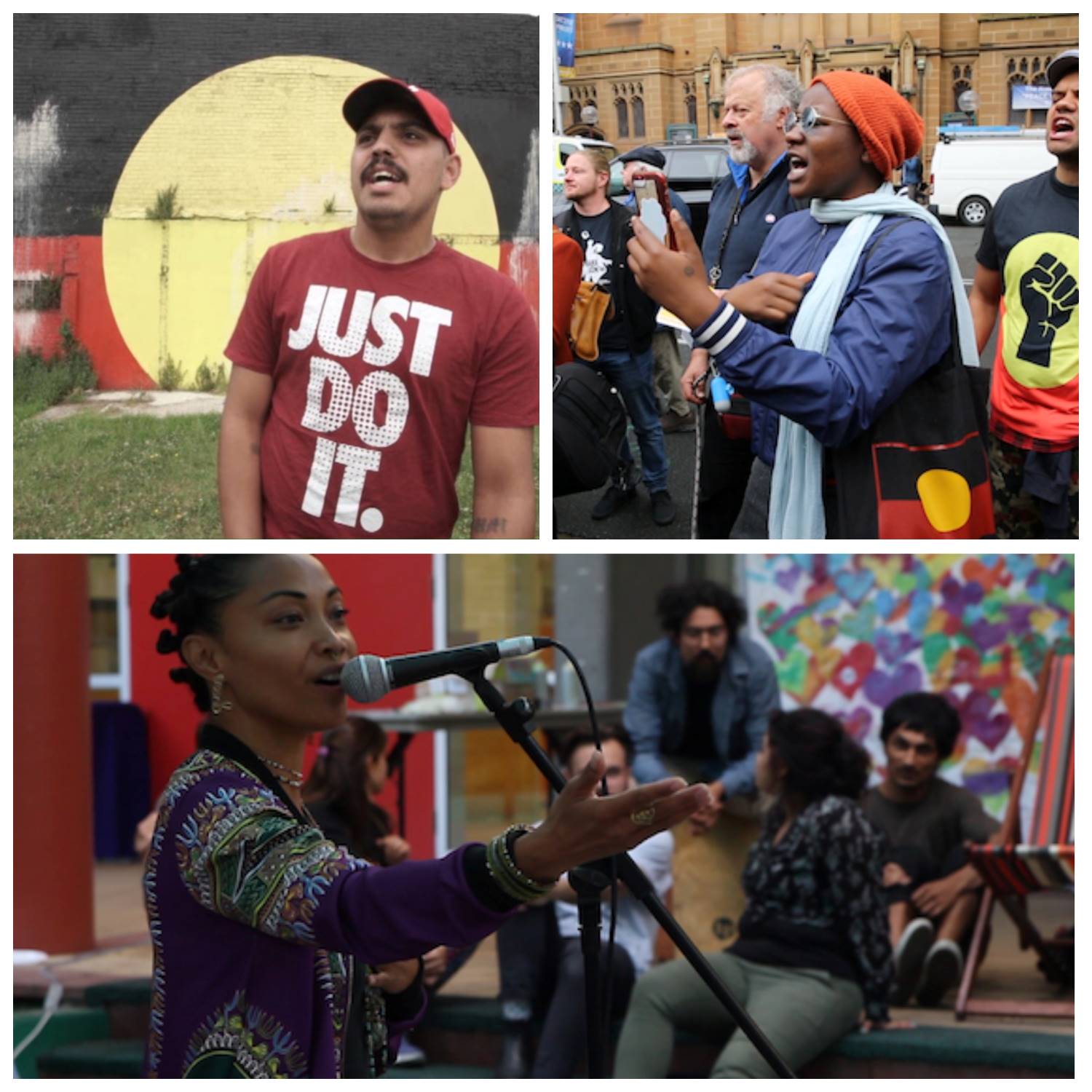
In JustUS, focal character Steven Saunders Carr aka MC Sonboy, of the Biripi and Dunghutti people, raps about the “The Block” in Redfern – where he originates from, and which has soaked into his soul.
Known as the “black heart of Sydney”, Redfern is a landmark locale, where Indigenous dance, theatre and music have flourished; and where, with rights within a collective community recognised, activism has had significant moments in history. It was the birthplace of the Aboriginal community-controlled sector including the establishment of the first Aboriginal Medical and Legal Service, Aboriginal Dance Theatre, child care, aged care and more.
Saunders elaborates on the JustUS project: “It’s about the history, culture and politics of The Block, Redfern – through the eyes and music of this one character who grew up on The Block, and created this EP called A Kid from the Block, which is about him growing up there, and his experiences with police harassment – specifically, through his brother Dean’s case where the Redfern police chased him down in a stolen car – back in 2012 – and shot him three times, and he almost died at the scene. He was sixteen years old at the time. Sonboy tells the story through his music, just like so many other Aboriginal hip-hop artists use it as a vehicle to tell these stories of injustices.”
Saunders’ personal relationship with The Block began in 1994, when he moved down from Taree to take up a position with the Sydney University Settlement as a youth development officer. “From there, I got into radio via Koori Radio, which was just down the end of the road from where I was working; and it was where I was hanging out and getting to meet people in the Aboriginal media industry, as well as visiting Black and First Nations artists from overseas, and local community people. It was sort of a drop-in centre, and I’d started volunteer broadcasting.
“From there, I was getting to learn Aboriginal music, just through their catalogues. That’s how I got involved in Aboriginal media in the beginning, which led me into taking on arts and communications; then got into Aboriginal higher education and really starting to learn more about the importance of The Block and the history and politics of that area. I didn’t grow up with Aboriginal education, apart from what I learned culturally from my family. We didn’t learn history or society politics through school. It was only later.”
A musical connoisseur with an earlier PHD documentary on the topic of hip-hop in Australia – which inspired the current film – Saunders reveals the title JustUS derives from an early eighties protest anthem lyric: “There’s no justice, there’s just us”. The line is a good fit for the documentary’s themes of isolated, targeted injustice. “JustUS is an extension on what I did for film school, when I made a half hour documentary called B.L.A.C.K.: an Aboriginal Song of HipHop, back in 2006.
“It was super successful! [Documentary Australia’s] Mitzi Goldman, who was my supervisor when I was a Master student at film school, encouraged a colleague of hers – a distributor by the name of Deb Zimmerman, from the US – to watch my film. As a result, she distributed in North America and my film got to be a part of the Harlem Curated Film Festival in New York. I got to meet members of the Rocksteady Crew, the break dance outfit from the eighties; and got toured around the Bronx, where Malcolm McLaren’s ‘Buffalo Girls’ video was shot. It was just an amazing experience.
“That film was about another character who was unrecognised at the time for how talented he was. And he wrote this song called ‘B.L.A.C.K.’, which translates to ‘Born Long Ago Creations Keeper’ – an acronym that he’d made. So, the film was about promoting his work, but also deconstructing what his song was about. And it was about identity. It was about police harassment. It was about disconnect with culture and colonisation.”
Saunders is currently also immersed in another hip-hop-related venture, a chapter for a book on hip-hop cultures in Australia. “I’m co-editing with three other hip-hop scholars to publish this, the first ever edited volume that focuses purely on Australian hip-hop. We’ve got twelve authors, speaking to all the different manifestations of hip-hop scenes in Australia.
“It’s changed so much from when it was dominated by white Australians. This was one of the reasons why I’d wanted to make that film back in 2006. I wanted audiences to understand that Aboriginal people had been creating hip-hop for a very long time, since the early eighties.” Unfortunately, these artists were not always being heard, which often contradicted the sociological style of the music.
“The origins of hip-hop coming out of the boroughs of New York – it was very much that it was dominated by black and brown people, and then you had white artists coming on the scene, like the Beastie Boys, and later Eminem. Now it’s a lot more of a balance there. We’re only starting to see that here in the last ten years, and that’s because of the work of Triple J, as well as the host Maya Jupiter, who’s a Turkish and Mexican Australian. And, Hau Latukefu, who’s Tongan-Australia. Both were very instrumental in promoting music from First Nations artists as well as from culturally and racially marginalised peoples.”
JustUS: Hip-Hop and the Block is listed at Documentary Australia, where supporters can contribute to this exciting and sure-to-be impactful production.
