


by Cain Noble-Davies
Worth: $11.50
FilmInk rates movies out of $20 — the score indicates the amount we believe a ticket to the movie to be worth
Cast:
Llúcia Garcia, Mitch Robles, Tristán Ulloa, Janet Novás, Celine Tyll, Miryam Gallego, Janet Novás, Sara Casasnovas, José Ángel Egido
Intro:
… a gorgeously-captured vista of the sheer frustration that can come from attempted discovery of one’s roots.
All storytelling has an element of the personal to it. Narratives don’t just emerge wholecloth from an ether of nothing, and even the ones that could be argued as appearing from the collective unconscious are still filtered through the individual experience of whoever is holding the pen. With that in mind, there must be a level of mutual connection to make that degree of the personal work for a story that is meant to engage an audience. Done well, it can create an emotional tether that helps make often idiosyncratic and isolating events and turmoil feel ever so slightly less lonesome; misery loves company, after all. But done less-well, and it can come across like something not meant for outsiders, completely slackening that tether regardless of how taut it may have been for the creator themselves.
Romería, the latest film by emphatically personal filmmaker Carla Simón (Summer 1993, Alcarràs), unfortunately fits into the latter category.
The film’s narrative, at first blush, reads like a more bureaucratic flip on Aftersun, following a young woman (Llúcia Garcia as Marina) and her attempts to reconnect with her family and, in the process, her own sense of self. However, rather than the rose-tinted scrapbook foraging that made Aftersun affect the viewer like a sun-bleached anvil to the chest, Marina’s journey is fuelled by something arguably even more depressing: paperwork. Specifically, her application for a university film studies scholarship, which requires proof of her parentage –her mother and father died when she was young, and her name isn’t on the father’s death certificate.
As Marina connects with her father’s extended family, we sense that children never get the 100% clear picture of who their family truly are. As the film continues, the frequent contradictions and generally hushed tones go from suitable melancholy (like the various forms of unperson-ing that the father’s family thinks of the couple) to fidgety frustration. Marina never getting the total perspective on her folks would be fair enough; but in a medium built on the mantra “show, don’t tell”, the audience being just as out-of-the-loop – not even letting dramatic irony fill in the blanks – only makes the prospect of connecting with the lead character (and, by extension, Simón herself) into a task of daunting nebulosity.
Where it gets weirder is that even the set-in-stone specifics of the story, namely the truth of Marina’s family, are delivered in mesmerisingly counter-intuitive ways. For a film all about teasing harsh truths out of people who would much rather repress them, the bigger revelations usually end up being factoids and reveals… that were already brought up in past scenes – yet are still treated as major paradigm-shifting moments. And the less said about the incestual textures of the story, the better.
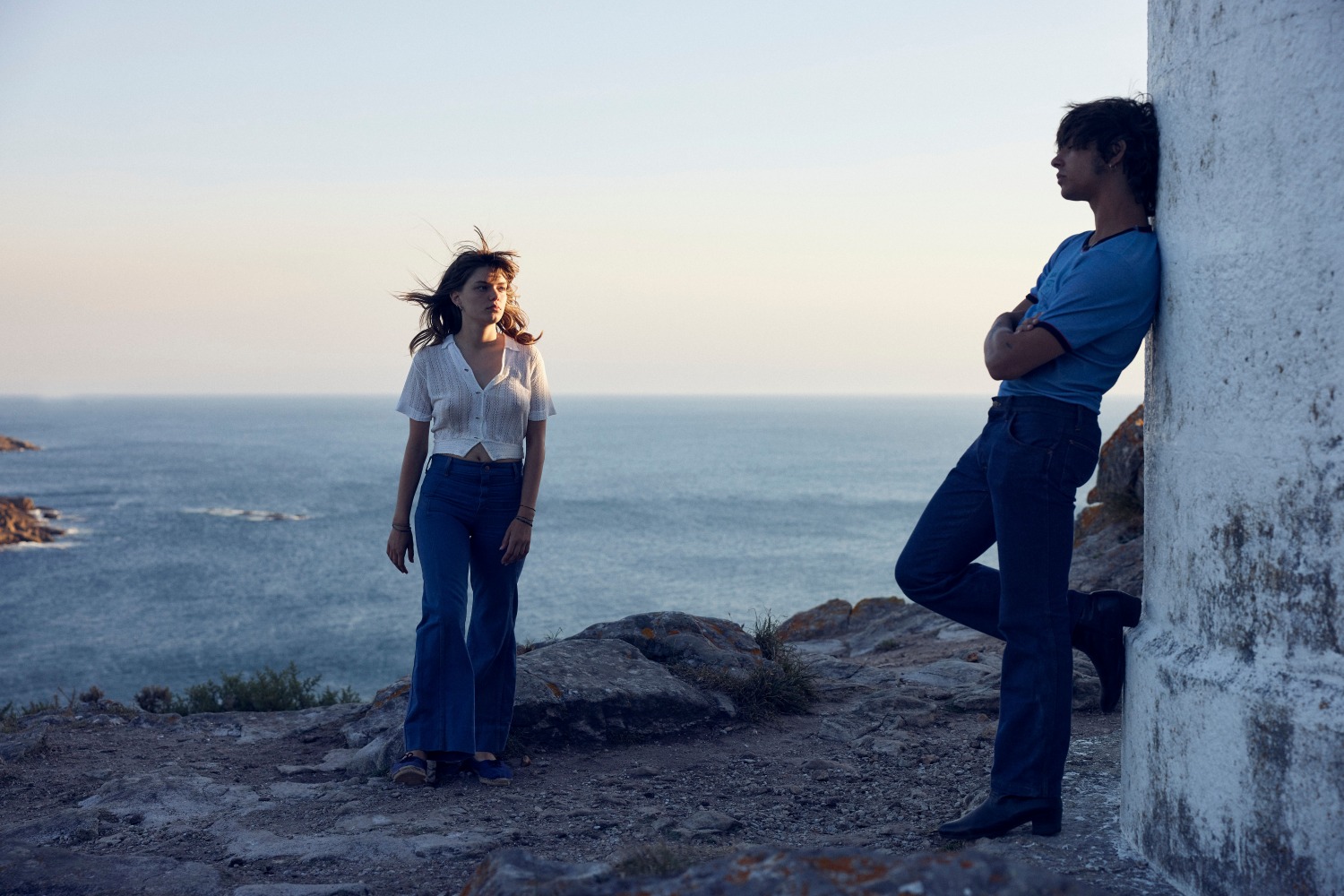
What makes all this disheartening lack of connection with the text sting even more is that, in terms of pure visual and aural presentation, this is quite a pretty picture. Simón and DP Hélène Louvart do wonders in showing Vigo (especially the Cíes Islands) as a beautiful slice of the Spanish coast, and when it actually gets into the reality of Marina’s parents (i.e. part of the rave generation that were swept away by their vices), the imagery is as beautiful as it is genuinely haunting. Ernest Pipó’s soundtrack adds greatly to that effect, from the pinched and weeping string sections backing Marina’s contemporaneous struggles, to sunburnt guitars underlining the tragic romance of her mother and father. There’s beauty to be found here. Just a shame that it takes so much trawling to really appreciate it.
Romería is like finding someone’s half-written diary at a charity shop. It’s most evidently a work of personal conviction, something that the creator cared an awful lot about to render it in such a fashion, but there’s so much distance between the words as written and the words as read that any and all catharsis and closure remain entirely one-sided. At best, it’s a gorgeously-captured vista of the sheer frustration that can come from attempted discovery of one’s roots. At worst, it’s a near-two-hour assumption that listless nostalgia is all one needs to connect with an audience.
