



by Stephen Vagg
Every sports fan knows that one of the worst gigs is replacing a legend of the game. You can never live up to the standards set by your predecessor, no matter how hard you try – so, every time you do something, it’s not going to be as good as it was in the old days. You’re the guy after the guy – and you’re far better off being the guy after the guy after the guy. But when a juicy job comes along, it’s hard to resist. After all, sometimes there are exceptions.
Buddy Adler was not an exception.
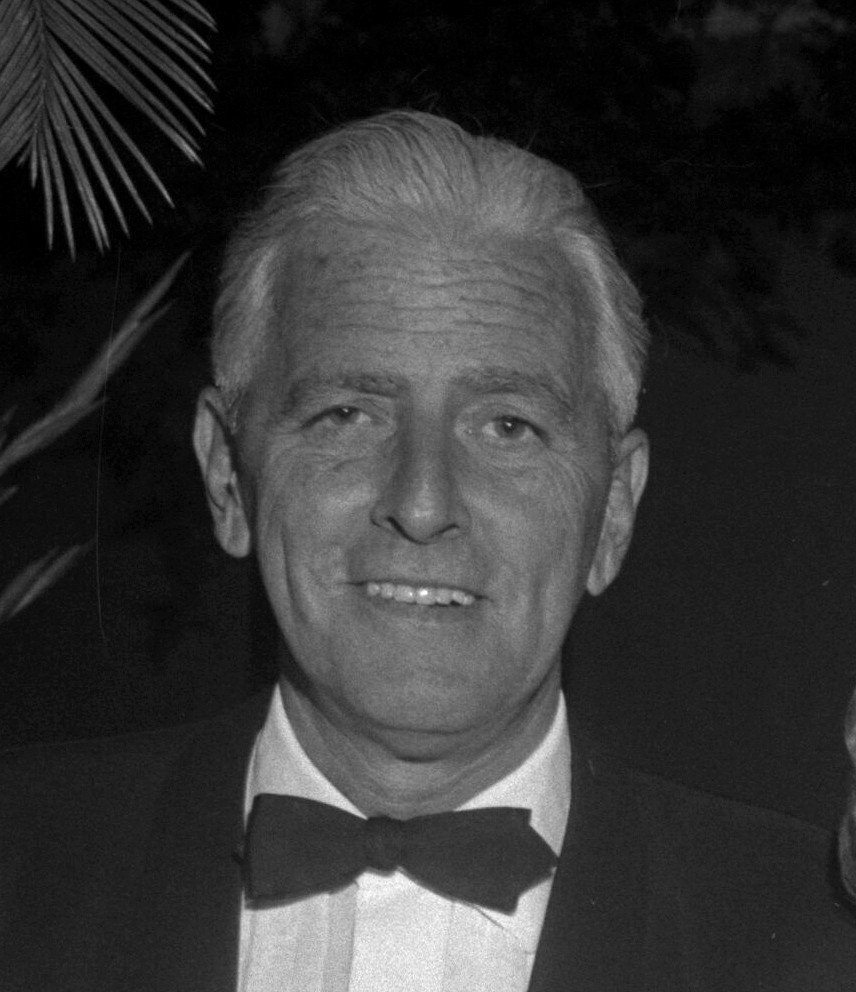
For those unfamiliar with the name – which we’re guessing is most readers of this piece – Adler was head of the Hollywood studio 20th Century Fox from 1956 to 1960. He followed the 1935-56 regime of Darryl F. Zanuck, one of the iconic moguls in history. Zanuck had been a legend for most of his working life: a boy wonder writer-producer, who worked his way up to become head of production at Warner Bros in the 1930s, then quit to set up his own shingle, 20th Century which in 1935 effectively took over the larger Fox Corporation, becoming one of the great studios. Zanuck ran 20th Century Fox for two successful decades, making stars (Marilyn Monroe, Tyrone Power), creating classics (All About Eve), breaking barriers (Pinky, Gentlemen’s Agreement), even changing how people saw movies (CinemaScope). The job was all-encompassing and exhausting and by the mid-1950s, Zanuck was sick of it. His marriage had broken up (after countless affairs, consensual and otherwise) and he wanted to chase his mistress, Bella Darvi around Europe; furthermore, he was sick of dealing with the rising power of agents and stars in Hollywood and wanted to focus more on filmmaking as opposed to administration, so he became an independent producer based in Europe and Fox came under the command of Buddy Adler.
Adler’s real name was E. Maurice; he was born in 1909 to a wealthy New York family who gave Buddy a good education and cushy job in the family business. Adler had ambitions for something more, and turned to writing, mostly short stories. In the late 1930s, he went west to Hollywood and wound up writing short films for Pete Smith at MGM. His career progression was interrupted by war; Adler served in the Signal Corps and when he got out, he tried to become a producer at MGM. It didn’t work out, so he headed over to Columbia in the late 1940s, where things really started to happen.
A handsome, urbane man, often nicknamed “the silver fox”, Adler was socially well-connected (his wife was actress Anita Louise), and impressed the uncouth, self-made head of Columbia, Harry Cohn, who was looking for someone to handle the studio’s “class pictures” after Cohn’s former 2IC, Sidney Buchman, got blacklisted. Adler went from medium-budgeted films like No Sad Songs for Me (1950) and The Harlem Globetrotters (1951) to epics like Salome (1953) and From Here to Eternity (1953). The latter was especially prestigious, a critical and commercial sensation, which won the Best Picture Oscar – Adler was generally seen to have done a superb job on some very tricky material.
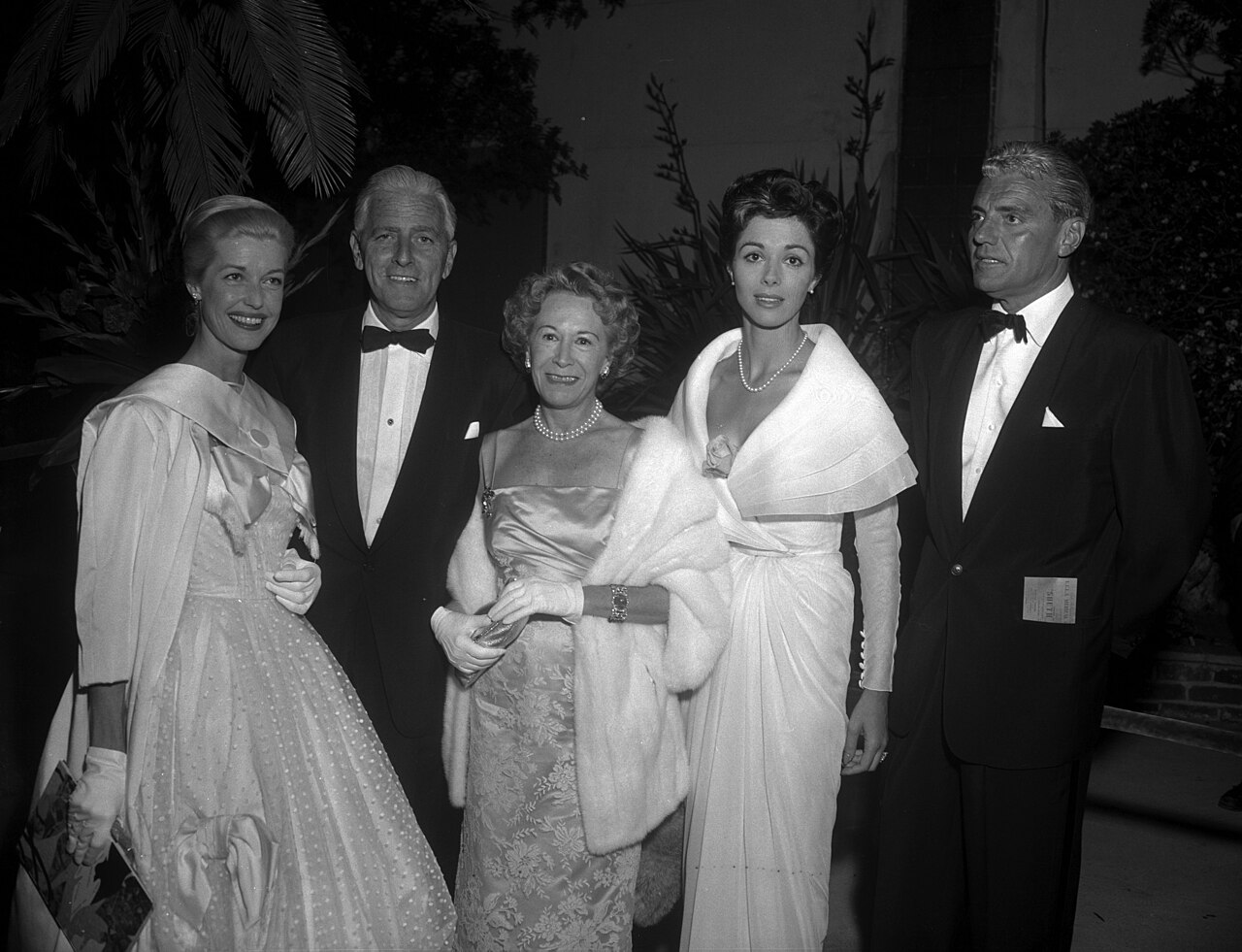
The movie’s success saw Adler fall out with Cohn – as huge hits occasionally do (something similar happened with Hal Wallis and Jack Warner after Casablanca (1943)). Darryl F. Zanuck offered Adler a contract over at 20th Century Fox, giving the producer a series of cream assignments (big budgets, significant stars, solid IP): Love is a Many Splendored Thing (1955), Anastasia (1955), Violent Saturday (1955), Soldier of Fortune (1955). Zanuck promoted Adler to be his 2IC, and then in 1956, when Zanuck decided to quit the studio and become an independent producer, Adler took over Zanuck’s job.
Adler ran Fox for four reasonably successful years until he died (of cancer) in June 1960. It should be noted that during this time, Adler had to contend with an increasing role at the studio played by Spyros Skouras, president of Fox, but he was still the main figure in charge of the studio’s artistic direction.
Adler’s regime at Fox was exemplified by several things:
1) Adaptations of pre-existing IP with stars and CinemaScope
During Adler’s time, only rarely, if ever, did Fox green light a big production that didn’t contain all three elements. It was not the studio to bring an original story or adapt a little-known story – Fox loved filming hit Broadway musicals/comedies/dramas, best-selling novels, biopics, remakes. It was super star-focused and big into shooting stories in CinemaScope, the widescreen technology developed by the studio. Sometimes, this worked spectacularly well during the Adler years (Peyton Place, Island in the Sun, The Best of Everything, Journey to the Centre of the Earth, An Affair to Remember, From the Terrace), Other times, not so much (The Roots of Heaven, The Sun Also Rises, Farewell to Arms, The Barbarian and the Geisha, Can-Can, A Woman Obsessed, The Blue Angel). The studio didn’t make as many edgy films as under Zanuck, but it did tackle tricky subjects if based on IP that had been sufficiently successful (The Diary of Anne Frank, Blue Denim).
2) Producer rather than director-driven
Under Adler, Fox was powered not so much by directors as producers, such as Zanuck, David Eisbert (a hugely underrated figure in Hollywood history), Charles Brackett, Henry Ephron, Jerry Wald, Samuel Engel and Adler himself. Fox’s leading directors of this period were typically ageing company men – Henry King, Jean Negulesco, Walter Lang – or younger company men – Mark Robson, Richard Fleischer. Now, these were good directors, it’s just that the studio struggled with more maverick/individual types. Adler gave several early chances for Martin Ritt, for instance, but those movies were among the blandest of Ritt’s career. Nick Ray made two movies at Fox – the decent Bigger Than Life and the frustratingly dull The True Story of Jesse James. Incidentally, Zanuck’s personal productions for Fox during Adler’s time varied widely in quality and included big turkeys (Sanctuary, Roots of Heaven, Sun Also Rises, Crack in the Mirror, The Big Gamble). Adler’s most reliable producers were Wald, Eisbert and himself. Which brings us to…
3) Adler’s personal productions
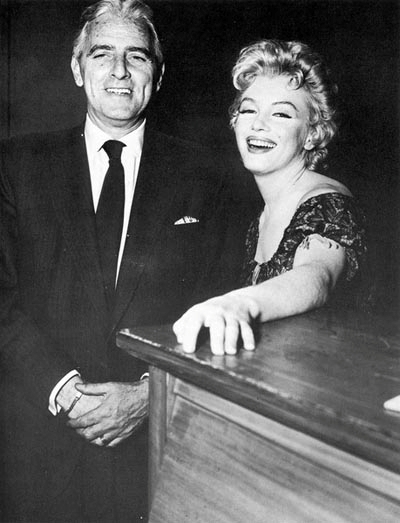 Adler was allowed to continue to personally produce films while head of the studio. And these movies were the cream of Fox’s product: The King and I, South Pacific, Bus Stop, The Inn of The Sixth Happiness, Anastasia. To which you might say “well, he was the head of the studio, of course he got the best IP and the top stars” and sometimes that was true… but when you look at it closely, many of Adler’s pictures could have gone horribly wrong. For instance, he took a huge risk bringing back Ingrid Bergman to star in Anastasia (1956) and it went brilliantly. Ditto Marilyn Monroe in Bus Stop (1956). Heaven Knows Mister Allison (1957) could have been a disaster with different stars and handling. He was a really superb producer with a knack for casting his director, writer and star perfectly.
4) Low budget films
Fox made a lot of low-budget product in Adler’s time, most of it made by producer Robert Lippert, a hugely prolific filmmaker who never got his due (in part, because he kept a low profile to avoid lawsuits). Most of these were fairly anonymous (Westerns, war movies) but the occasional classic snuck through such as The Fly (1958). This was a continuation of Zanuck’s policy.
5) British films
Towards the late 1950s, Fox kicked off a series of productions in England under Bob Goldstein (who would replace Adler on the latter’s death), often in tandem with the Rank Organisation. On the whole, the combination of English talent and American money worked well and some of these films were pretty good (Heaven Knows Mr Allison, Island in the Sun, Sink the Bismarck!, The Sheriff of Fractured Jaw, Sons and Lovers) along with the inevitable stinkers (Seawife). Incidentally, Adler arranged for Cleopatra to start shooting in England – the Robert Mamoulian version with Elizabeth Taylor, Stephen Boyd and Peter Finch that no one regrets was not finished.
6) Star development program
Adler’s big lunge for immortality was to go all-in on a star talent program, putting scores of young actors under contract to the studio and hiring the legendary Sanford Meisner to oversee them. This was going to be Adler’s big legacy – and if any studio head had a knack for casting movies it was him (e.g. he produced From Here to Eternity which is probably one of the best cast movies of all time). However, his star making program was pretty much a flop.
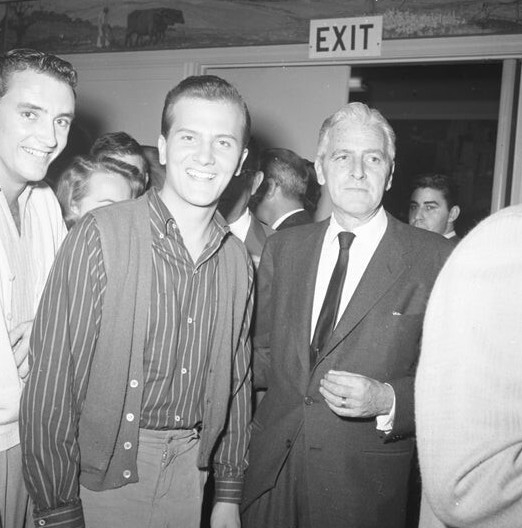 Adler admittedly struck gold with turning Elvis Presley and, to a lesser degree, Pat Boone into movie stars – both were huge pop idols but unknown quantities as actors when they made their first films at Fox (Love Me Tender, Bernadine). And generally, Fox served both Presley and Boone [left, with Adler] well during Adler’s time (Boone’s film career went into free fall after Adler died). However, other pop idols signed to the studio during Adler’s time didn’t do as well e.g. Tommy Sands (Sing Boy Sing), Fabian (Hound Dog Man).
Adler kind of turned Jayne Mansfield, Joanne Woodward and Lee Remick into stars – but not really. Mansfield became hugely famous with two Frank Tashlin films at Fox (The Girl Can’t Help It, Will Success Spoil Rock Hunter?) but the studio was unable to find anything else decent for her to do (The Wayward Bus, Kiss Them for Me, The Sheriff of Fractured Jaw). Woodward was a brilliant actor who became a name in The Three Faces of Eve, but who never appeared in a hit movie unless Paul Newman was also in it (Long Hot Summer, Rally Round the Flag Boys, From the Terrace vs No Down Payment, The Sound and the Fury). After The Long Hot Summer, everyone thought Lee Remick was going to be a star – she had it all, looks, charisma, talent – but the fact is, her films at Fox flopped (Ten Thousand Hills, Wild River, Sanctuary)
And none of Adler’s other discoveries became stars, not really, despite many chances: Jill St John, Carol Lynley, Gary Crosby, Stuart Whitman, Christine Carere, Barry Coe, Barbara Eden, Suzy Parker (a particular Adler favourite), Francis Nuyen, May Britt, Diane Varsi, Bradford Dillman, Hope Lange, Richard Egan, Tony Randall, Stephen Boyd, Ray Stricklyn, Robert Evans. Adler also failed to turn some Zanuck favourites into big names: Jeffrey Hunter, Robert Wagner, Dana Wynter, Robert Stack, Sheree North, Joan Collins.
Now, we stress, none of this is to discount the abilities of the above performers – we are discussing them as proper movie stars not as actors (or TV stars or, in Evans’ case, producing). As mentioned, many were brilliantly talented (e.g. Woodward, Remick) and/or had super long careers (e.g. Joan Collins, Robert Wagner, Tony Randall). But the fact is, while Adler was skilled at casting top list stars in game-breaking roles (e.g. Ingrid Bergman, Frank Sinatra, Elvis Presley), his conversion rate when it came to taking unknowns/little-knowns to stars was poor.
And this hurt Fox’s films during Adler’s time, as so many of them were contracted as star vehicles, and they used second-tier names: Fraulein, The Wayward Bus, The True Story of Jesse James, The Gift of Love, Stopover Tokyo, From Hell to Texas, A Certain Smile, The Fiend Who Walked the West, Harry Black and the Tiger, A Private’s Affair, The Story of Ruth, Esther and the King. He only really got away with it when he shoved a whole bunch in a movie e.g. Peyton Place, In Love and War, Island in the Sun, The Best of Everything.
In hindsight, Adler should have pulled back on his star building program and just culled from freelancers – or leaned more heavily into Fox’s television arm, and constantly used studio contract talent for that (the way Universal did in the 1960s and 1970s)
Adler’s passing prompted a series of hagiographical obituaries, but since then, he has never enjoyed much of a strong posthumous reputation. He was disparaged in memoirs/interviews by Zanuck fans such as Philip Dunne and Nunnally Johnson (who claimed Adler “wasn’t very bright and he did us all harm while he was there”). Fox almost went bankrupt not long after Adler’s death due to a series of flops. We should also note that, like Zanuck, Adler was clearly a bit of a lech: this was commented on by Dunne, Joan Collins and Rita Moreno.
However, Adler had his admirers, such as producer David Brown who called him “a missing chapter in the history of American film”, and Frank Tashlin, who made his best movies under Adler. And responsibility for the series of duds that almost killed the studio following his death really falls on Skouras, Goldstein and Peter Levathes.
Buddy Adler’s record as a producer is excellent. As a studio head, it’s more mixed. In his defence, he had to face a number of challenges in that time – the rise of television, the increased power of stars and agents, and several labour disputes. What really bought him undone was trying to build new stars using an old-fashioned talent school at a time when production was shrinking, and he was making too many movies. Still, a lot of those movies were great. Adler was no Darryl F. Zanuck, but he did as well as anyone probably could have in that position.
