



by Cain Noble-Davies
Worth: $17.00
FilmInk rates movies out of $20 — the score indicates the amount we believe a ticket to the movie to be worth
Cast:
Chihara Junia, Ryuhei Matsuda, Yôsuke Kubozuka
Intro:
… it’s gorgeous, unsettling, and just plain cool.
It’s not every day that a film comes out with a title that promises so much from a singular audiovisual experience, then actually delivers on it, and manages to do so, right as it reveals that title in-film.
After spending its first 38 minutes examining the shady magics of sorcerer Hanzo (Chihara Junia) and hired hitman Shinno’s (Ryuhei Matsuda) attempt to kill him, this seeming clash between Japan’s mystical past and Yakuza-flecked present takes a trip to the stars.
As the title arrives fashionably late, director Toshiaki Toyoda zooms out from an orbital shot of Earth across the solar system, the Milky Way, and then the entire universe.
Made in collaboration with Shinji Higuchi of Shin Ultraman and Michael Arias of Tekkonkinkreet, and backed by Shabaka and Oren Marshall’s dynamic brass from Sons of Kemet’s ‘Inner Babylon’, the entire sequence beautifully illustrates the notion of spirituality and technology working together to achieve true transcendence that forms part of the film’s larger patchwork.
Everything Everywhere All at Once at its most kaleidoscopic fused with the space-jazz of Yoko Kanno and the film singularity that capped off Damien Chazelle’s own ode to Babylon.
It is a moment of such pure cinematic euphoria that, while carrying a considerable seizure warning, marks one of 2025’s great film scenes.
Building on his recent run of short films centred on the temple of Mt. Resurrection-Wolf, Toyoda pools an entire career’s worth of musings on the futility of authority structures, the nature of self-sacrifice, and the need to transcend the physical world to find real peace.
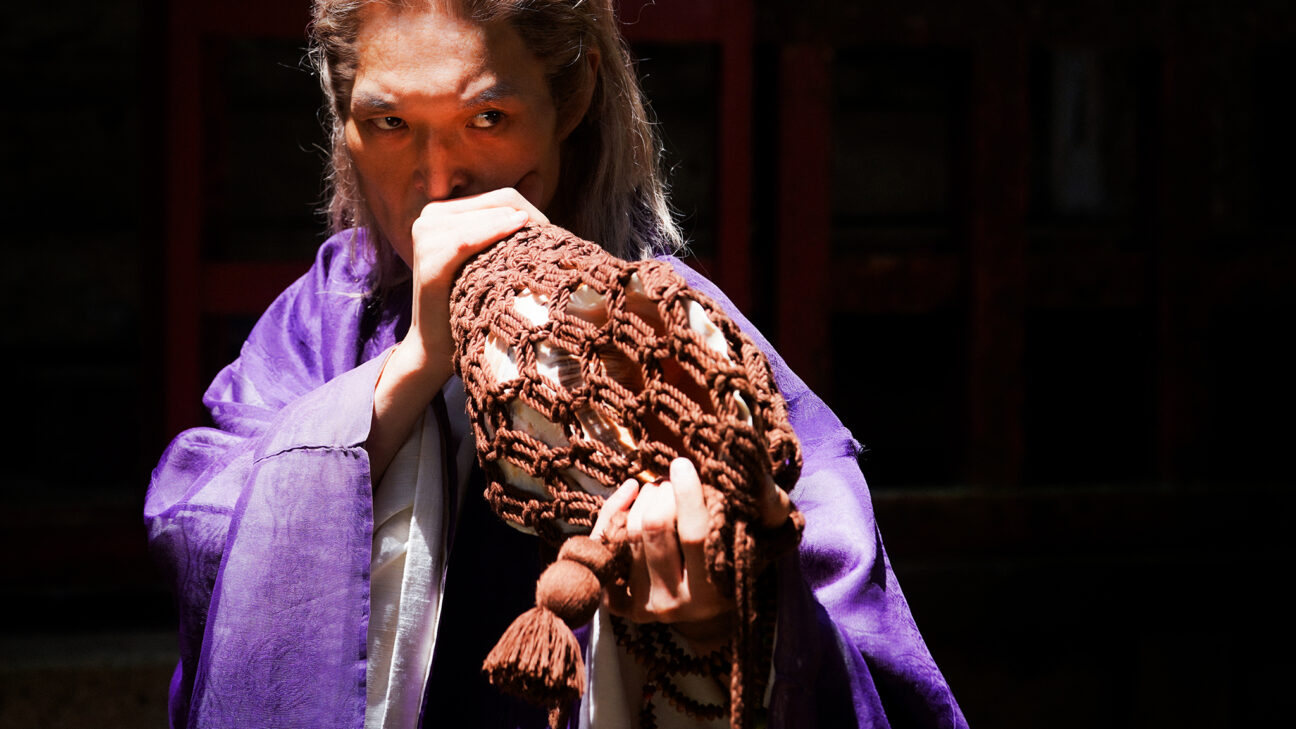
While the narrative tying the images together strikes more mood than conversation, the images themselves are so glorious to behold that it hardly matters. A crystalline universe resting inside a conch shell, a man witnessing his own brain being squashed under foot, a pinkie that carries souls into space; it’s gorgeous, unsettling, and just plain cool.
As Hanzo, Shinno, and ascetic monk Rosuke (Yôsuke Kubozuka) point magic fingers at each other, constantly threatening to spill out into a Grand Guignol yet refusing to tip over outright, the film latches onto the flesh and the brain only in emphasis of the import that is finding that transcendence, rather than just expecting it to happen in the hereafter. With how wild the visual effects frequently get here, it’s quite interesting how well Toyoda’s own asceticism translates to film, staying relatively conservative in terms of locations and characters, yet using them to explore the breadth of human thought.
It taps into a similar mindscape as The Holy Mountain in its insistence that film itself can be used as an enlightenment tool, while sharing the same understanding that being shown the right path isn’t the same as walking it oneself. A film can only do so much on its own, after all.
Transcending Dimensions is a meditation on the relationship between life and death that often feels like experiencing both simultaneously; it’s like a soul-cleansing ritual at 24 frames per second – a collision between past, present, and future, in search of the truth of existence, flirting with various genre archetypes to find the bigger idea that they all share.
One for the more philosophically inclined, but those who are willing to lose themselves in a piece of film art, will find a piece that is transcendent not as simple marketing fluff, but as a genuine, functional statement.
