

by Samuel Cook
Some games want your attention. Others demand your participation. But a rare few feel like they’ve been storyboarded for the cinema – shot-for-shot tension, characters in crisis, and pressure that builds like the third act of a thriller. The titles below weren’t designed as film adaptations, but they unfold with the pacing, drama, and internal stakes of good screenwriting.
While most players are drawn to familiar card tables and slot rooms of licensed Aussie gambling platforms, these narrative-driven titles make risk feel personal, like something closer to performance than pastime.
1. The Invisible Hand (2021)
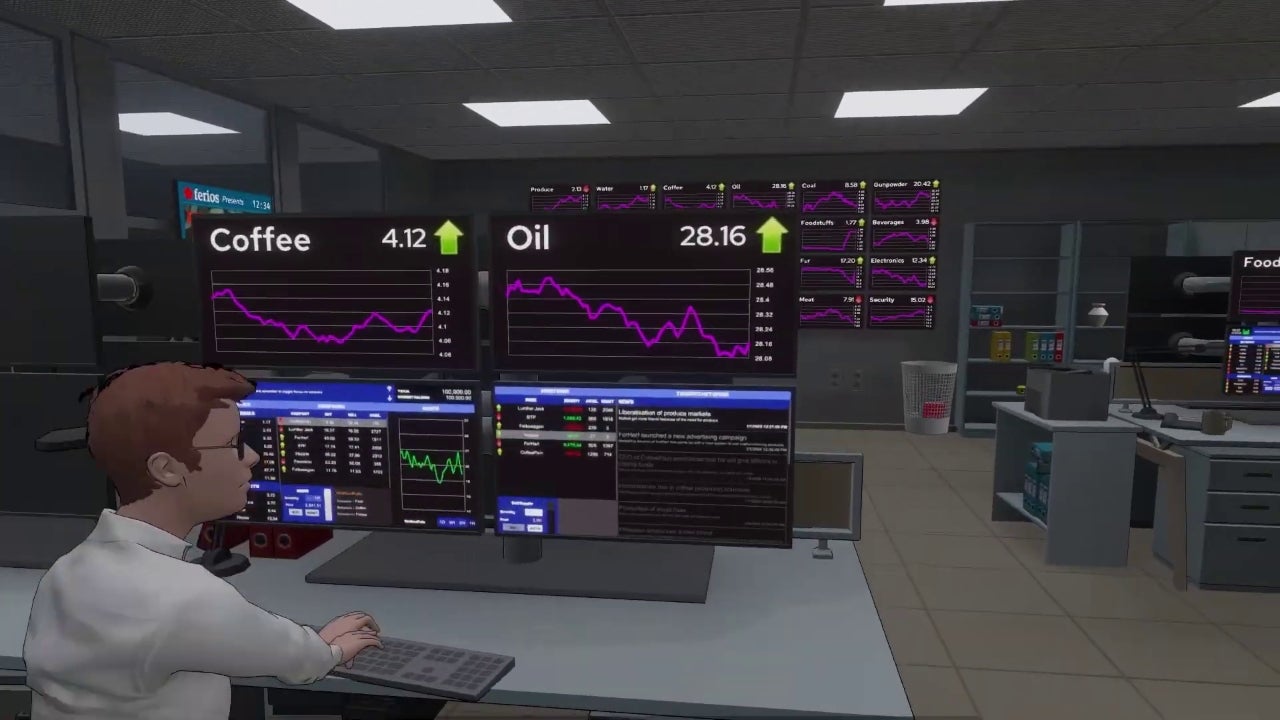
Markets don’t crash in silence. In The Invisible Hand, every ticker surge and shorted position ticks like a countdown. You play as a junior analyst inside a volatile investment firm where profit overrides ethics, and the screens you’re given are your only guide through the maze of consequence. There’s no gunfire here, no getaway scenes, but the emotional grip is tighter than most action games.
Instead of pulling a trigger, you approve insider deals. Instead of running, you rationalise decisions. Time moves forward whether you’re ready or not. The gameplay rewards ruthlessness, but it never lets you forget what that costs. In The Invisible Hand review article, a savvy writer noted that the game lets players “step into the full-grain leather shoes of a big-time stockbroker manipulating a volatile, virtual market,” – a sentence that perfectly describes the high-stakes tension found in cinematic finance thrillers.
2. Casino Inc. (2003)
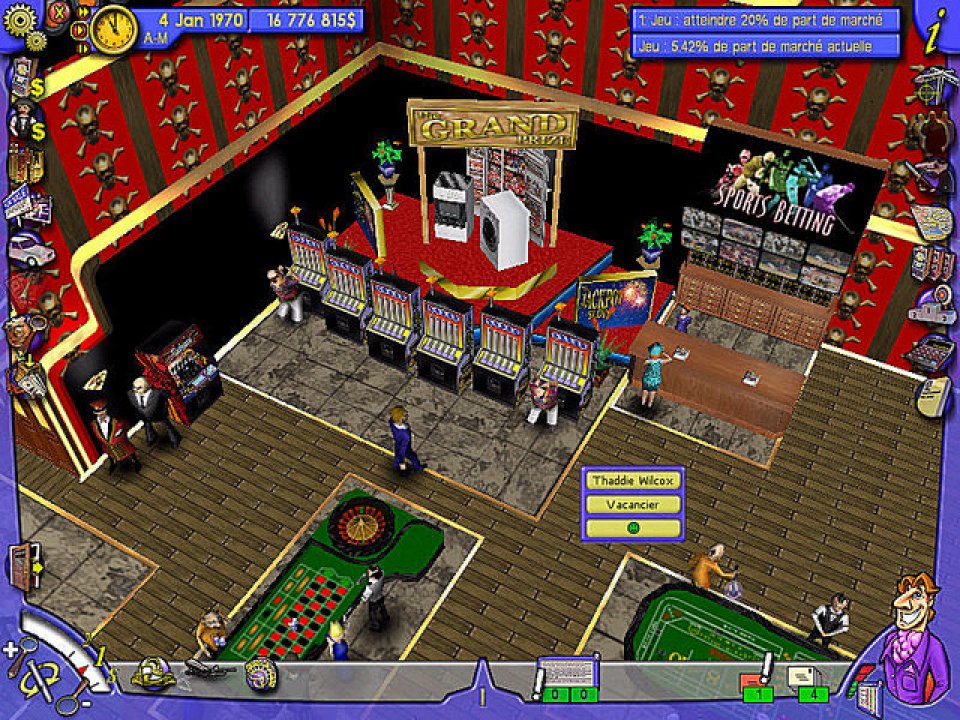
In Casino Inc., the drama doesn’t come from the roulette table – it builds behind the scenes. Every system intersects with personal agendas: competitors looking to undercut your business, clients expecting tailored experiences, staff whose loyalty fluctuates with your bottom line. Every decision stretches your grip a little thinner, and control becomes a matter of timing more than strategy.
Much like in crime films where ambition unravels under its own weight, Casino Inc. piles pressure through systems that collide. A single night’s revenue depends not only on your tables but on your surveillance team, the waitstaff, and the guy you hired to lean on competitors. Every success invites escalation. That’s the structure: not a business sim, but a character arc, disguised in spreadsheets.
3. Full House Poker (2011)
Microsoft didn’t just launch another poker game in 2011. They built a series. Full House Poker introduced scheduled tournaments, publicly timed “Texas Heat” events that brought Xbox avatars together for matches that felt like televised showdowns. Players returned week after week not for graphics or variety, but for continuity. For the next episode.
As noted in Full House Poker compared to 1 vs. 100 Guardian feature Microsoft framed the game as a “spiritual successor” to its earlier live-format hit, designing poker tournaments with timed events and avatar-driven play to capture the serial tension and communal energy of televised competition. In tone, it resembled a procedural drama with new faces, minor arcs, and unpredictable endings, all held together by one recurring set: the table.
4. The Invisible Hours (2017)
A man is dead. The guests are suspects. But you’re not solving the murder. You’re observing it from every angle.
The Invisible Hours isn’t linear. Its story unfolds in real time, and you’re free to follow whoever you want. One moment you’re tracking a grieving engineer; the next, you’re standing in a hallway listening to two conspirators reveal something they shouldn’t.
The pacing mimics that of a tightly written ensemble film, where plot is assembled through quiet overlaps. Walk away from a conversation, and you miss what’s said. Stay too long, and you miss what’s happening elsewhere. Presence becomes the only way to follow the story. Every room, every conversation, holds a detail that rewrites what you thought you knew. And when the credits roll, you’re left with something more complex than resolution: a web of perspective, delivered with stage-level timing and screen-level polish.
5. High Rollers Casino (2004)
In High Rollers Casino, tension builds through interaction rather than spectacle, as the routines of staff, players, and supervisors overlap in ways that alter the tone of the room without drawing attention to themselves.
You begin as a floor-level presence and move upward, not through design, but through response. Players, staff, and even architecture adjust around you. Conversations matter. Behaviour is read. The result isn’t spectacle, but steady pressure, an unspoken competition for control over a space filled with uncertainty. And that’s what separates this game from mechanical simulations: it invites you to watch the game play people, not the other way around.
6. Vegas Dream (1988)
Thirty-five years ago, Vegas Dream delivered something few games even attempt today: chance events with real emotional weight. You don’t just gamble at the slots or play blackjack. You might meet a stranger, marry them, and get robbed. Or you might win big, then get fired from your job before cashing out. Random events unfold with just enough cause to feel intentional, as if each one belongs in a larger story.
Every choice pushes you forward through what looks like a normal weekend in Vegas, but reads like a loosely scripted indie film. There’s minimal text, no voice acting, and yet decisions carry weight because they’re personal. The stakes aren’t framed through graphics but are rather carried by uncertainty. Even now, that structure holds. Vegas Dream wasn’t complex, but it was cinematic in the way real life can be: sudden, uneven, and sometimes irreversible.
7. Prominence Poker (2016)
If poker had a graphic novel, this would be it. Prominence Poker strips away Vegas neon and drops you into basements, backrooms, and underground circles where the table is only part of the problem. You don’t just play hands. You play people. The bosses you face carry names, styles, and reputations. You’re not beating AI. You’re outlasting characters.
The atmosphere leans noir without cliché and each win feels earned not just through cards, but through presence. You climb slowly, guarded by nothing but your own decisions. The pace respects tension and presentation respects consequence.
And by the time you walk away from a big win, it doesn’t feel like a game. It feels like a scene that could run under end credits.
