


By Deborah McCormick
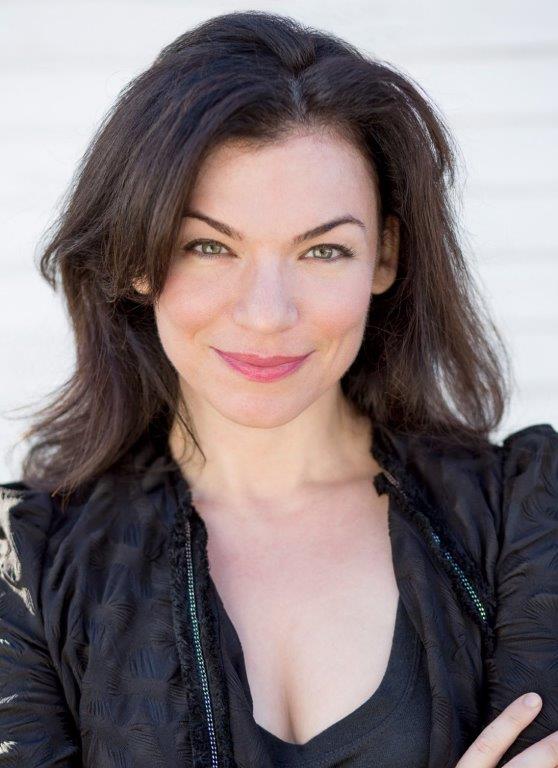
Sera Gamble co-created popular shows The Magicians and now You, starring Penn Badgley and Victoria Pedretti, based on Caroline Kepnes’s of the same name, and its sequel Hidden Bodies, loosely adapted for You’s second season. You was originally available on cable channel Lifetime in the US before being picked up by Netflix for season two.
While there’s no official release date yet for the highly anticipated third season, showrunner Sera Gamble was happy to see it back in production after a brief hiatus due to COVID.
How have you stayed sane during COVID?
“I actually haven’t stopped working since we came home in March; just figuring out how to produce the show has been taking up most of my time.”
Give us a preview of your talk at Screen Forever.
“I believe that we’re going to be talking about the writers’ room and the process of how the magic is made in the writers’ room and moving from there into creating TV shows.”
What’s a Zoom writers’ room like?
“It’s like a little Brady Bunch checkerboard. We try to keep it lively. It’s not quite as fun as in person, but we have just done an entire season of TV that way. We had only been in the room for about a month before we all had to go home. Certain things remain the same. That’s the amazing thing about storytelling. It’s not reinventing the wheel. We’re just asking a thousand percent more flexibility and a thousand percent more inventiveness to get through it. But the fundamentals, surprisingly, have remained the same.”
How did you select the various personalities in the writers’ room to cover all your bases?
“It’s impossible to cover all of your bases. I ask for a ton of scripts. They come at me from the executive who’s covering the show at the studio. They come from the producers. They come from agents. And I always ask to meet writers who may not have written in the particular genre of the show before. So, for Magicians, I was interested in meeting with writers who weren’t even into fantasy or comic books. There’s a nice mix of people who are into that and people from more procedural backgrounds.
“The hope is that you kind of tile in people whose interests and areas of brilliance overlap, so they’re not covering the same thing. And hopefully what you get is a really rousing, respectful but lively conversation every day in the room. That’s basically what we do. We drink coffee and I was going to say argue, but we debate.”
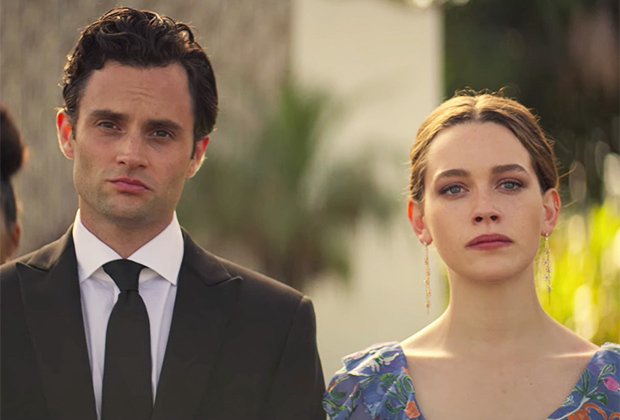
Will there be a Mr. and Mrs. Smith relationship between Joe and Love in Season Three of You?
“That’s a fun reference. The baby is imminent at the end of season two, so I’m not allowed to spoil too much. But I can say that there’s a baby in season three and Joe’s concept of love and what it means to be a good man is stretched even further because he has found himself inside a lot of things that were sort of promised as happily ever after. And as we know, because we live in the real world, the reality is a little bit different than the fairy tale we were handed as children.
“No, he can’t have it the way he would. Because what he’s hoping for, it doesn’t really take into account everything about how people work and how women work and how relationships work. There is something very wires crossed, twisted up in his mind. It’s the great pleasure of writing this character because I can certainly relate to where he’s coming from in terms of the stuff that he puts on a pedestal. But the lengths that he goes to, it’s like there’s a fundamental chip missing for him in terms of understanding that the solution doesn’t exist out in the world. If you keep thinking other people are the problem, maybe there’s some stuff to look at.”
You’d think with Love, Joe doesn’t have to hide who he is anymore, but it’s not going to work, is it?
“It’s a beautiful thing to meet someone, fall in love with them, have them fall in love with you and realise that they are accepting the real you, but only if you’re able to accept the real you. And if you cannot, then it’s a huge problem to be around somebody who knows who you really are.”
Joe is so deplorable, yet we’re drawn to him.
“I know plenty of people who find themselves compelled by him on any number of levels. That’s the point. We’re not trying to deprogram you or tell you, especially taken out of context, that some of the things he does aren’t incredibly romantic, thoughtful, beautiful gestures. More fundamentally, what we’re trying to do is just call into question why we idolise the things we do in our romantic heroes. I always say I’m never trying to tell people not to desire what they desire. It’s more about exploring the problematic desires that we do have. There’s obviously a huge difference between wanting something and acting on it. That’s the difference between those of us who do not chase people and stalk them and break into their apartments and people that do.”
Penn didn’t want to play the role initially. How did you convince him?
“I don’t think I did convince him. We just had a conversation about how he was feeling. And our perspective was that he was feeling all the right things about the character. There is a lot to be repulsed by, and it’s a testament to the character of Penn Badgley. Probably what happened was he realised we were on the same page about why a story like that should be told and what the purpose of embodying that character was and that there was no intent to excuse it. But rather we were going to explore him. And frankly, we’re kind of burning him to the ground bit by bit.”
What about people who say this glorifies stalking or psycho behaviour?
“People are going to have all kinds of reactions to all filmed entertainment. You can’t really control whether something is to someone’s taste. I think it’s pretty clear that You occupies a subversive little corner of the storytelling world. I always feel like there are people who want to be in on a joke like that and be kind of cheeky about these fairly serious topics. They come along for the ride. It’s not for everybody.”
Why didn’t the show do as well on Lifetime as Netflix?
“It had everything to do with the landscape of television for the last few years. Lifetime have been passionate supporters of the show and they are in a very difficult space. I can’t pretend to explain exactly what happened between Lifetime and Netflix, because I think some of it was just the stars aligning for the show in a way that we’re all really grateful about. With Netflix, the whole mythical algorithm is set up so that it can provide you with more of what you like. They have several different metrics they use to find stuff that they feel would be up your alley. And that put the show in a brilliant position, especially for a lot of men who might not have been so inclined to check something out on a network branded for women. They might be hearing about it for the first time on Netflix.”
What is the viewership, male versus female?
“I don’t know the exact viewership, but I’m told we have a good mix. It’s a show that’s watched by young and old, male and female and everything in between. There’s something for everybody.”
Do you like comparisons to Dexter and American Psycho?
“I get a tiny bit annoyed actually and a bit defensive because I have protected it as much as possible in the writers’ room and in conversations with the directors and with Penn and Victoria. I try to ward off clinical diagnoses because I feel like we are storytellers of fiction and we’re trying to embody something about the human experience. To do that, we might pull in a lot of things that psychiatrists might have an opinion about. But we’re not trying to be psychiatrists. The thing about Dexter and American Psycho is that it’s sort of widely known to be about those people who have some sociopathy and psychopathy. And we talk about that in the room. I always want each writer to be able to set that aside and just ask themselves, ‘with everything I know about this character, how would he feel in this next moment?’ Not as somebody who would be diagnosing him or medicating him, but rather as just another human.
“’I’m going to put myself in his shoes for a minute.’ Because some of those labels confine you to a certain box. Sometimes you just need some wiggle room to have your character do what might be perceived as out of character. And by the way, I speak as a daughter of a psychiatrist. My mum is a psychiatrist. She has very strong opinions about the potential diagnosis of somebody like Joe. But we always joke that my job is so different from her job. When she sees somebody like that, she’s trying to figure out what’s wrong, so she can fix it. We’re asking ourselves what is the worst-case scenario of something like this? And turns out, it’s a lot of murder.”
How closely will season three follow the new book [You Love Me, scheduled for release in 2021]?
“It has a little bit. You’ll be able to see the parallels when you read the book. But over the course of season two, Joe and Love went in a few directions different than Caroline’s books. The longer a TV show exists alongside a book or a book series, the more it sort of diverges. I think of it because I’m a fantasy writer. I think of it as timelines, and that the original timeline is Caroline’s books. And now we’re in a parallel timeline where Love makes a few different decisions in season two and it sets off on a slightly different pattern in season three.”
Screen Forever is on February 16-18, 2020 on the Gold Coast.
