


by Andrea Baker and Kristen Scott
Yellow Letters (Gelbe Briefe, in German) is a timely take on the ongoing oppression of artistic freedom during authoritarian times.
Directed and co-written by Turkish-born, German-based filmmaker İlker Çatak, the feature won the Best Film (Golden Bear) at the Berlinale in February this year.
The term ‘yellow letter’ refers to an official, legally tracked letter from a court or government authority.
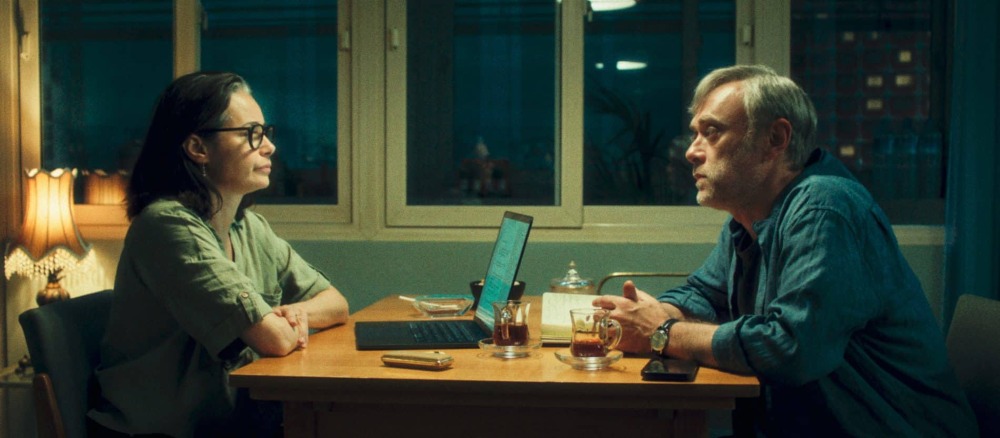
In this film, Aziz, a Professor of dramatic arts and avant-garde playwright (played by Tansu Biçer) and his wife Derya, a famous actress (played by Özgü Namal), receive a ‘yellow letter’ from the Turkish government about their alleged political beliefs and activities.

Aziz is put on extended leave from his university job after he is surreptitiously filmed encouraging his students to leave class and attend a protest, arguing that the theatre of a protest is a fine way to learn about dramaturgy. Derya’s play at a State Theatre is cancelled because her social media posts are labelled as anti-government.
As these coercive measures impact their well-being, the family (Aziz, Derya and their 14-year-old rebellious daughter, Ezgi, played by Leyla Smyrna Cabas), move from Ankara and Istanbul to live with Aziz’s mother, Güngör (played by İpek Bilgin) and slowly rebuild their lives.
Narratives of authoritarianism
Like Çatak’s The Teachers’ Lounge (2023), which was the German international feature nomination at the 2024 Oscars, the universal theme of Yellow Letters is tied to fear, authority and control. However, this time, it’s multi-layered, from the public, interpersonal, and domestic spaces.
The first layer is a common narrative of state control and censorship of artistic expression, where academics and writers are considered political “traitors and terrorists”, and avant-garde theatre is a metaphor of rebellion.
The second layer is a strained marriage between the two spirited creatives, Aziz and Derya. The male academic and playwright is an idealist, while the female actress is a realist.
Unable to get academic work, Aziz works as a taxi driver and writes a play with a political message in his spare time. Derya wants to sell her joint family property (co-owned with her brother) to finance her daughter’s education and ultimately takes a lucrative role in a state-controlled television series, for which Aziz labels her “ethically bankrupt”.
Derya, despite her moral outrage and internal conflict, comes to accept that expressing an idea publicly might have deleterious consequences, like not being able to support the family unit with paid work.

The third layer is Aziz’s mother Güngör, whose maternal instincts want this fragile artistic family to stay with her.
The final layer is about a teen who is carving out her identity. “You think theatre will save the world?, Ezgi asks her academic-playwright father, Aziz. “Yes, I do”, he replies. Ezgi, often comforted by Güngör, rallies against her parents’ perceived control over smoking cigarettes and her choice of a much older boyfriend.
Shades of authenticity and vagueness
The director, Çatak left Turkey when he was a child and has been based in Berlin ever since. The film is an international co-production between Germany, France, and Turkey.
Given that the bulk of the funding is from Germany and his birthplace’s rigid censorship, in Yellow Letters, Berlin and Hamburg stand in for the respective Turkish cities, Ankara and Istanbul.
However, this location shift lacks authenticity, as those familiar with Berlin can see the dominating symbol of former East Berlin, the Berlin TV Tower (Fernsehturm), while street life lacks the usual gritty chaos associated with Istanbul.
The film’s standout is the acting by well-credentialed Turkish thespians, from the elusively shocked Biçer (as Aziz); eternally indignant Namal (as Derya); warm but world-weary Bilgin (as Güngör) to the introductory role of Smyrna Cabas as the defiant teenager, Ezgi.
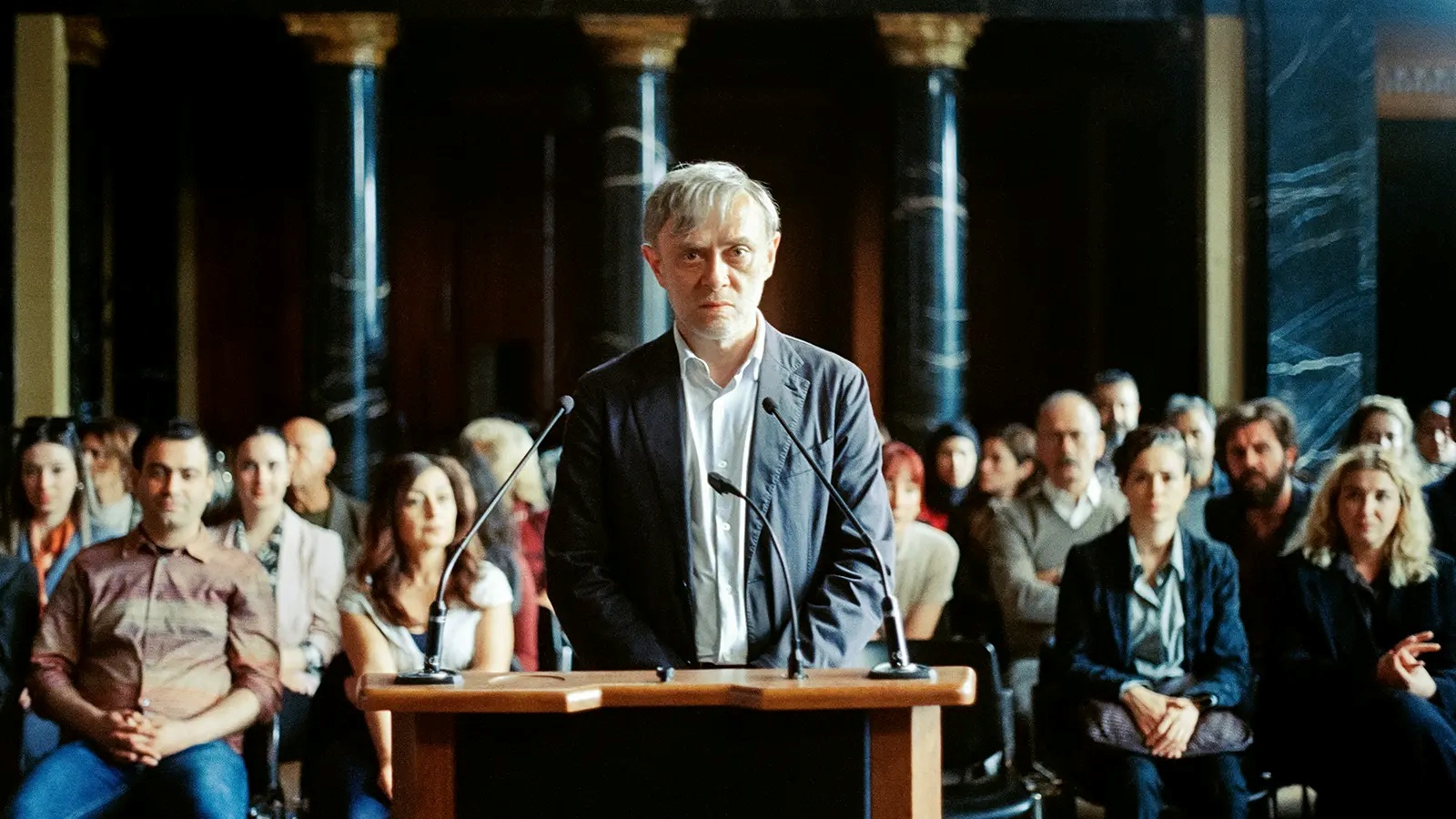
Yellow Letters is also saturated with political vagueness. Aziz, and his other ousted academic peers are left to defend their positions in a kangaroo-like court. “If it’s not a crime to have an idea, neither is expressing it!” his colleague said. It is never clear why some of his colleagues were also suspended from the university.
Nor is it clear what Aziz’s students were protesting about. Audiences are left to hypothesise that it is the current Israeli war because of the parade of Palestinian flags and anti-war posters at the protest.
The film is based in Turkey, but its leader, President Recep Tayyip Erdoğan (who has been in power for over 22 years) is never mentioned. Adding to this vagueness, Erdoğan is supportive of the Palestinian state, but this thread gets lost.
Perhaps vagueness is the director Çatak’s intent, as Yellow Letters is a homage to artistic truth-telling, a universal message against censorship and the growing tide of authoritarianism across the globe.
Yellow Letters screens at the Darwin Internation Film Festival on Sunday 13 September, tix here.
