


by Lewis Khan
I went to see Tony last week and absolutely loved it.
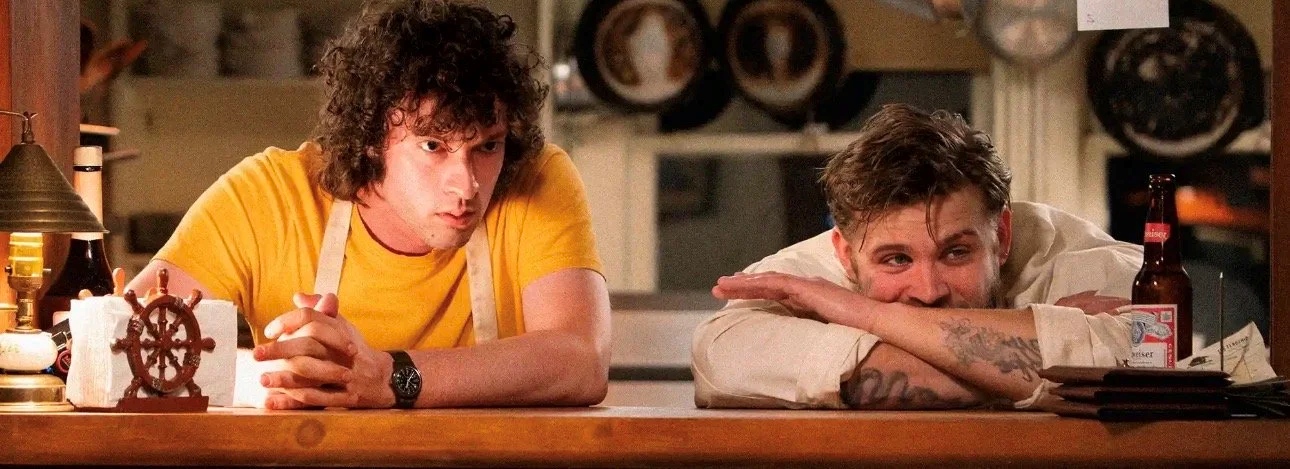
The film follows a 19-year-old Anthony Bourdain as he stumbles into the chaotic world of a restaurant kitchen in Provincetown. It’s funny, warm and full of life, and it understands why those early years mattered. The kitchen gives Tony a place to belong, and introduces him to the people, energy and culture that will shape the rest of his life.
After seeing it, I read about how A24 launched the film in the United States. The campaign understood Tony just as well as the filmmakers did.
Ahead of the wider release, A24 partnered with OpenTable and Square to run free advance screenings for hospitality and food-service workers across 25 cities, called Industry Night. The idea was simple: a film about a young Bourdain finding his place inside a restaurant kitchen was shown first to the people who live inside that world.
Every choice underneath that idea followed the same logic. The screenings ran on a Monday, the industry’s version of a Friday and one of the few nights hospitality workers can actually get to an event. OpenTable already fills their tables. Square already processes their payments. Neither partnership needed explaining to the audience that A24 was chasing, and local chefs, not talent from the film, hosted each night, because they already had standing in that city.
None of that is dramatic. Together, it’s an audience strategy. A24 knew who should see the film first, understood how those people worked, and knew whose invitation would carry weight.
When we talk about marketing an independent film, the conversation usually starts with trailers, posters, publicity and advertising. All of that matters, but it works far better once someone can answer a more basic question: who are the first people this film is for? “People who like movies” is too broad to guide any decision that matters.
Every film carries communities, places and experiences that connect it to particular groups of people, whether that’s people living with disability, a regional town, or anyone who’s worked a kitchen line. Those audiences need identifying while the film is still being developed, not once it’s finished and there’s no time left to build a real relationship with them.
I learned that on my own first feature, What About Sal. Some of our earliest public screenings ran in 50-seat cinemas in Sydney and Melbourne, and I was the one ringing those cinemas myself, trying to build an audience from a standing start while the release clock was already running. Sal went on to a national theatrical release and a Netflix acquisition, proof the audience was there. Next time though, I’ll start that work during development, not after the film is finished.
That’s what A24 understood with Tony. Bourdain has a broad following across food, travel, television and publishing. A24 gave the first screenings to the dishwashers, servers, cooks and bartenders that he spent his career celebrating, ahead of his celebrity fans and entertainment media coverage. That decision bought the campaign something advertising money struggles to buy: authenticity.
Film partnerships are often treated as sponsorship, a logo in exchange for tickets and branding. The stronger version does more than that. OpenTable and Square already had standing with the audience that A24 needed, and audiences can tell when a brand’s been bolted onto a film through a manufactured connection versus one that actually belongs in the room. Australian producers should be building these relationships while a film is still in development, not once a release date is locked, because a partner who understands the audience early can shape events, content and outreach long before the film is finished, and sometimes fund part of it too.
Local trust also beats national profile. Independent films often chase the biggest available name to host a screening. A recognisable face gets attention. A trusted one gets relevance, and a respected local chef inviting hospitality workers to a Bourdain film carries a kind of credibility a bigger name from outside that world can’t buy. Australia has enormous scope here: community leaders, regional media, sporting clubs and specialist creators with real relationships to the audiences a film actually needs, often with a far smaller public profile than the “name” a campaign would normally reach for.
The best part of Industry Night is that the strategy never shows up as messaging. It shows up as logistics. Who got invited first, which brands were attached, what night it ran, who stood at the front of the room, every one of those was a communications decision before a single line of copy existed.
In Australia, marketing is too often bolted on in the final stage of post, and the campaign team ends up finding an audience in a hurry, with whatever money and time is left. The stronger model brings audience thinking into development, while the script, package and finance plan are still taking shape, so that by the time the film is finished, the release isn’t the start of a relationship with its audience. It’s the next stage of one already underway.
That doesn’t cap the eventual audience. Tony can still reach anyone interested in Bourdain, food, travel or a good coming-of-age story. It just means that the campaign has a starting point.
Australian independent films are fighting for attention with small budgets, crowded screens and more viewing choices than audiences have ever had. Trying to reach everybody from day one spreads those resources thin.
A better question: who are the first 500 people who should see this film?
Where do they gather? Who already has their trust? What would make them bring someone else? A24 didn’t invent a community for Tony. It found the one Bourdain spent his life inside, and let the release start there.
Every film has a first audience. Most Australian marketing plans start by chasing the widest one they can find. The films that travel are the ones that found the smallest one first.
Lewis Khan is a Sydney based producer
