



by Stephen Vagg
Lee Robinson and Chips Rafferty had made one profitable low budget feature, The Phantom Stockman. What to do for an encore? A think piece about the malaise of modern society? A musical set during the 1890s shearers’ strike? Or a slightly bigger and better version of their first movie using the same principles?
They picked the latter. King of the Coral Sea was another adventure tale in the vein of Stockman, which leaned in to Rafferty and Robinson’s strengths: Rafferty’s screen presence and fame, plus Robinson’s experience as a documentary filmmaker and radio writer of adventure tales.
They decided not to make a second film in the outback, but instead selected another exotic, visually interesting part of Australia that Robinson knew well – the pearling industry of Thursday Island. Robinson had made a documentary on the pearling industry in Broome, The Pearlers, although decided to set his film on Thursday Island, which he knew from his travels to New Guinea, and was logistically easier to base a movie unit than Broome.
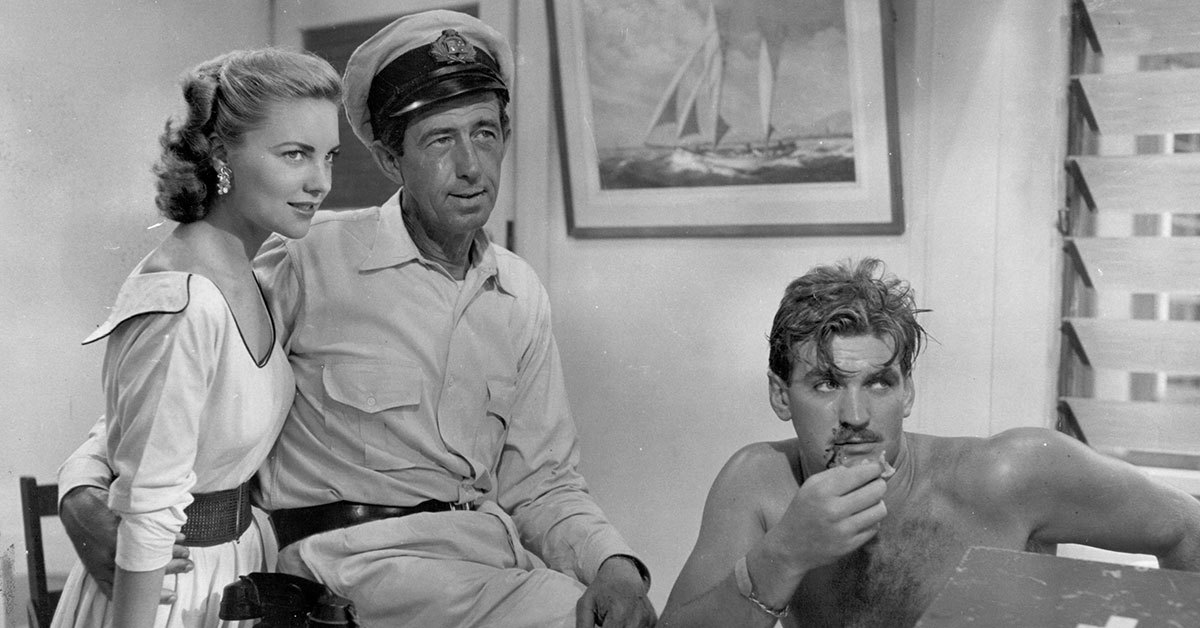
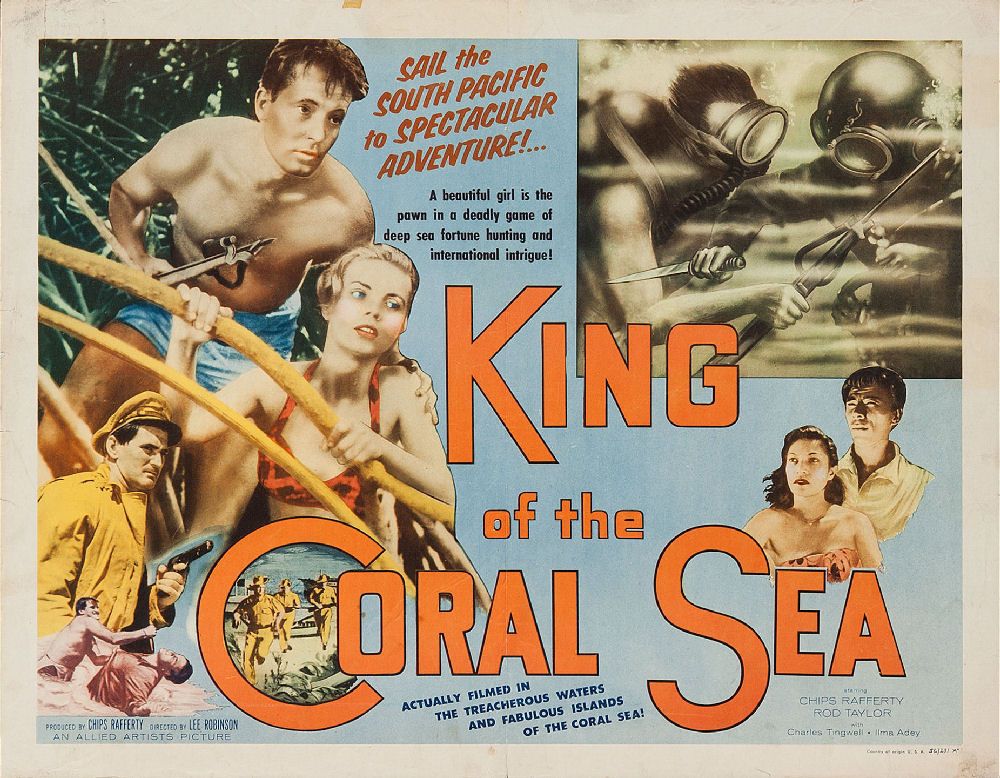
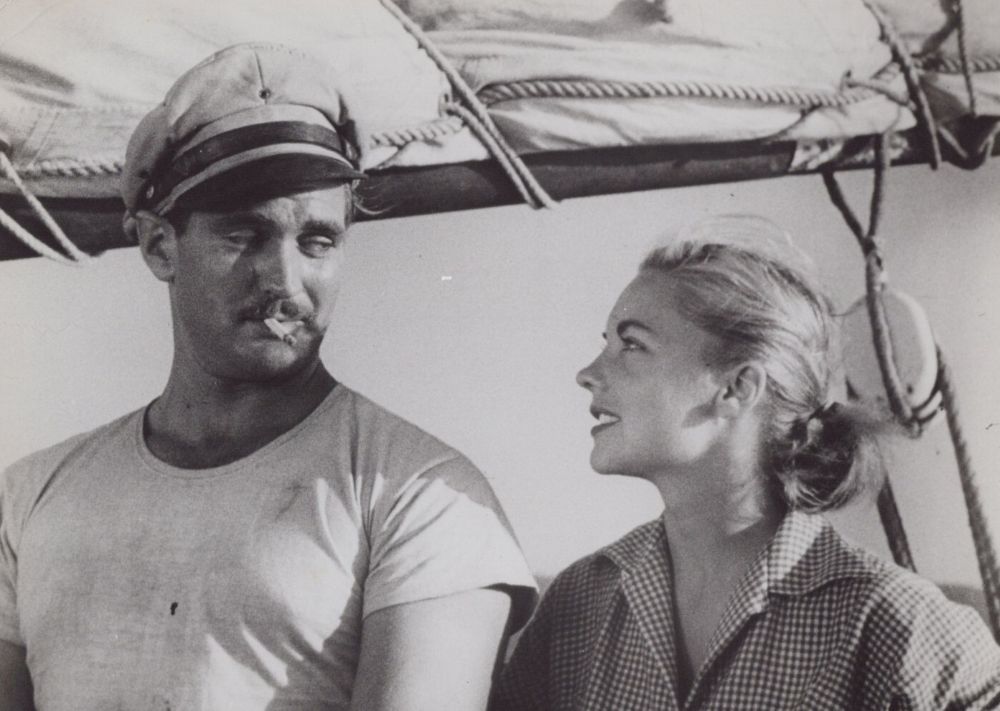
Like Stockman, the story of King of the Coral Sea revolved around Rafferty investigating a murder, this time of a person plucked out of the water (it was based on a real case, the murder of Mark Liebglid in Broome in 1905). Like Stockman, there was a decent female lead part: Rusty, daughter of Ted King (Rafferty); she would have a romance with Peter Merrimen, the playboy owner of King’s company. As he had with Stockman, Robinson cast a model (Ilma Adey) with no acting experience in the female lead, but surrounded her with a strong cast from the world of Sydney radio – Charles Tingwell (as Merriman), Rod Taylor (Jake Janiero, Ted’s offsider), Lloyd Berrell (Yusep, the baddy) and Reg Lye (Grundy, a local boozer).
The success of Stockman enabled Robinson and Rafferty to raise a larger budget for their second film, around 23,000 pounds (the silly capital restriction referred to in the previous article had been lifted). This allowed for a larger cast and for everyone to be flown to location on Thursday Island, with additional scenes shot on Green Island. There was even a second decent sized female role, Serena, played by local nurse Frances Chin Soon.
King of the Coral Sea definitely had its flaws. The pacing is lethargic. Rafferty’s character should have had more of a motivation to investigate the murder (do local authorities commonly outsource murder investigations to pearlers?). Rod Taylor’s character is superfluous to the whole story – he’s crying out to be used in a love triangle with Rusty and Merrimen, and/or to be revealed to be the main villain, which would give the third act a badly needed push, but that never happens. (Nothing wrong with Rod Taylor’s performance, which is splendid – we’re talking his character, who sucks up oxygen that would be better given to Ted King, Rusty and Merrimen.) The movie has the racial sensitivity of its time – the baddies are foreign whites or “half castes”; there’s a native girl who is meant to clean Merrimen’s house who “always has her boyfriends around”.
But the cast is excellent, the romantic leads sexy, the photography gorgeous, the locations fabulous, and the story holds. The movie received a bigger release than Phantom Stockman and made even more money for Robinson and Rafferty. They were now batting two for two.
What lessons can be learned from King of the Coral Sea?
Some are the same lessons for Phantom Stockman, to wit:
- Have a story that ticks the basics of its genre – stakes, beginning/middle/end, goodies/baddies, action, romance.
- Play to your strengths – in their case, location filming, Rafferty’s stardom, actors Robinson and Rafferty knew from Sydney radio, Robinson’s ability to construct a basic adventure tale.
Some are specific to King of the Coral Sea, namely:
- If you have a success, try to repeat it, but try to improve. Robinson and Rafferty stretched themselves for their second film – better actors, more varied locations, stronger story – but not too much; they didn’t depart too far from formula.
- Cast hot people. Phantom Stockman only had one, Jeanette Elphick. King had three – Tingwell, Rod Taylor, Ilma Adey. Your film should have some attractive people in it. Not wall to wall, that’s dumb, but some. You’re manufacturing dreams.
- There’s no crime in aiming at an international audience. The movie was originally called the more geographically accurate King of the Arafura Sea but changed to King of the Coral Sea as more people, in particular Americans, had heard of the Coral Sea (it also rolls more easily off the tongue). Likewise, Rod Taylor’s character was made American to appeal to Americans – which might explain why his character wasn’t allowed to be a baddie (that doesn’t let the filmmakers off the hook – Tingwell’s character could have been played as an American).
- Don’t have superfluous characters in a script, like Jake Janeiro. Always do a test – “if I cut this character out, what will happen?” If the answer is “nothing”, then either cut that character out or make him/her/they essential to story in some way – a secret villain/ally/complication/something. Don’t waste screen real estate.
- Make the lead story personal. Phantom Stockman is better than King in this respect – that investigation was personal. King isn’t. That would’ve been an easy flaw to fix (make the dead person King’s brother or have him blamed for the murder or something) that would’ve made the film that much better.
- Don’t bother asking film critics for advice on scripts in advance as they are generally useless. Robinson sent a copy of the script to Kenneth Slessor, best known for his poetry, but a highly regarded film reviewer, asking for advice on the script. On July 13, 1953, Ken Slessor sent Robinson a note which is available in Robinson’s papers. Slessor stated, “Of a simple, direct, outdoor Western type, the story seems satisfactory. It hasn’t much subtlety, but subtlety is not required – indeed, it would be out of place. The only criticism I would care to offer is to repeat the old warning given to early Australian films – don’t try to cram in too much local colour for its own sake. The narrative should come first all the time and to hell with showing off landscape, horses, kangaroos, koalas, etc as some of the early films insisted on doing. That’s why you must be careful not to emphasise such scenes as the native dance, the old fort, crayfish spearing, etc beyond their proper proportion in the story. These interludes must appear to come in spontaneously and naturally and not to have been dragged in just as sideshows themselves. Otherwise, I think you’ve got something that could be pretty good in its class.”
This sort of feedback is useless: Slessor didn’t pick up on any of the aforementioned flaws about the superfluousness of Rod Taylor’s character or the motivations of Ted King, or how to increase pace and tension, or the need for another twist or two. In fairness, critics aren’t trained story editors but that makes you wonder why they act as such authorities on what is a good/bad script.
The success of King of the Coral Sea and The Phantom Stockman encouraged Rafferty and Robinson to get really ambitious. They were about to have their greatest success… which would then result in disaster. Stay tuned for part three.
The author would like to thank Graham Shirley for his assistance with this article. Unless specified, all opinions are those of the author.
Click here to read The Lee Robinson-Chips Rafferty Story Part One: The Phantom Stockman
