



by Gill Pringle
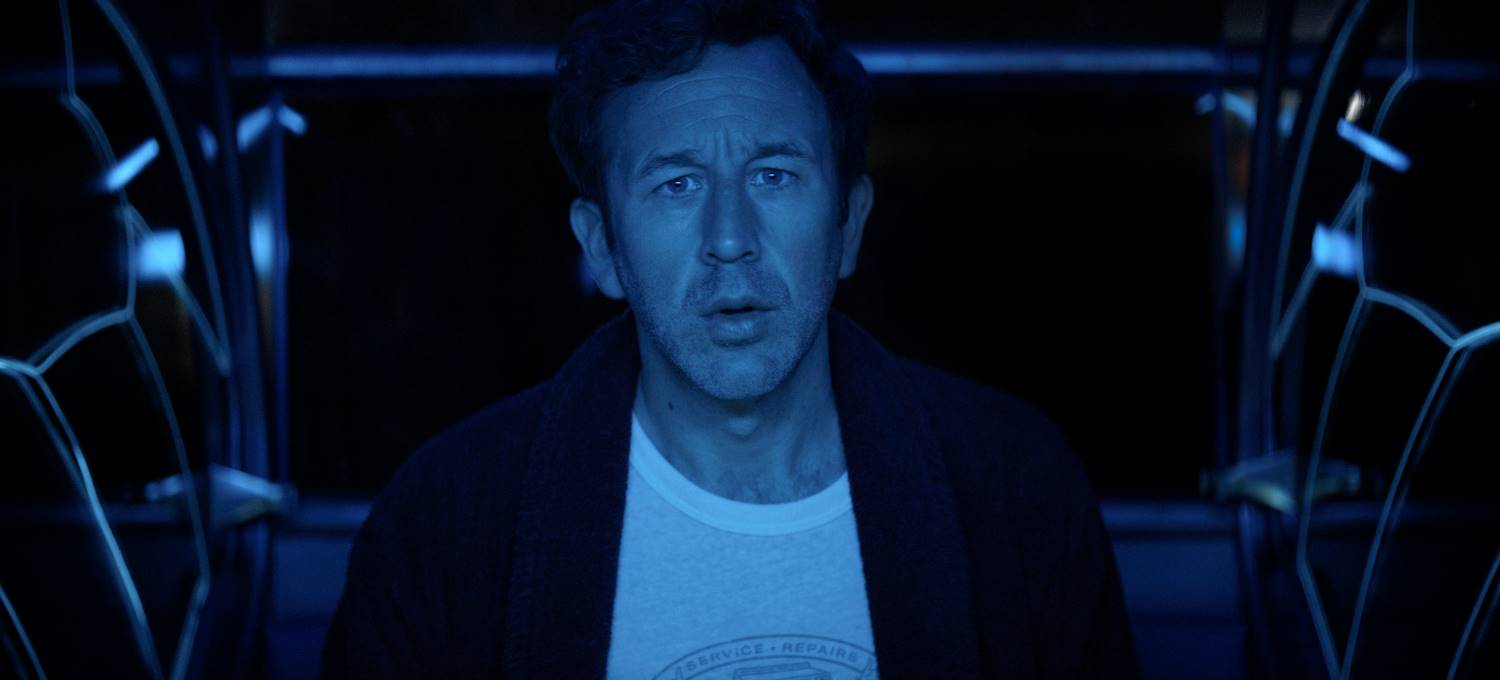
That’s the premise behind The Big Door Prize, a ten-part sci-fi dramedy set in Deerfield, a small town that is forever changed when a mysterious machine – named Morpho – appears in the general store, promising to reveal each resident’s true life potential.
Some of Deerfield’s locals are reluctant to try it, while others walk around town exuding joy at Morpho’s revelations. It looks like a retro arcade game, but its promise is intriguing: provide your social security number, fingerprints and two dollars, and the machine will give you a card that states your life’s potential.
Based on M.O. Walsh’s 2020 bestseller, The Big Door Prize, it was the last book Emmy Award winner David West Read (Schitt’s Creek) read before the pandemic began.
The showrunner loved the universality of the story’s themes, that everyone has something they’re reaching for – or something they wanted to reach for – but perhaps haven’t had the courage or the resources to do so.
 “Seeing the way that people interpret their potential to be whatever they wanted to be was always a very interesting idea to me; that they don’t really need this machine to tell them what they want, they need the machine to give them permission to pursue it. It feels like encouragement and the green light to go after something, is often the missing piece in terms of pursuing what would really make you happy,” muses Read, who has greatly expanded upon the book to make the series more open-ended, leaving the door open for future seasons.
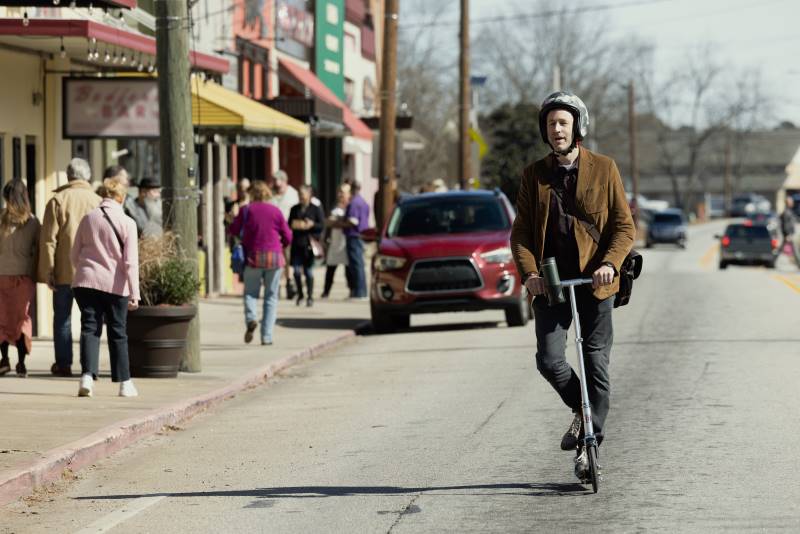
Chris O’Dowd, 43, was Read’s first choice to portray Dusty Hubbard, a seemingly content, cheerful family man and high school teacher who, watching everyone around him reevaluate their life choices and ambitions – based on the machine’s printouts – is forced to question whether he is truly as happy as he once thought.
As the machine’s chief skeptic, O’Dowd reckons that he’s pretty similar to Dusty in real life. “I’ve never really been into fortune things. But weirdly, my wife would always have her palm read. And when we just started dating and it was kind of up and down a bit – I don’t know if we thought it was going to make it or not – she went to a fortune teller,” recalls the Irish actor beloved for his roles in Bridesmaids, The Sapphires and The IT Crowd.
“At the time, I was shooting a film in London and the fortune teller told her that she was going to spend her life with a man on a horse. And the next minute, she received a text from me – and I was on a horse! Because I had to ride a horse in this movie. And she, like, killed the lady!” jokes the actor who would go on to marry TV presenter/writer Dawn O’Porter, now parents to two little boys.
O’Dowd is not sure if he would personally be convinced by the Morpho. “I think it would have to be so specific, where it felt like it was about me in some way. Otherwise, I think I’d be too much of a cynic,” he says.
As more and more townspeople use the Morpho machine, they are surprised by its remarkable ability to tap into their secret hopes and dreams. Soon, Deerfield’s residents are abandoning jobs, relationships, and everything that they thought they knew about themselves, in pursuit of a better future.
Even Dusty’s wife, Cass (Gabrielle Dennis), has embraced the machine’s prophecy whole-heartedly, indulging in the dream that there’s something bigger out there for her. Like many of Deerfield’s residents, the couple has lived a relatively safe, uncomplicated life, but with the arrival of Morpho, all of that is about to change.
Gabrielle Dennis believes that these themes are highly relatable. “Anybody that watches the show, they’re going to ask those similar existential questions and have that experience of, like, ‘What is my life’s potential?’ or ‘Am I happy?’ Just like the journey that these characters go through and the narrative of the show goes through, I think audiences will have similar reactions in their own personal world,” says the actress who has featured on TV series Insecure, Luke Cage, A Black Lady Sketch Show and SWAT.
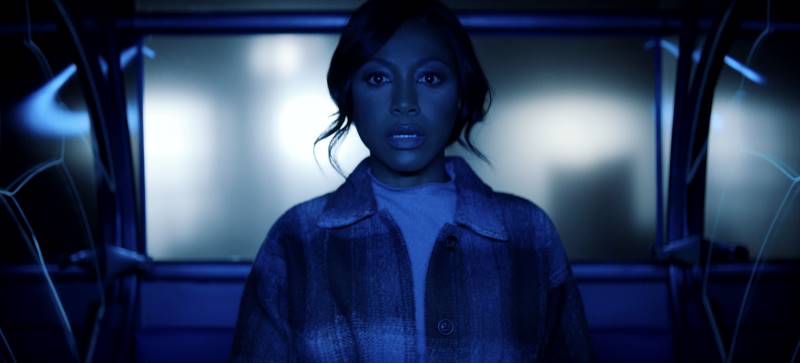
“Happiness is this universal quest that I think we all go through,” she argues. “So, for Cass – and me alike – these questions aligned during filming. And for me, personally, the Morpho was very reflective of the pandemic being this tangible life shift, where we all asked ourselves questions or did a reassessment of life, and figured out what was most important to us. So, the fact of the pandemic and the community of Deerfield going through this experience collectively together, I found that very relatable.”
At the beginning of the story, we find Dusty as one of the few Deerfield townsfolk who is overly critical of the Morpho machine. “The two things that we know about Dusty is that he’s a teacher who goes through his life whistling in some capacity,” says O’Dowd.
“And he gets this card which says that his truest potential is something he has already achieved. So, he has to grapple with the enormity of that potential. The potential that you are already everything you will ever be.”
Read elaborates: “I think one of Dusty’s anxieties, which I find very relatable, is that there is no plateau where everything is okay and where happiness has been achieved; that as you move forward in life or upward in life, there is always something beyond where you are. I think Dusty realising that he should have set his sights higher, is one of the things that he struggles with the most,” he says.
If O’Dowd’s Dusty leads a fairly mundane small town existence, then he surprised his co-stars – Ally Maki, Damon Gupton, Josh Segarra, Crystal Fox, Sammy Fourlas, and Djouliet Amara – with an impressive dance display, leading them onto the dance floor for an exuberant interpretation of George Michael’s ‘Faith’.
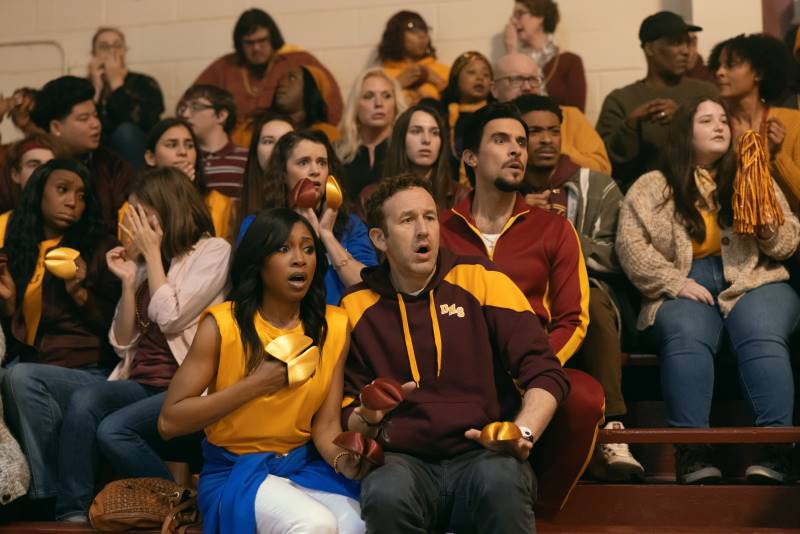
O’Dowd is typically modest. “My dance was less than extraordinary, but it was fun. I like having a boogie but learning dance moves is a different side of the brain for me. So, we had a bit of choreography for the dance – because it was supposed to be a choreographed dance from an old dance routine I think.
“The reality is, that me dancing is much like a hammer falling off a table. There’s a clang, but there’s some movement – and there’s the grace and I suppose fortitude of the hammer having other uses. But once I got into it, I enjoyed it so much,” he admits.
And while his character is supposed to be a talented whistler, O’Dowd admits to being less than talented himself. “We actually used a professional whistler to try and get some of the bigger stuff across and then I do little bits of it. I wanted them to use lots of it, so there’s a lot of scenes where I’m just walking in the background with my lips pursed like that. So, if they don’t use the whistle sound, I just looked like an idiot. Look out for that. Me sucking a straw!” he laughs.
A self-confessed sceptic, O’Dowd is curious about the story’s themes of people needing some kind of permission to change their lives.
“It’s not necessarily that we need the permission, but we need a catalyst, even if it’s something as light as a horoscope in a newspaper… and it doesn’t need to be true. It doesn’t matter if any of it is true. It’s just to be led, or the permission to change or the catalyst for self-improvement. Or sometimes it’s thrust upon you. And life is what happens when you’re making other plans. But I think what our show says: have a try anyway.”
The Big Door Prize premieres globally on Wednesday, 29 March on Apple TV+
