



by Lewis Khan
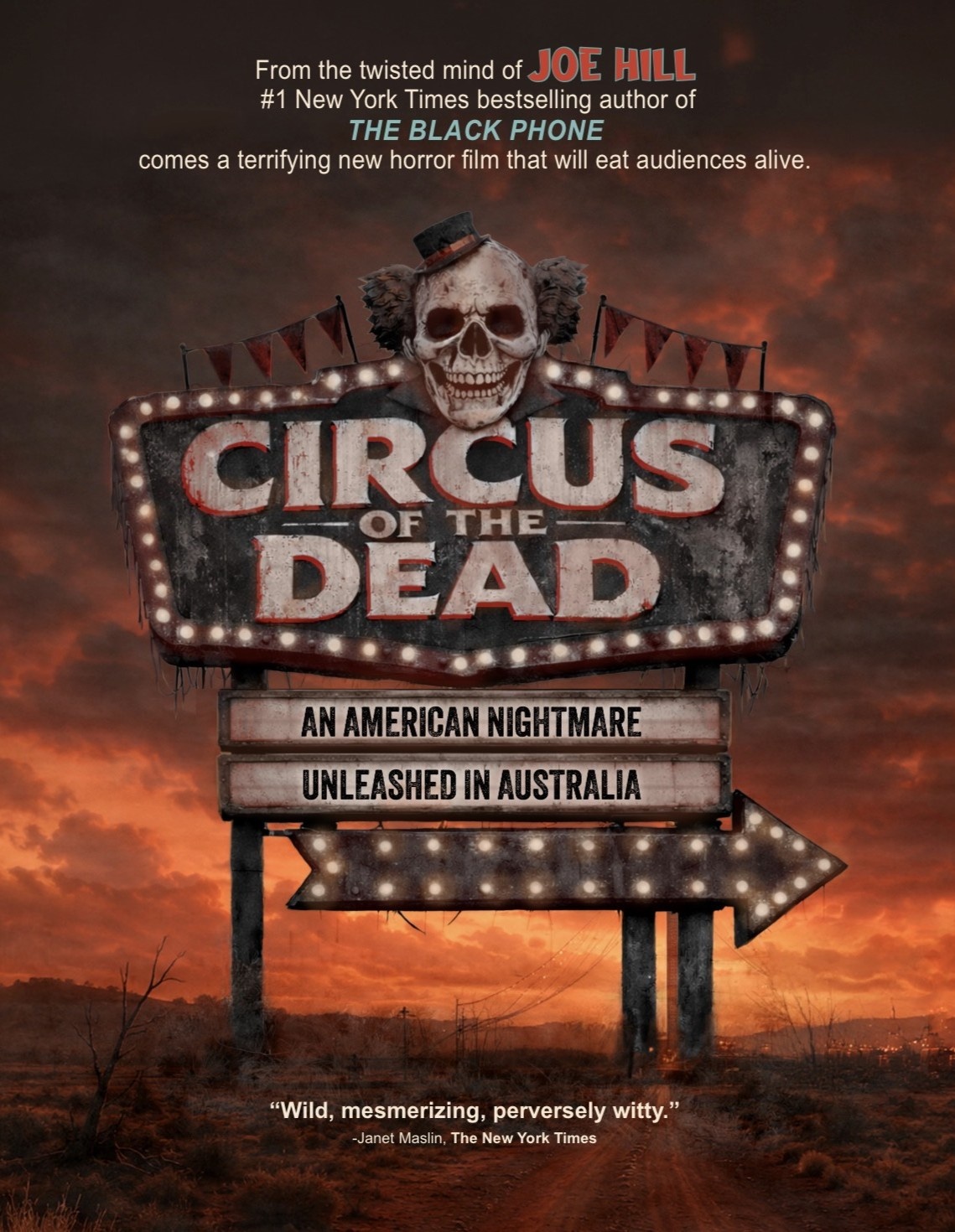
I’m putting together the finance plan for a feature I’m co-producing, Circus of the Dead, and I keep coming back to a line that isn’t on the spreadsheet.
The audience.
Like most film finance plans, ours accounts for the usual pieces: private equity, the Producer Offset, distributor guarantees, international sales, maybe gap financing depending on how the structure comes together. There’s a production budget, a recoupment waterfall, sales assumptions modelling to show an investor where the money comes from and how it might come back.
What there isn’t is a line that places any value on an audience that exists before the film does.
I’m starting to think that’s a mistake.
We treat audience as something that arrives at the end. Develop the screenplay. Finance it. Make the film. Eventually a distributor comes aboard, and a marketing campaign begins trying to find the people who might want to watch it.
That’s a strange sequence outside the film business. If I were raising money for almost any other consumer product, an investor’s first question would be whether anybody wants it. How many potential customers have we identified? Can we reach them? Have they shown any willingness to buy something from us before? In independent film, we look to raise millions before having good answers to any of that.
I see it changing in investor conversations. People still ask who’s starring, what it costs, who might distribute it. But increasingly, I’m asked a different question: who is going to watch it? “We’ll find out when we release it” doesn’t land the way it used to.
Part of the problem is that our financing language was built around assets that the industry already knows how to recognise. A distribution minimum guarantee sits on a finance plan because somebody has contractually committed money. A sales estimate supports lending because an established agent has put a value against specific territories. The Producer Offset can be calculated and cash-flowed.
An audience doesn’t fit into any of those boxes. Ten thousand people following a film’s development aren’t worth $500,000 the way a distribution guarantee is. A Letterboxd watchlist isn’t a receivable. I wouldn’t pretend otherwise.
But that doesn’t mean it has no economic value. An existing audience lowers what it costs to reach people at release. It can improve crowdfunding. It can generate revenue during development. It gives distributors evidence people are already interested. And it reduces one of the biggest unknowns in independent film: whether anybody is waiting at the other end.
This is especially interesting in Australia, given how we finance films. We have an unusually valuable mechanism in the Producer Offset, public agency investment still matters, and private capital is increasingly part of the conversation. Yet audience sits outside the structure entirely. We calculate the government’s contribution, the investors’, the distributors’, and only after assembling all of that do we start spending more money to find out if an audience exists.
I don’t think the fix is inventing an “audience valuation” and sticking an arbitrary number on the plan, as I believe followers are too easy to inflate, and they don’t necessarily buy tickets. What belongs in the conversation instead is evidence: how many people can the project reach directly? How many have stayed connected? What have they responded to? Has that audience ever paid for anything? Those are due-diligence questions, not marketing ones.
That distinction is the real point. If audience-building starts six weeks before release, it’s marketing. If it starts eighteen months before production and becomes part of how the project demonstrates demand, attracts partners and eventually helps a distributor reach buyers, then it’s development. And development is where value gets created before the cameras roll. A screenplay creates value. Attaching an actor creates value. A credible sales agent creates value. Why wouldn’t demonstrating that 30,000 people want to follow the project do the same?
None of this means a filmmaker with a huge following automatically gets financed, or one without an audience shouldn’t be, as some films need to be made before anyone knows they want them, and that’s exactly what public funding exists to allow. But private investors are being asked to put capital at risk, and when I’m sitting across from them talking about Circus of the Dead, I want to show them more than how we’re financing the film. I want to show who we’re building it for, and what evidence we have that they’ll still be there when it arrives.
Maybe the audience doesn’t belong on the finance plan as a dollar figure yet.
But it belongs in the room when the money is being raised.
Lewis Khan is a producer based in Sydney
