


By Helen Barlow
The night before Sundance’s awards announcements, I called around regular attendees to see what they thought. We all concurred that we missed the energy of the live event, the audience reaction and the ability to confer with colleagues. The general atmosphere in Sundance is more egalitarian than at other festivals, with down-dressed celebrities at casual premieres and even wandering along Park City’s Main Street. There’s a vibe there that’s kind of cool.
As for the films this year, which we watched at home, the selection was artier, harking back to the original festival – before star-driven movies became the name of the game. Certainly, this year stars were thin on the ground in the online Q&As that followed the films’ premieres, that is, for the few films that had them.
The Festival’s Australian feature film entry, Sally Aitken’s Playing With Sharks, may not have won awards, but it went down extremely well and my colleagues chuckled at the memory of watching it. Indeed, it’s full of humour, thanks to the star presence of the indomitable Valerie Taylor.
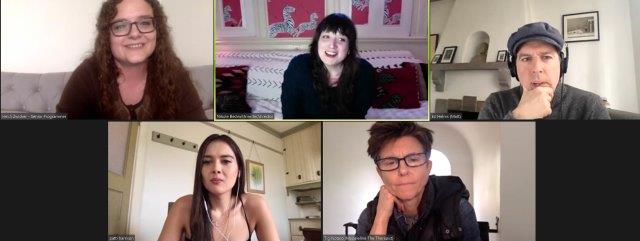
Likewise, Ed Helms provided some much-needed humour in Together Together, the story of a single man who pays a young surrogate (Patti Harrison) to have his baby. They become friends – but how far will the relationship go? That film went away empty-handed too.
Before the festival, the directing debuts by Rebecca Hall and Robin Wright had been widely publicised, so were highly anticipated. Hall’s Passing starring Tessa Thompson and Ruth Negga (who received raves for her role as a mixed race woman who passes for white, even to her wealthy husband, played by Alexander Skarsgard) was beautiful to look at. Shot in black and white and set in 1920s Harlem, the film harks back to old Hollywood and is evocative of a time that thankfully has passed. Hall adapted the story from Nella Larsen’s 1920s novel, and admitted at the festival that her own maternal grandfather was black and passed for white. The film failed to win a prize in the awards.
Wright’s Land was again ravishingly filmed though light on storyline, and unlike Hall, she stars in her film. Land follows a woman who after a personal tragedy heads to live in the wilds of Wyoming and the difficulties she encounters. It screened out-of-competition in the Premieres section where the more commercial films usually unspool.
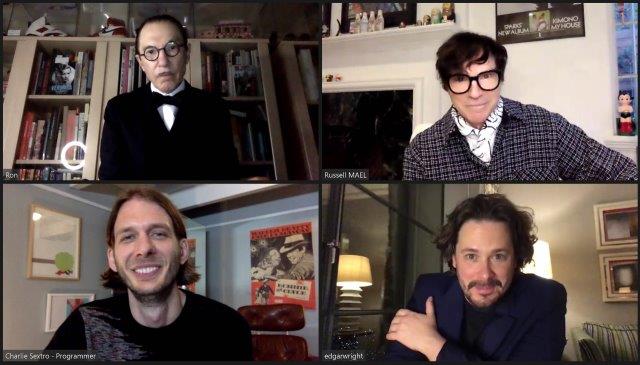
This was also the case with Edgar Wright’s passion project The Sparks Brothers, which relays the talents of the two eccentric musicians who have been hugely influential for the director. Wright (Hot Fuzz, Baby Driver) has attracted commentators who read like a who’s who in the music industry – from Beck to Duran Duran – and Wright even makes multiple appearances. It will be interesting to see how Annette, a film that the brothers wrote (starring Adam Driver and Marion Cotillard and directed by Leos Carax) will be received when it premieres, most likely in Cannes.
Amy Tan: An Unintended Memoir, focusing on the Joy Luck Club writer, was also a treat in the Premieres section. The film, directed by the late Jamie Redford, son of Sundance founder Robert Redford, traces Tan’s painful family history and focuses on her relationship with her mother.
Shaka King’s Judas and the Black Messiah, a late out-of-competition entry, is anchored by two strong performances. Daniel Kaluuya, an Oscar nominee for Get Out, is a shoo-in to be nominated again, albeit as supporting actor. He plays the real life Fred Hampton, deputy chairman of the national Black Panther Party, who was assassinated in 1969 by the FBI. LaKeith Stanfield (Knives Out) plays petty criminal William O’Neal, who was coerced into helping the FBI silence the Party. The film releases here March 11.
No Sundance film exerted more star power than Japanese director Sion Sono’s American debut, the Japan-set actioner Prisoners of The Ghostland starring an in form and surprisingly buff Nicolas Cage. At one point, the tall imposing actor wears only a sumo wrestler’s loincloth, but mostly he is clad in leather, recalling Mad Max.
THE WINNERS
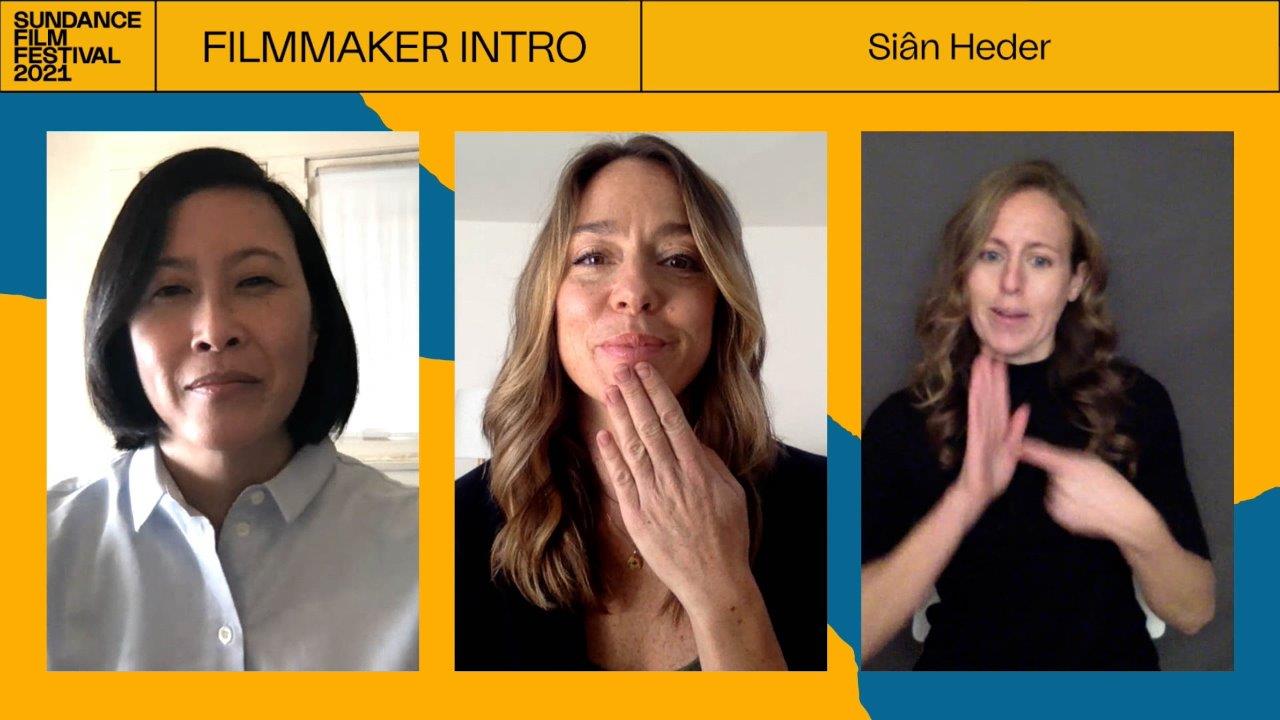
Even before CODA won four awards (the Grand Jury prize, the directing prize, the audience award and a Special Jury prize for best ensemble) the film, an American remake of the 2014 crowdpleaser The Belier Family was making news for attracting the biggest deal in Sundance history. It sold to Apple for $US25 million, out-stripping Palm Springs which sold for US$22.5 million last year. Sian Heder’s film follows an aspiring singer and lone hearing person in a deaf family (Locke and Key’s Emilia Jones).
The hand-drawn hybrid documentary Flee, directed by Danish-French filmmaker Jonas Poher Rasmussen was awarded the World Cinema Jury Prize. It focuses on an Afghan refugee, who for the past two decades has been hiding from his past after being granted asylum in Copenhagen. He only agrees to tell his personal story of persecution and escape if his identity remains unknown. The 36-year-old subject is an old school friend of Rasmussen. Executive-produced by Nicolaj Coster-Waldau and Riz Ahmed, the film has been picked up by Madman for Australia and New Zealand.
U.S. Grand Jury Prize: Dramatic
CODA
Audience Award: U.S. Dramatic
CODA
Directing Award: U.S. Dramatic
Siân Heder, CODA
Waldo Salt Screenwriting Award: U.S. Dramatic
Ari Katcher and Ryan Welch, On the Count of Three
U.S. Dramatic Special Jury Award for Best Actor
Clifton Collins Jr., Jockey
U.S. Dramatic Special Jury Award for Best Ensemble
The cast of CODA (Emilia Jones, Eugenio Derbez, Troy Kotsur, Ferdia Walsh-Peelo, Daniel Durant, and Marlee Matlin)
U.S. Grand Jury Prize: Documentary
Summer Of Soul (… Or, When the Revolution Could Not Be Televised)
Audience Award: U.S. Documentary
Summer Of Soul (… Or, When the Revolution Could Not Be Televised)
Directing Award: U.S. Documentary
Natalia Almada, Users
Jonathan Oppenheim Editing Award: U.S. Documentary
Kristina Motwani and Rebecca Adorno, Homeroom
U.S. Documentary Special Jury Award for Emerging Filmmaker
Parker Hill, Isabel Bethencourt, Cusp
U.S. Documentary Special Jury Award for Nonfiction Experimentation
Theo Anthony, All Light, Everywhere
World Cinema Grand Jury Prize: Dramatic
Hive
Audience Award: World Cinema Dramatic
Hive
Directing Award: World Cinema Dramatic
Blerta Basholli, Hive
World Cinema Dramatic Special Jury Award for Acting
Jesmark Scicluna, Luzzu
World Cinema Dramatic Special Jury Award for Creative Vision
Baz Poonpiriya, One for the Road
World Cinema Grand Jury Prize: Documentary
Flee
Audience Award: World Cinema Documentary
Writing With Fire
Directing Award: World Cinema Documentary
Hogir Hirori, Sabaya
World Cinema Documentary Special Jury Award for Vérité Filmmaking
Camilla Nielsson, President
World Cinema Documentary Special Jury Award for Impact for Change
Rintu Thomas, Sushmit Ghosh, Writing With Fire
NEXT Audience Award
Marion Hill, My Belle, My Beauty
NEXT Innovator Award
Dash Shaw (director), Jane Samborski (animation director), Cryptozoo
Alfred P. Sloan Feature Film Prize
Alexis Gambis, Son of Monarchs
Sundance Institute/Amazon Studios Producers Award for Narrative Features
Natalie Qasabian, Run
Sundance Institute/Amazon Studios Producers Award for Documentary Features
Nicole Salazar, Philly D.A.
Sundance Institute NHK Award
Meryam Joobeur, Motherhood
Sundance Institute/Adobe Mentorship Award for Editing Nonfiction
Juli Vizza
Sundance Institute/Adobe Mentorship Award for Editing Fiction
Terilyn Shropshire
