

By Gill Pringle
Why did you choose to come back to Inferno? “Well, the story was very good, and [screenwriter] David Koepp had a strong sense of how he could adapt it. We all responded well to the book. [Dan Brown’s 2009 Robert Langdon novel] Lost Symbol was a really good book too, but we didn’t know how to make it fresh and exciting as a standalone movie. We don’t just do the book because it’s there. The popularity of the books means so much in terms of finding movie audiences around the world, but we didn’t want to just count on that…ever. It became clear that there was a very exciting, and very contemporary, thriller story here. Unlike the previous movies, which dealt more with the past, this was so immediate and so of-the-moment. It was a different way to use the clue path, and to use the Langdon character. That said, Dan Brown brilliantly still found a way to use the past: Dante’s original conception of hell versus the possibility of hell on earth today, which is of our own making. It felt fresh and exciting. We also learn more about the Robert Langdon character through the action and through the intensity of this story. It’s more personal to him…he’s actually part of this mystery. Tom really liked that as a performance opportunity for himself, and I love directing interesting, complex performances as well, so I felt like this was a great chance for one of our best actors, ever, to do something dynamic and really entertaining, and still follow all the things that we really love about Dan Brown mysteries and the Robert Langdon clue path adventures.”
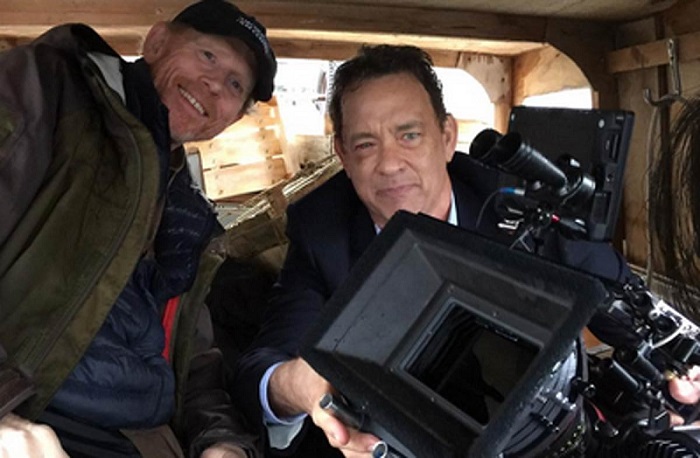
I’m guessing that Tom wasn’t difficult to persuade? “No, if anything, he was saying, ‘Oh, come on, Ron, let’s do it!’ He really wanted to play the part. He really loved the other two films, and he really loves playing Robert Langdon. Now, as life experiences, these are fantastic because you go on the tour – whether it’s the Da Vinci Code tour or the Angels & Demons tour or, in this case, the Inferno tour – and you live it. And just as Dan Brown goes to these places for months at a time, and explores the past, and his own imagination allows him to create these really suspenseful scenes with this great conflict in the present, we actually get to live it, so they’re great life experiences.”
Do you like to shoot on location in different cities and countries? Does that add a lot? “It certainly adds a lot, and people expect it of this. Part of my attraction to making them is the life experience. Working on these Dan Brown/Robert Langdon mysteries has really opened the world up to me. Before, it wasn’t like I didn’t travel and wasn’t curious and love to go, but when you wind up living in places and working in cities like Istanbul and Florence and Venice or Budapest, it’s amazing. These become great memories, and it’s creatively very stimulating. I like the pressure of living up to these stories and these characters, and the scope and the budgets of these movies, while being in collaboration with stars from all over the world has been important to my growth. My sense of cinematic aesthetic has shifted and evolved a little bit too. A film like Rush influenced that in a way; there’s an energy from that movie that found its way into Inferno…a visual energy. Inferno was a different set of demands to The Da Vinci Code, which was more classic.”

Hollywood now has more and more income and revenue coming in from international markets…how important do you think that is? “Well, it’s very important, and also very interesting in that filmmakers working with studios are trying to make movies with broad appeal, and larger-budgeted movies for the big screen. We now look to the global audience, and we know that we’re talking to them. They’re every bit as important as the American audience that we, as American filmmakers, might be familiar with. Of course, conversely, international movies are more important, and television shows even; so with that comes an exciting new grammar and a new sensibility, and I like to believe that some of that is finding its way into my approach to a movie like Inferno.”
Which filmmakers have inspired you within this genre…was it Hitchcock? Who do you look up to? “The Da Vinci Code was a little more Hitchcock, and this is much more of a thriller. This is a little bit more Bourne, and it’s a little more Tell No One…there are a lot of good French thrillers that have this kind of urgency, and they’re out on the streets. The Parallax View is another one. This film is a little more about trusting yourself, the truth, and what’s real and what isn’t. I kept looking at Don’t Look Now…for its depiction of Venice, but also just for that feel, and that sense of uncertainty about where the conflict was, and where the danger existed.”
Inferno is released in cinemas on October 13.
