


By John Noonan
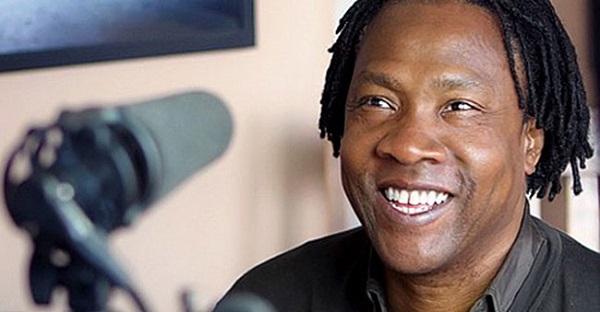
Based on the book of the same name by Ron Suskind, Life, Animated is the new documentary by Roger Ross Williams, who helmed 2013’s God Loves Uganda, and famously debuted with 2010’s Music By Prudence, which won the Oscar for Best Documentary Short Subject, making Williams the first African-American director to win an Academy Award. Life, Animated tells of Owen Suskind, who, at the age of three, was diagnosed with autism, and whose love of Disney films allowed him to find ways to connect with his family. When Life, Animated begins, Owen is ready to graduate and move into his own apartment, and Williams was there to detail his momentous year.
What is your relationship with Owen and his family? “I’ve known Ron [Owen’s father] for 15 years. We worked together at ABC, and we’ve stayed friends ever since. He’s a very famous writer. He writes very serious books about politics. He’s won The Pulitzer Prize, and he was a journalist for The Wall Street Journal. Life, Animated was his first personal book. He approached me and said, ‘I think that this would make a great film.’ And I jumped on it.”
It feels like more of a coming of age film than a documentary… “Exactly! That’s exactly what it is. It’s a coming of age film; it’s not a film about autism. The stakes are higher because Owen has autism, but it’s a coming of age story about the power of story. It’s about the power of cinema, and how it can change people’s lives.”
And were there any particular films growing up that shaped your life? Or perhaps films now that have an impact you? “Growing up, I didn’t have a lot of access to films. I was a latch key kid. I would come home and be parked in front of the television. I grew up watching TV shows like All In The Family, The Jeffersons and The Jetsons. Now, I’m so busy. I only ever see documentaries because I’m at film festivals a lot. But I’ve also served on so many juries for the last couple of years; the Sundance jury, the Tribeca jury. I’m also part of the Academy; I’m the governor of the documentary branch, which I was just elected to a couple of weeks ago. So in the Academy, you get sent 150 films to watch. You’re assigned 20% of them to watch. So I see a lot of docs. But every once in a while, I get to see a narrative film. It’s so exciting to see something that’s not non-fiction [laughs].”
Owen’s big love is Disney; how easy was it to approach them to use their films within the narrative? “It was a process. It took about a year. It’s not just about using their films; we also redrew their characters within the film. The process started because Sean Bailey, the president of Disney productions, is a trustee on the board of The Sundance Institute. I’m on the alumni board and the CEO connected us. I went out to meet him, and he got together a whole team of the heads of Disney Legal, and marketing, and animation, all in one room. I had shot Owen’s graduation and a few other things. So, I took them all on a journey through the film, and how I envisioned the film. By the time the lights went up, they were all in tears. Obviously they knew the power of the stuff that they create on a cultural landscape, but they didn’t know that it could change someone’s life. It gave them so much more meaning to what they do. They were like, ‘We’re not going to stand in your way.’”
And once you had access to the films, this must have played a part in how you edited the narrative. “We edited for a year. We were also creating original animation that takes a long time. And it’s a very layered film. It’s a verite film at its base, following Owen and a year in his life. A transformative year where he is graduating and all the other big moments that we experience. Then there are the flashbacks to how he got there. So we cut from present day to the backstory. Then there are the home movies, and photographs. We have the original animation based on Owen’s short story, which is autobiographical. It was always about bringing the audience deeper and deeper into Owen’s world until they’re in his world.”
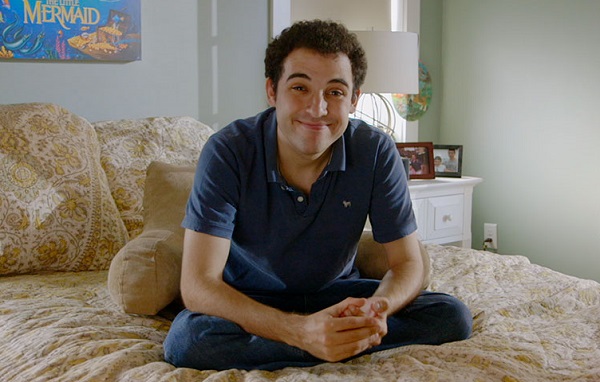
You mention Owen’s story, Land Of Sidekicks, which you animated. Did you have a particular style of animation that you wanted to use? “It was about invoking Owen’s inner world. He drew the monsters when he was ten-years-old. Fuzz Butch is a villain that breathes fog into your head and makes your mind fuzzy. What’s that symbolic of, you know? So I always knew that I wanted to bring that to life. It just had to be different from Disney, because it was Owen’s story. There are Disney sidekicks, but they’re Owen’s version. I had these brilliant French animators, geniuses out of animation college. And everything had to be hand drawn because Owen connects to the emotion of hand drawn animation.”
Had you worked with animation before? “No, never.”
Would it be something that you’d do again in feature length form? “Yeah. You know someone who is hiring? [Laughs]”
And what was Owen’s reaction to seeing his story animated? “The word that he used was, ‘amazed.’ Owen’s a one word guy. When he saw the film for the first time, he was in our office. He ran out of the office, because I was peeking through the keyhole, and he hugged me. That is totally out of character for him. He doesn’t hug. And he said, ‘I love it!’ [Laughs]”
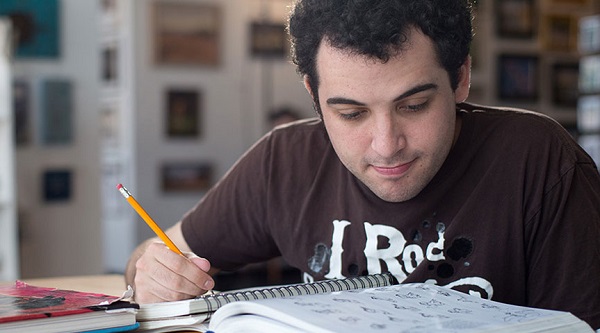
You were there when Owen moved into his own apartment, which is a big moment for anyone. But you also had cameras set up there as well, which could have been daunting for Owen. “Because Owen can be in his head, he’s constantly self-talking. He’s the perfect documentary subject because he completely ignores the cameras. And with Tom Bergmann, my cinematographer, it was always important to have one cinematographer with Owen, so that he became part of the family. And Tom became part of the family. I was there initially that first night, but I left. Tom was in the corner, and Owen completely ignored him. He goes to bed, he watches Bambi, and he falls asleep. Tom let himself out and then snuck back in at 6:00am. When Owen woke up, Tom was already filming. Imagine waking up with a camera in front of you! [Laughs] Owen just completely ignored it. He doesn’t even look at it.”
In the film, you interview Owen and he seems quite open and willing to look down the lens. “I used an Interrotron camera, which is a camera hidden in a television. I was in another room interviewing him. If I sat down with him, he wouldn’t make eye contact. He’d get up and start pacing. When he sees me on the television screen, he can look me right in the eye, into the camera. So in a sense, he’s looking the audience in the eye and telling them his story himself. It was important for Owen to tell his own story. He’s the only one in the interviews who looks at the camera. Everyone else is looking off to the side. A lot of people don’t notice, but the psychological effect is that as Owen is the only one who looks at you, you connect with him.”
So what have you got lined up next? “I have a number of things. I’ve been on the road a lot with Life, Animated, and the Suskind family and Owen. Going to a screening with Owen Suskind is like going to a rock concert. People are on their feet, and he’s running down the aisle high-fiving people. He takes the stage, grabs the mic, and says, ‘I feel the love in this room!’ He’s amazing. He loves running the Q&As. He’s done The View with Whoopi Goldberg, and he’s done Stephen Colbert. And he’s very wise because he’s growing up on this diet of story and myth. He says, ‘I’m not a celebrity. Celebrities are out for themselves, and I’m just being celebrated this year.’ He’s a wise man.”
Life Animated is released in cinemas on September 29.
