



by Nataliia Serebriakova
Worth: $14.40
FilmInk rates movies out of $20 — the score indicates the amount we believe a ticket to the movie to be worth
Cast:
Shafa, Patron
Intro:
In a context where attention is fragmented and compassion often fatigued, We, Our Pets and the War insists on a simple, undeniable truth: the way people treat animals in moments of extreme crisis reveals something essential about who they are.
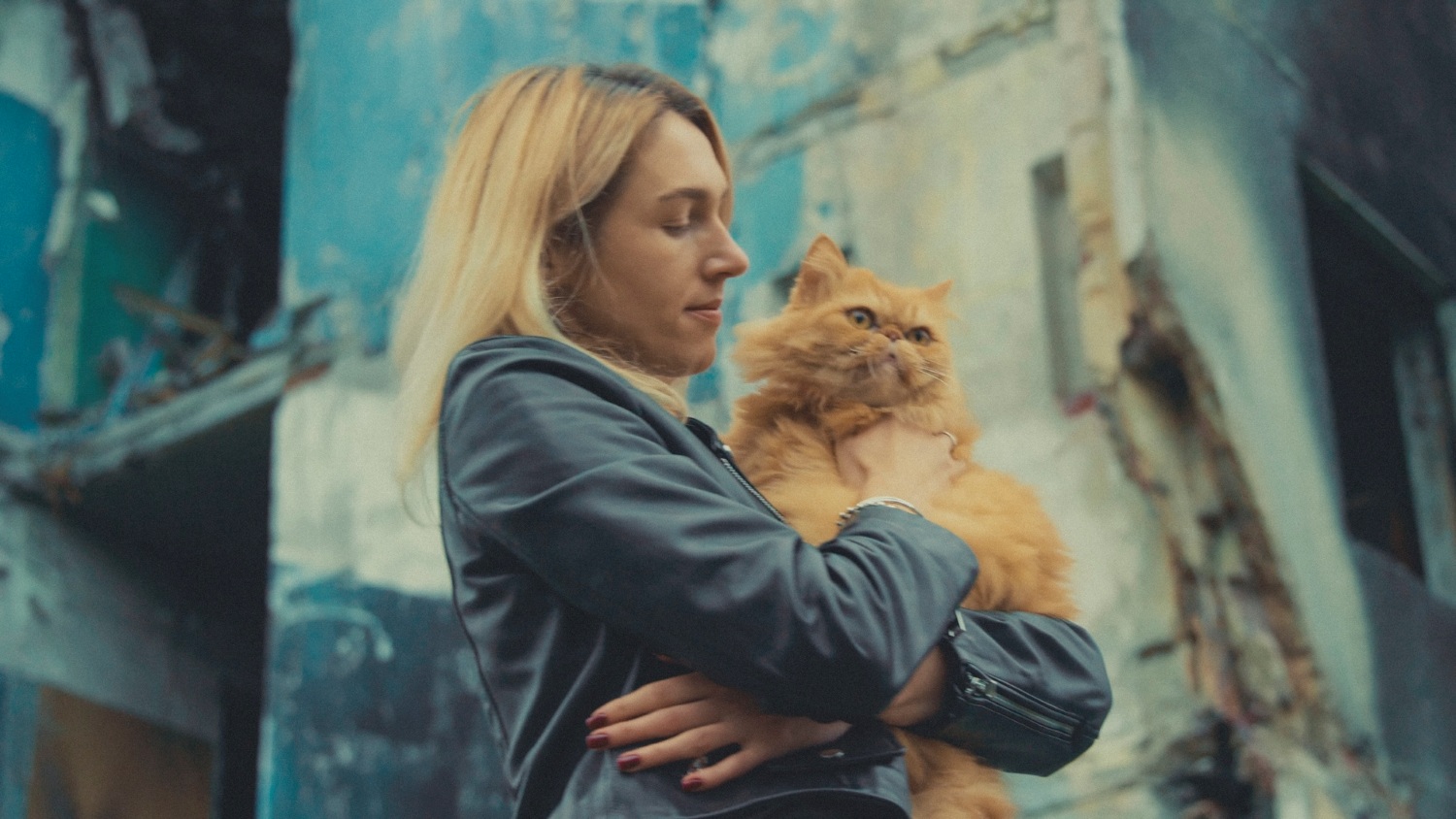
Shafa, a cat from Borodyanka, survived what should have been impossible: sixty days trapped in a ruined apartment without food or water. Patron, a small Jack Russell terrier, has turned his size and sharp instincts into a life-saving profession, detecting explosives across liberated territories. Between these two stories unfolds a larger reality — one in which Ukrainian civilians risk their own safety to rescue animals abandoned in the chaos of war. Anton Ptushkin’s documentary Us, Our Pets and the War builds its narrative from these fragments, assembling a portrait of a country through its relationship with the most vulnerable.
The film opens with a simple but striking observation: never before have so many refugees fled a war while refusing to leave their animals behind. From this starting point, Ptushkin follows volunteers, activists, and ordinary people whose lives have been reshaped by invasion. Zoo Patrol teams comb through destroyed suburbs, pulling cats from collapsed buildings and coaxing terrified dogs out of basements. In one scene, a volunteer carefully carries a trembling animal through debris, speaking to it as if calming a child. In another, trucks filled with rescued creatures move silently across checkpoints, their cargo both fragile and deeply symbolic.
Ptushkin’s approach is direct and accessible. Visually, the film adheres to a familiar documentary language — clean compositions, steady pacing, and an emphasis on clarity over experimentation. Yet within this conventional framework, the emotional impact accumulates with surprising force. A soldier reunited with his dog, a volunteer describing the evacuation of exotic animals from shelled zoos, the devastating account of hundreds of dogs left to die in a locked shelter in Borodyanka — these moments are presented without excessive dramatisation, allowing their weight to speak for itself.
There is also a clear awareness of the audience. Much of the dialogue is in English, and the storytelling is shaped to resonate beyond Ukraine, translating local experiences into a universal language of empathy. In this sense, the film operates not only as documentation but also as testimony — a deliberate attempt to communicate the human dimension of war through stories that bypass political abstraction.
At times, this clarity comes at the cost of complexity. The film does not challenge its own emotional strategies, nor does it stray far from a structure designed to move and persuade. But perhaps that is precisely its intention. In a context where attention is fragmented and compassion often fatigued, Us, Our Pets and the War insists on a simple, undeniable truth: the way people treat animals in moments of extreme crisis reveals something essential about who they are.
It is also important to consider Anton Ptushkin’s background, as he is a widely recognised and beloved television host in Ukraine. He first gained popularity through mainstream travel television before transitioning to independent content creation on YouTube, where his personal, visually polished travel films attracted a large audience. This established connection with viewers carries into his documentary work, shaping both the film’s accessible tone and its clear intention to communicate with a broad, emotionally engaged audience.
Ptushkin’s debut ultimately becomes less about animals themselves and more about the people who refuse to abandon them. It is a record of care under pressure, of small acts of humanity that persist despite everything. And in its quiet, steady way, the film argues that these acts matter — not only as stories, but as evidence.
