


by Cain Noble-Davies
Worth: $9.50
FilmInk rates movies out of $20 — the score indicates the amount we believe a ticket to the movie to be worth
Cast:
Naomi Watts, Bing, Bill Murray, Ann Dowd, Constance Wu, Sarah Pidgeon, Owen Teague, Carla Gugino
Intro:
… fairweather drama at best.
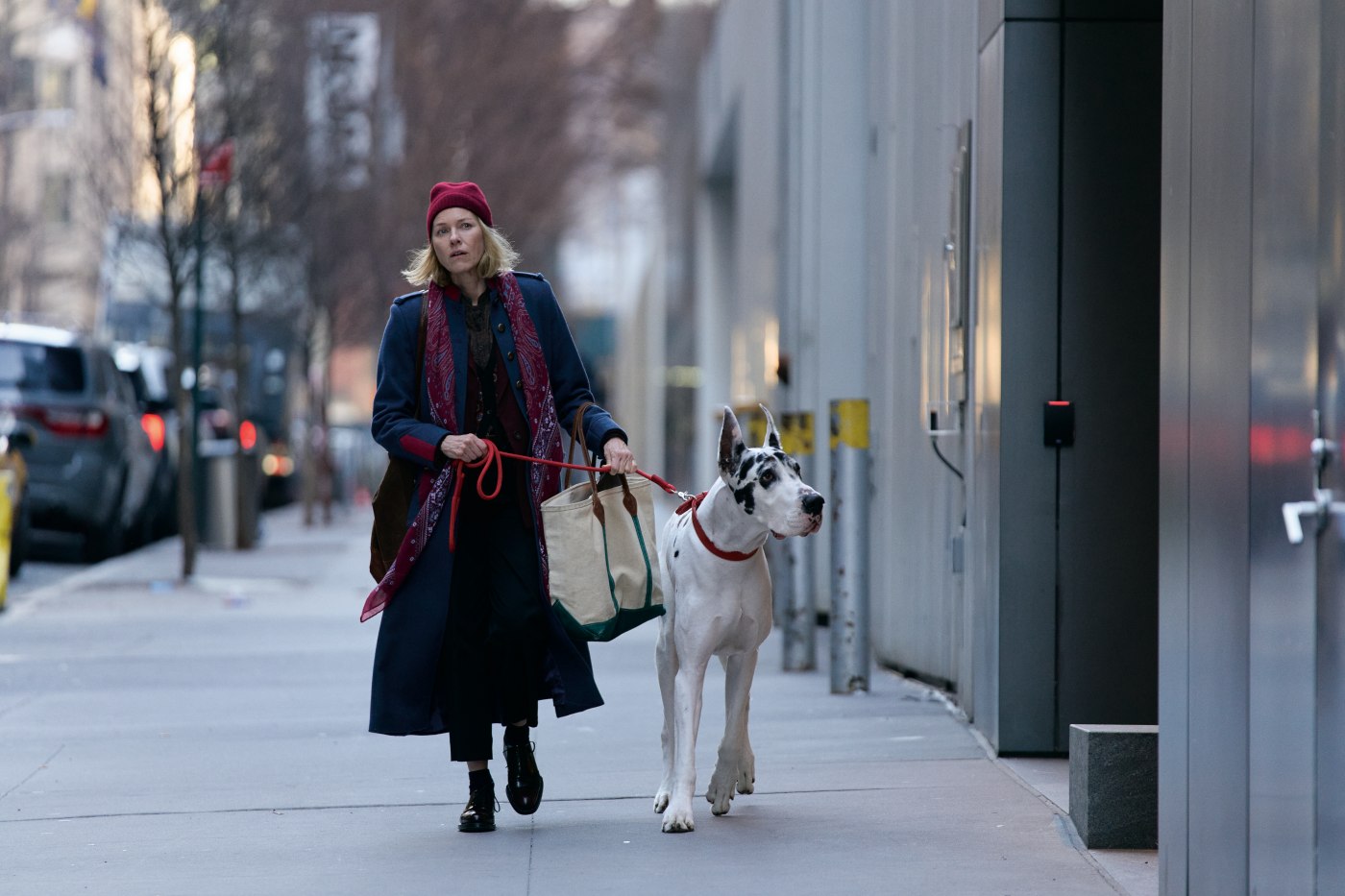
It’s quite disheartening to see a film with a cast this willing and capable of delivering catharsis, and yet the only performers that end up standing out are either barely on-screen (Bill Murray in proper ‘no one will ever believe you’ mode as author Walter) or literally a dog (Bing as Walter’s pet Apollo).
In-between the smatterings of writer’s block, brownstones, and blank stares across rooms, both the dialogue and the delivery never manage to elevate Scott McGehee and David Siegel’s The Friend above a collection of superficial people talking about their superficial problems amongst their superficial friend groups. In adapting Sigrid Nunez’s novel, it’s as if McGehee and Siegel (The Deep End, What Maisie Knew) watched a Woody Allen marathon, and the only things that they picked up were that people in New York are sad, and that jazz music exists.
As if to compound the issue of Bing being the most effective performer, the film doesn’t even seem sure what role he is supposed to play here.
The script waffles on about coming to terms with grief, with Naomi Watts’ Iris suddenly being made caretaker of Apollo after Walter’s sudden death, and having many conversations with the gnarled network of ex-lovers, colleagues, and children that the author left behind. However, for some mystifying reason, what ends up taking focus narratively for the bulk of this two-hour feature is whether Iris will be able to keep her rent-controlled apartment. Truly, the greatest of all trials.
While it would be easy to point at recent New Yorker dramadies like Materialists, or fellow support animal dramas like Channing Tatum’s Dog and even Penguin Bloom, just to emphasise the emotional connection that’s missing here, that would only obfuscate that, somewhere in here, is a good idea for a film.
The best moment comes when Iris decides to put all her feelings about Walter into writing, turning into a ‘theatre of the mind’ kind of confrontation with her memory of him. It’s the best scene because it actually does something with the art of writing as a narrative texture. This kind of open vulnerability could’ve been the centrepiece, with the rest of the events written around it, and the film at large would come out looking better for it.
And yet, it is also the worst moment of the film because, while filtered through raw grief and nerve endings, it ends up crystalising the wonkiness of the film’s overall attempts to speak on mental health and suicide especially. Because Walter’s interactions with others are relegated to ‘tell, don’t show’ for most of the film, this big climactic moment ends up taking a similar tone to the infamous talking foetus scene in Blonde, using fiction as a means to lecture the dead with righteous indignation. Far more so than Walter, it just makes Iris look worse for the exercise, which draws a big fat question mark on the point of the preceding minutes upon minutes that led to it.
The Friend is fairweather drama at best. As an examination of grief, it lacks focus. As a canine companion flick, it wastes a genuinely good dog actor and resorts to Dog’s Purpose-esque manipulation tactics. As a look at the psychology of being a writer, it sticks to bland platitudes that aren’t even the fun kind of pretentious. And as a film in its own right, it’s too distant to connect with, and so rote as to seem trivial, which is not a good look considering the issues it tries to tackle.
