


by Nataliia Serebriakova
Worth: $16.00
FilmInk rates movies out of $20 — the score indicates the amount we believe a ticket to the movie to be worth
Karlovy Vary International Film Festival
Cast:
Nandar Myat Aung, Nandar Myint Lwin
Intro:
… a work of remarkable emotional precision — understated, unresolved, and difficult to shake off.
The winner of Grand Prix of the Karlovy Vary International Film Festival, Aung Phyoe’s Myanmarese film Fruit Gathering is a quiet but deeply unsettling debut — a film that resists overt dramatic climaxes in favour of accumulation: gestures, pauses, withheld words.
Set within the suffocating rhythm of a Yangon garment factory, the film observes not simply labour, but the emotional erosion that repetitive, precarious work inflicts on those who endure it.
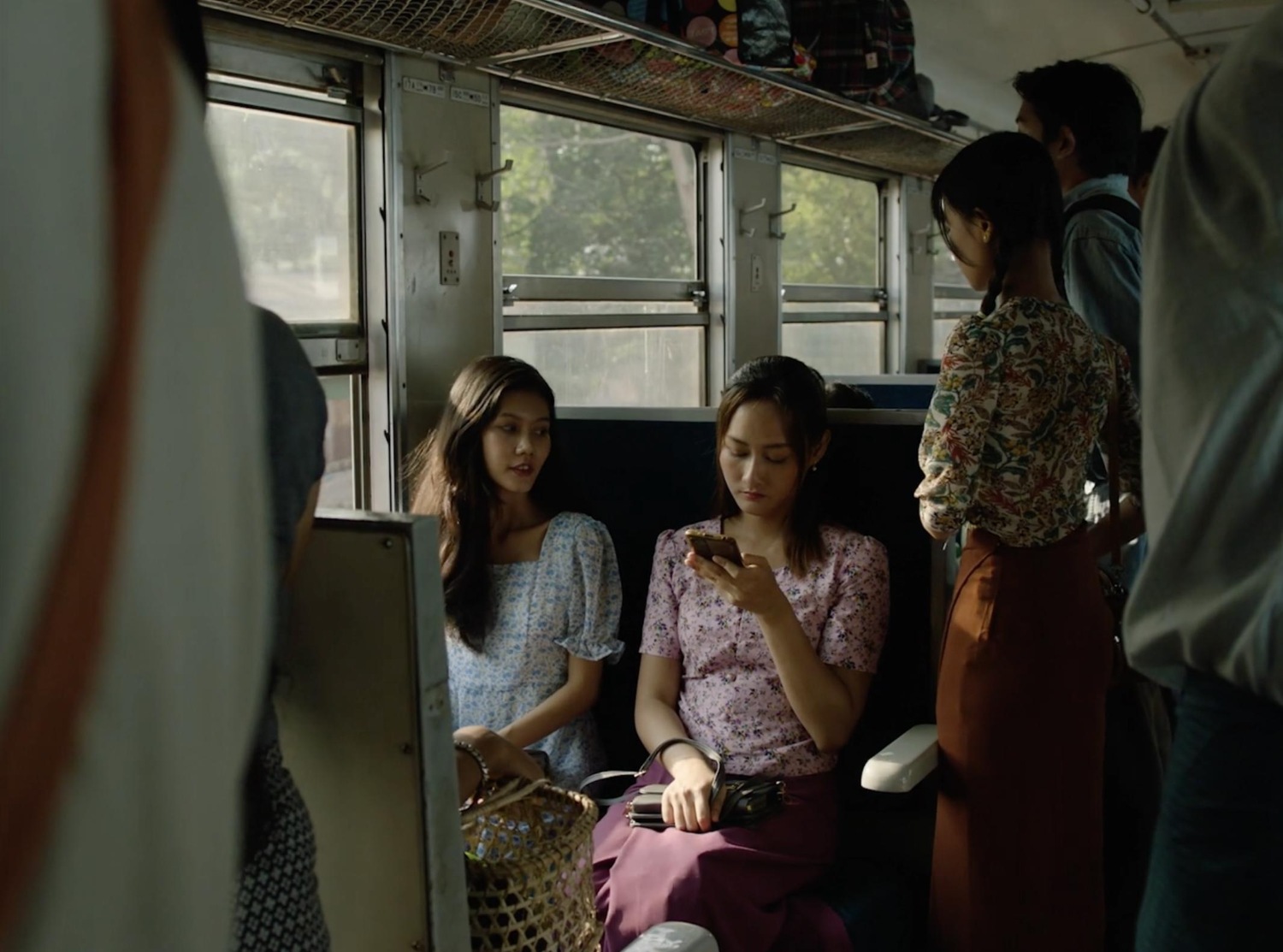
At the center are two young women, San Kyi and Theint Theint Oo, whose relationship unfolds with disarming ambiguity. Their connection does not follow a conventional romantic trajectory; rather, it exists in a fragile in-between state between friendship, dependency, and desire. Phyoe avoids labeling it, and this refusal becomes the film’s most precise gesture. In a society where emotional expression — especially between women — is tightly regulated, even naming a feeling can become an act of risk.
What distinguishes Fruit Gathering is its sensitivity to the microdynamics of intimacy. A glance in a locker room, a shared meal, the quiet expectation of being chosen — these moments carry more narrative weight than any external plot development. The camera lingers not to aestheticise bodies, but to register perception itself: how one person learns to look at another with growing intensity, and how that gaze is not always returned in equal measure.
San Kyi’s emotional trajectory is particularly striking. She is not framed as a tragic heroine, but as someone fundamentally unequipped for the instability of attachment. Her longing is diffused yet absolute; it seeks not necessarily romantic fulfillment, but a form of recognition that might stabilise her sense of self. Theint, by contrast, moves through the world with a kind of improvisational pragmatism — borrowing money, entering and exiting relationships, adapting quickly to circumstance. Their asymmetry is not dramatised through conflict so much as through imbalance: one invests, the other drifts.
Phyoe constructs a predominantly female space where male presence is peripheral, almost incidental. This is not simply a political gesture but a structural one: by minimising patriarchal intrusion on screen, the film sharpens its focus on how women navigate systems that already define the limits of their autonomy. Economic precarity, social expectation, and internalised restraint operate as invisible frameworks shaping every decision.
The title itself introduces a subtle metaphorical layer. Borrowed from Tagore, Fruit Gathering suggests ripeness, timing, and the inevitability of loss — fruit must be picked before it spoils, just as moments of connection must be seized before they dissolve. Yet in Phyoe’s film, timing is perpetually off. Feelings emerge either too early or too late, and the possibility of mutuality remains elusive.
Visually, the film embraces austerity. Static compositions and muted colour palettes mirror the monotony of factory life, while the absence of dramatic musical cues reinforces its observational tone. This restraint proves effective: rather than guiding the viewer toward emotional conclusions, the film creates space for discomfort and recognition.
Fruit Gathering is less about queer identity as such than about the universal mechanics of attachment — the human need to anchor oneself in another person, and the quiet devastation when that anchoring fails. It is a film about proximity without alignment, about desire that cannot fully articulate itself, and about lives lived in the narrow gap between endurance and longing.
In its refusal of resolution, Aung Phyoe’s debut aligns itself with a broader tendency in contemporary Southeast Asian cinema: to privilege atmosphere over narrative closure, and to locate political reality not in explicit statements but in the textures of everyday life. The result is a work of remarkable emotional precision — understated, unresolved, and difficult to shake off. A genuinely beautiful and deeply affecting work.
