


by Cain Noble-Davies
Worth: $13.50
FilmInk rates movies out of $20 — the score indicates the amount we believe a ticket to the movie to be worth
Cast:
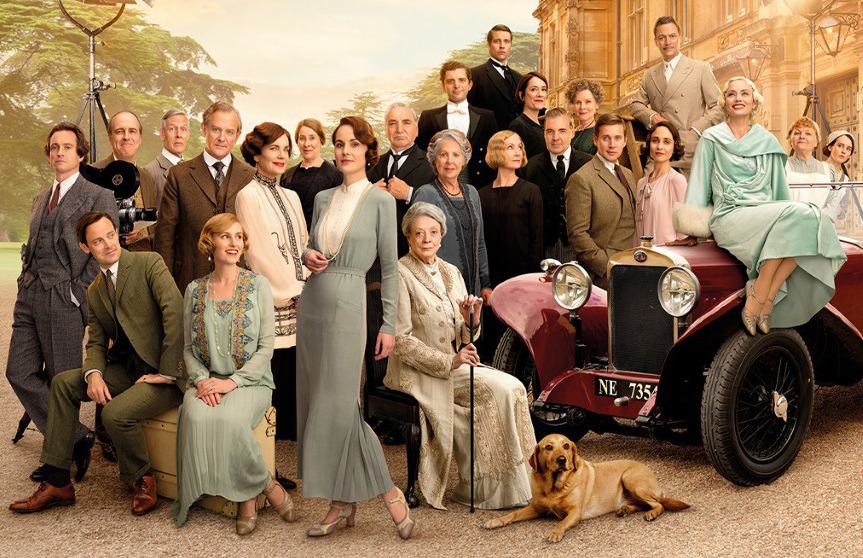
Hugh Bonneville, Maggie Smith, Laura Carmichael, Jim Carter, Michelle Dockery, Laura Haddock, Dominic West, Tuppence Middleton, Phyllis Logan, Hugh Dancy, Nathalie Baye, Imelda Staunton, Elizabeth McGovern
Intro:
… has the capacity to annoy if you think too hard about what’s happening, but on the strength of the performances and the many witticisms, stiff-upper-lip as they are, it’s a quite pleasant experience.
Downton Abbey: A New Era is split in two threads: one involves Robert Crawley (Hugh Bonneville being as dashing as ever) sorting out and visiting a French villa that Violet Crawley (Maggie Smith, the best thing about this franchise) has been left in a will, while the other has the servant staff dealing with the Abbey being used as the set for a film production. Altogether, it’s the sort of snigger-worthy aristo-camp that makes this series so much fun, but when taken separately, they make for diametrically opposing entertainment.
The latter is the more compelling, even if a fair amount of it rips off Singin’ in the Rain wholesale, as the underlying conflict about the transition from silent film to talkies makes for a nice companion to the bigger mood conjured by this film’s subtitle: The Crawleys et al. transitioning into a new era of their own.
As fun as it is to see Laura Haddock and Dominic West liven things up as the lead actors in the film-within-a-film, showrunner/writer Julian Fellowes doesn’t exactly give their trade the credit it deserves. Hearing not only the servants, but also the in-universe film crew, be this glib about silent cinema is enough to make Lillian Gish sigh from beyond the grave. To say nothing of the condescension copped by Haddock as the working-class actress Myrna Dagleish, lest that classist undercurrent go forgotten.
As for the villa plot, apart from the heavy whiffs of privilege problems throughout, a lot of the drama that crops up concerning why Violet has been given this country house winds up being rather unimportant in the scheme of things. Given the previous film in the series involved political assassination in its plot, there’s a sense that this is all deliberately lighter, but it would’ve helped if there was a genuine point to most of it, beyond just making the upper-class look fleetingly uncomfortable.
But that’s ultimately small potatoes, as the bulk of Downton Abbey: A New Era is delightful. It has the capacity to annoy if you think too hard about what’s happening, but on the strength of the performances and the many witticisms, stiff-upper-lip as they are, it’s a quite pleasant experience.
