



by Annette Basile
Worth: $18.00
FilmInk rates movies out of $20 — the score indicates the amount we believe a ticket to the movie to be worth
Cast:
David Bridie, George Telek, Helen Mountfort, John Phillips, Pius Wasi, Ian Boas, Linda Bull, Vika Bull
Intro:
… a fine and fascinating documentary that’s not only about two gifted musicians, but about the remarkable music on Australia’s doorstep.
It’s 1986. Melbourne musician David Bridie is 24 and ready to travel overseas for the first time. A friend – the late documentary filmmaker Mark Worth – gave Bridie some sage advice: “David, fuck going to England and America and Germany, that’s all the same… Go to Papua New Guinea, it’s like going to Mars.”
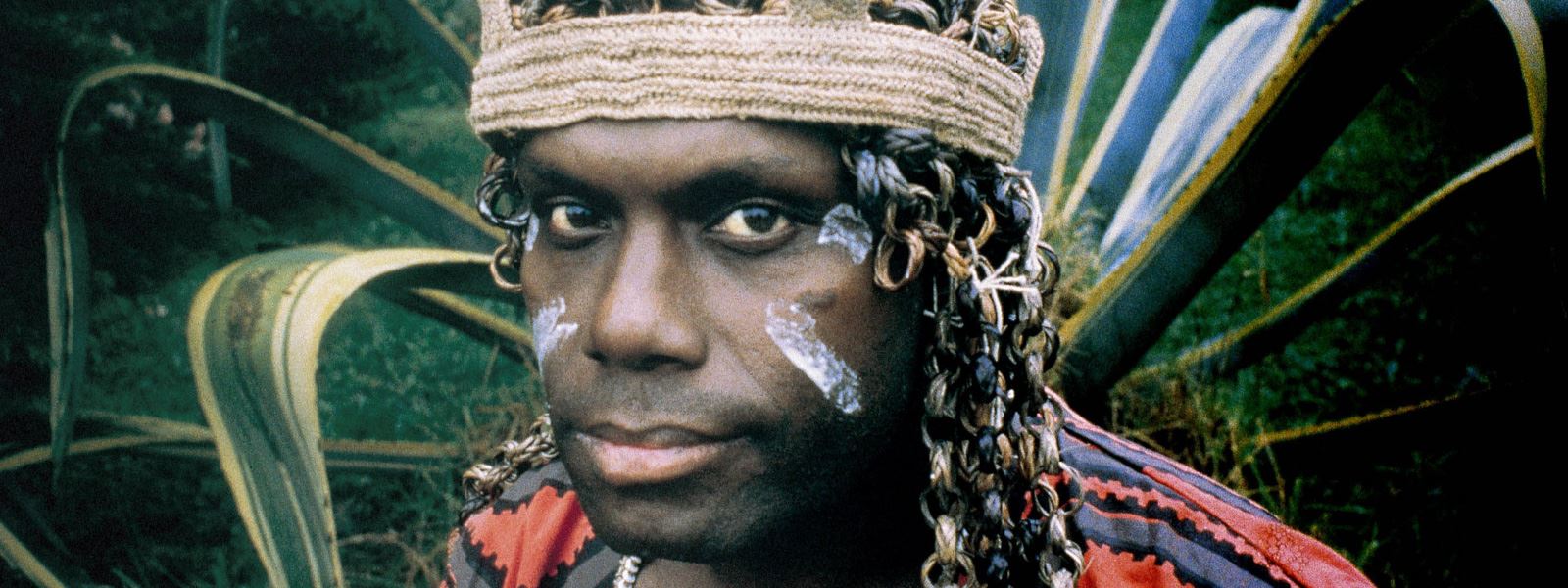
Bridie followed Worth’s lead and was instantly entranced with PNG, its people and music. In a few short years, he would bring his band – the sublime Not Drowning, Waving – to record there. Bridie had already struck up a friendship with George Telek – the legendary PNG musician with a golden voice, whose song, ‘Abebe Butterfly Song’, gives this documentary its name. By 1989, Telek, Not Drowning, Waving and a bunch of local master musicians were making music in the township of Rabaul.
Music is so embedded in PNG’s culture that Rabaul’s three recording studios operate 24/7, three shifts a day. The Australian and PNG musicians got the day shift, recording from 9am to 5pm, and documenting it all on video. The result was 1989’s Tabaran, and the world started to find out about the rich stringed melodies and rhythms of PNG’s music, and, in particular, Telek’s vocal talents.
The film is as layered and textured as the music that it’s focussed on – the decades-long collaboration between Bridie and Telek. As well as plenty of archival footage of the Rabaul recording and playing live in PNG, there’s a primer on PNG history, touching on its relationship with Australia, and the ongoing effects of colonisation. At the heart of this film, though, is Bridie and Telek’s deep connection. They are brothers, says Telek.
It’s a friendship and musical partnership that changed the trajectory of each of the musician’s lives: Bridie learned Telek’s language and was initiated into the community. Telek picked up an ARIA and an MBE.
Bridie and Telek are interviewed in the present day here, as well as others, including cellist Helen Mountfort, a Not Drowning, Waving alumni who also worked with Bridie in My Friend the Chocolate Cake. Mountfort describes Bridie as a “complicated man”.
Bridie has championed the music of PNG and the region, and put together the Sing Sing concerts, bringing musicians from the region, including Indigenous Australians, plus Not Drowning, Waving onto one stage – the Sing Sing concert footage seen here is joyous, (elsewhere, there’s a snippet of the Vanuatu Women’s Water Drummers who use water as a kind of swishing percussive instrument – incredible).
Director Rosie Jones (The Family) has a lot of material to weave into the film – histories of musicians and countries, customs, politics, enduring friendship; it’s big stuff and we get the details along with all-important context. It’s impressive how much information and music is packed in without things ever feeling cursory.
Abebe Butterfly Song is a fine and fascinating documentary that’s not only about two gifted musicians, but about the remarkable music on Australia’s doorstep.
