


By Matthew Pejkovic
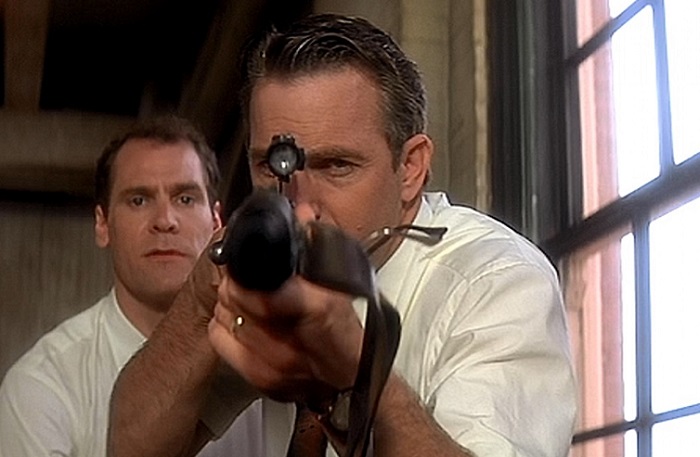
JFK (1991)
Oliver Stone’s pedigree as a provocateur reached new heights with JFK, which was based on the bestselling book On The Trail Of The Assassins, written by former New Orleans District Attorney Jim Garrison. Stone’s decision to adapt Garrison’s book was greeted with instant cynicism and suspicion. Garrison was, after all, the only man courageous (or is that crazy?) enough to prosecute someone for President John F. Kennedy’s assassination, with his investigation weaving together a tapestry of quasi-fact, credible speculation, and lashings of paranoia. Garrison’s findings pointed the finger at Fidel Castro, the Mafia, the CIA, and even President Lyndon B. Johnson. All roads, however, led to respected New Orleans businessman Clay Shaw, who was brought to trial for orchestrating Kennedy’s murder, but was quickly found not guilty of all charges. Garrison’s credibility took a thumping, but it wasn’t enough to sway Stone from tackling the story, and he was met with a truly vociferous reception. A few weeks after filming began, The Washington Post ran a biting article entitled “On The Set: Dallas In Wonderland.” With the first draft of the JFK screenplay as its evidence, they blasted the film for “the absurdities and palpable untruths in Garrison’s book and Stone’s rendition of it.” The New York Times and Time Magazine then ran their own critiques of the film. Stone spent the remainder of the shoot responding to criticism, and conducted a publicity campaign in defence of his film. Things got even worse after the release of JFK, as the president of The Motion Picture Association Of America, Jack Valenti, strongly denounced the film as propaganda. “In much the same way,” he said, “young German boys and girls in 1941 were mesmerised by Leni Riefenstahl’s The Triumph Of The Will, in which Adolf Hitler was depicted as a newborn god.”
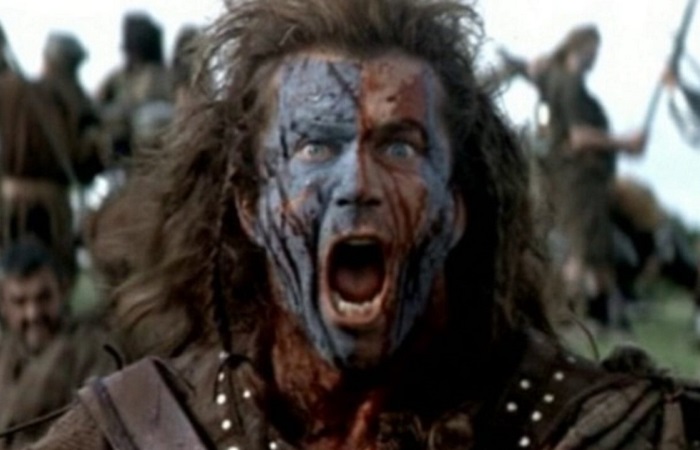
BRAVEHEART (1995)
Mel Gibson’s Oscar winning biopic on the legendary Scotsman William Wallace attracted slashing criticism for its questionable historical accuracy, amongst other things. First came the accusations of homophobia, which were levelled at the film’s scathing portrayal of Prince Edward as an effeminate gay man. A scene where King Edward (Patrick McGoohan) throws his son’s lover out of a window drew the most scorn, but Gibson was nonplussed. “King Edward throwing this character out of a window has nothing to do with him being gay,” the actor/director responded. “He’s terrible to his son…he’s terrible to everybody.” Braveheart was next accused of being anti-English. “Braveheart gave full reign to a toxic Anglophobia,” sneered Joan Sutherland in The Guardian. Taking it one step further was Colin MacArthur, author of Brigadoon, Braveheart And The Scots: Distortions Of Scotland In Hollywood Cinema, who said that Braveheart was “a fucking atrocious film” that would appeal to “neo-fascist groups and the attendant psyche”, and that its “political effects are truly pernicious. It’s a xenophobic film.” Next up were the historians, who took issue with many historical inaccuracies. Medieval historian Sharon Krossa whined about the attire worn by Wallace and his men, stating that “no Scots wore belted plaids, let alone kilts of any kind”, and that when they did, it was not “in the rather bizarre style depicted in the film.” Another article in The Guardian, written by historian Alex Von Tunzlemann, revealed more historical untruths, such as the fact that Wallace had never met France’s Princess Isabelle, since she married King Edward II three years after Wallace’s death, and that the primae noctis decree was never used by King Edward. Both Gibson and screenwriter Randal Wallace, however, would go on to defend the choices made in the film, no doubt polishing their Oscars while doing so.
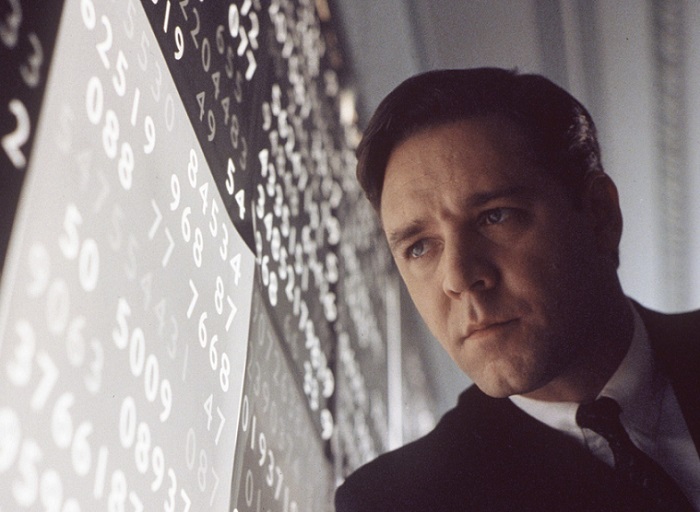
A BEAUTIFUL MIND (2002)
Some ugly truths were revealed in the midst of A Beautiful Mind’s dream run during the 2003 awards season. The revelations came about when rival movie studio Miramax (run, of course, by the now much maligned but at one time celebrated Harvey Weinstein) embarked on a smear campaign against Universal’s biopic, which starred Russell Crowe as Nobel Prize winning mathematician John Nash. Directed by Ron Howard, A Beautiful Mind centred on Nash’s gifts as a brilliant mathematician, which were compromised by his growing schizophrenia. The film was a big success, but accusations soon flew that Howard intentionally left out several controversial details from Nash’s life story. Chief among them was that Nash was an anti-Semite, that he was involved in numerous homosexual relationships during his college years, and that he abandoned a son born from a long-ago relationship. The accusations threatened to derail the film’s Oscar campaign, even forcing Nash himself to front the media. An interview on 60 Minutes saw Nash and his family dismiss every allegation. Anti-Semitism? “I did have strange ideas during certain periods of time,” said Nash, referring to his schizophrenia. An unwanted child? Yes, but they found each other again and became close, with his son John David Stier receiving a share of the royalties from the film. Left is the homosexual relationship, and that is where things get tricky. Nash all but denied it. “I’ve learned that’s it better that I don’t talk about it,” he said. Yet according to author Sylvia Nasar, who wrote the biography upon which A Beautiful Mind is based, Nash had liaisons with numerous men. On the filmmakers’ part, they admitted to removing any homosexual subtexts on the basis that they didn’t want to be accused of portraying homosexuality as a by-product of schizophrenia. In the end, A Beautiful Mind took home several Oscars, but the Miramax smear campaign has forever tarnished the film.
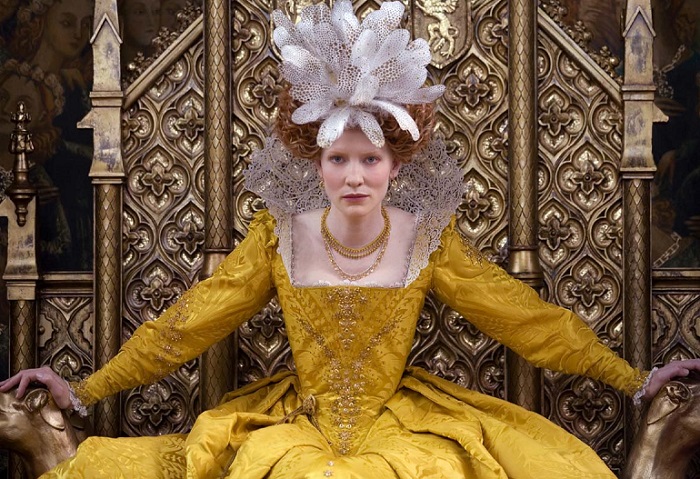
ELIZABETH: THE GOLDEN AGE (2007)
Dramatic license may give a little sparkle to historical events depicted on screen, but for Elizabeth: The Golden Age, playing fast and loose with the facts proved to be the film’s downfall. The follow up to 1998’s acclaimed Elizabeth saw Cate Blanchett return as Queen Elizabeth I, now embroiled in a love triangle with Sir Walter Raleigh (Clive Owen) and her lady-in waiting, Elizabeth Throckmorton (Abbie Cornish), while also contending with those pesky Catholics and their Spanish Armada. It was the latter that saw the filmmakers not only shoot themselves in the foot, but sever it clean off in their passing over of several key points as to why Spain sent their Armada against England. Conspicuously absent were: Queen Elizabeth’s support for the Dutch Republic, who had revolted against Spain; the looting of Spanish possessions by the likes of Raleigh; and the attacks on Spanish ports by Sir Francis Drake. In its place is Jordi Molla as a madcap Prince Phillip, vowing to kill the “whore” Elizabeth. Thus began the accusations of anti-Catholicism. Leading the charge was The National Catholic Register. “Pound for pound, minute for minute, Elizabeth: The Golden Age could possibly contain more sustained church bashing than any other film,” it roared. The Newark Star-Ledger also chipped in: “This movie equates Catholicism with some sort of horror movie cult, with scary close-ups of chanting monks and glinting crucifixes.” Historian Franco Cardini also weighed in, stating that King Phillip II “is naturally a caricature of a ferocious fanatic, who uses his rosary like a weapon.” Director Shekhar Kapur rejected the criticism, stating that the film is “actually very, very deeply non anti-Catholic. It is anti-extreme forms of religion. I would describe all history as fiction and interpretation. You interpret history to tell the story that is relevant to us now.”
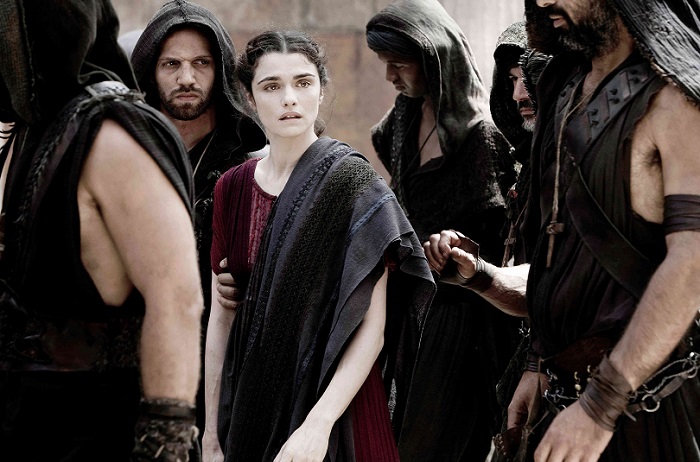
AGORA (2009)
Atheists have their saints just as Christians do. High on top of that list is Hypatia, a Greek scholar from Alexandria in ancient Egypt. The story of her martyrdom saw Hypatia as a voice of reason against the wailing of religious fundamentalists (aka Christians), who would go on to destroy the great Library Of Alexandria and, years later – under the charge of Cyril Of Alexander – would viciously murder Hypatia. At least, that is the story repeated by the likes of popular astronomer Carl Sagan, and director Alejandro Amenabar, whose Agora attempted to tell the story of Hypatia’s (Rachel Weisz) struggle against the early church, while providing an allegory for reason versus fundamentalism in today’s world. Yet for all of its visual flair, it seems that Amenabar forgot to cite a history book, as he portrays the important Christian saint Cyril (Sami Samir) as nothing more than a fanatic clergyman. This did not sit well with historians or the Christian community. Also shaky is the film’s insistence that a Christian uprising was responsible for the destruction of The Library Of Alexandria, which many scholars blame on Caesar’s conquest in 48 BC. Justin Pollard, author of The Rise And Fall Of Alexandria: Birthplace Of The Modern Mind, and a historical consultant on the film, admitted that “because there are so many holes in the story, you have a lot of scope for putting in your own drama. No works of Hypatia survived, and her story is told in fragments in other books that are now lost. You have to take it all with a pinch of salt.” Or a slap in the face, with The Religious Anti-Defamation Observatory claiming that the film was responsible for “promoting hatred against Catholics and reinforcing false cliches about the Catholic Church.”
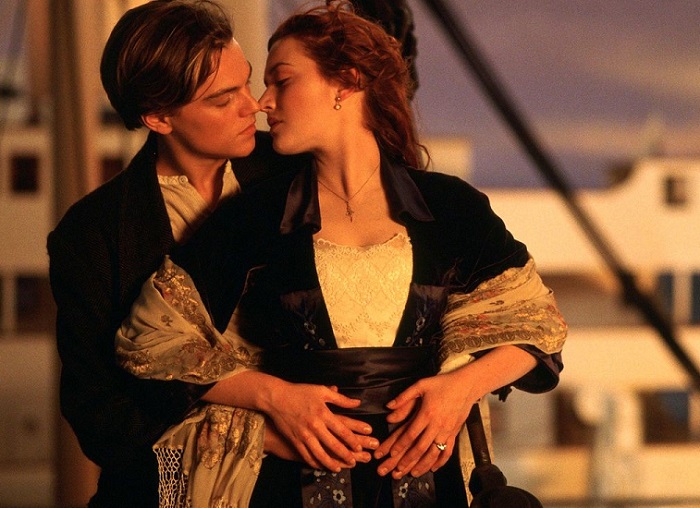
TITANIC (1997)
Who are we mere mortals to contest King James Cameron? After all, he is the man responsible for two of the highest grossing films of all time, and for temporarily making 3-D glasses trendy again in cinemas. Yet to the small Scottish town of Dalbeattie, Cameron’s Titanic featured an unforgiveable piece of character assassination. Granted, Titanic was not a straightforward historical retelling, with Leonardo DiCaprio and Kate Winslet’s lead characters fictional creations. Yet many supporting characters were not. Chief among them was First Officer William McMaster Murdoch. Historians have cited Murdoch as a heroic figure who did his utmost to save passengers on the doomed vessel, guiding them to boats and throwing deckchairs overboard for those in the sea to cling on to. Yet in Cameron’s film, Murdoch (played by Ewan Stewart) was portrayed in a much different light. In one sequence, he accepts a bribe from Billy Zane’s villain, and then shoots two passengers when he presumes that they intend to storm one of the remaining lifeboats. He then finally turns the gun on himself as his limp body crumbles backwards into the sea. The people of Murdoch’s hometown of Dalbeattie were having none of it, prompting 20th Century Fox Vice President Scott Neeson to deliver a personal apology, and hand over a £5,000 donation to the local high school’s William Murdoch Memorial Prize. “I believe that Murdoch was portrayed as a hero in the film”, said the Scots-born Neeson. “In the film and in real life, he is saving an enormous number of lives.” Yet while reasonably happy with the apology, Murdoch’s nephew Scott could not forget the damage done to the reputation of his uncle. “People will forget about this ceremony, and the film will still portray my uncle as a murderer, when he was actually a hero.”
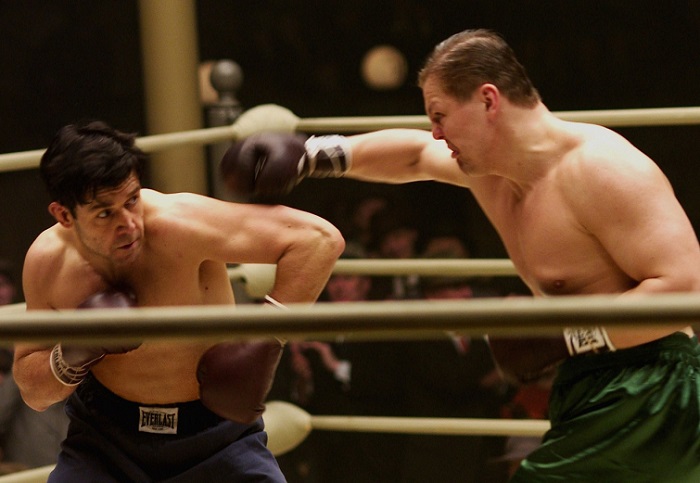
CINDERELLA MAN (2005)
Every boxing movie needs an Ivan Drago to combat its Rocky. Namely, a violently intimidating killing machine who appears to be the dominating figure, yet eventually loses to the underdog, whose spirit and persistence cannot be crushed by the pounding of clenched fists. Ron Howard’s Cinderella Man, a biopic on Depression-era boxing great Jim Braddock, had just that type of caricature in the form of controversial heavyweight champion Max Baer. Not to say that Baer was a fictional figure. But judging from the way that Cinderella Man portrayed him, he might as well be. According to Jeremy Schaap, the author of the book upon which Cinderella Man was based, Baer was a kind, charismatic and respected man in both the boxing and Jewish communities, with the latter seeing Baer as a true activist force. He wore a large Star Of David on his shorts as a symbol against the rise of anti-Semitism, and even delivered a prophetic “up yours” to Adolf Hitler when he defeated Germany’s Max Schmeling in 1933. Yet in Cinderella Man, Baer (as played by an oily Craig Bierko) is portrayed as a top notch jerk and brutal killer of two adversaries. In reality, Baer killed one man in the ring (Frankie Campbell), while another competitor, Ernie Schaaf, died much later after his bout with Baer. One scene in the film has Baer confront Braddock and his wife, boast about the deaths at his hands, threaten to kill Braddock, and then offer to sleep with his wife. Classy! Baer’s family and boxing historians were left fuming, and asserted that Baer was an emotional wreck after Campbell’s death, giving his prize money to Campbell’s family so his children would have an education. As far as the confrontation between Baer and the Braddocks? “It’s totally made up”, said Schaap.

THE HURRICANE (1999)
Where can Oscar winning actor Denzel Washington and music legend Bob Dylan both be exposed as liars? Hollywood, of course. That’s because they both bought into the lies which surrounded the arrest and incarceration of African-American boxing champion Rubin “The Hurricane” Carter. At least that’s what many journalists and historians claim, with director Norman Jewison’s 1999 biopic The Hurricane representing the last straw for many pundits. The film’s critics were out for blood, and quite possibly cost Denzel Washington an Oscar for his outstanding performance in a film which sits far from its “true life” tag. According to the film, Rubin Carter was the victim of a racist police officer (played by Dan Hedaya) who framed him for the murder of two men, putting the boxing champion behind bars for twenty years. The facts, however, didn’t add up, and the film was criticised for misrepresenting many aspects of Carter’s life. The case itself – as shown through police reports, court documents, and Carter’s military and criminal records – does not match with what was presented on screen. As for that racist cop who pursued Carter so ruthlessly and vindictively? It turns out that there is no evidence to show that he even existed. Not surprisingly, the criticisms aimed at the film’s almost complete lack of veracity were constant and scathing. The New York Times said that The Hurricane was “false, evasive and factually very thin – a liberal fairytale.” Jack Newfield of The New York Post went one step further. “I knew Rubin Carter,” he wrote. “I attended his fights, and covered his retrial. I didn’t see much reality on the screen.” For their part, the filmmakers claimed that The Hurricane was meant to be a fable, and that any misrepresentation of the facts was done in the service of “the greater good.”
RESCUE DAWN (2006)
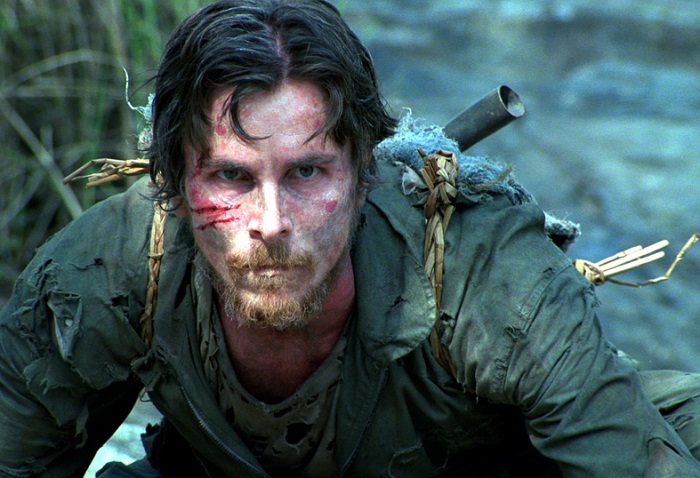
For a film which received much praise for its realism, there is quite a bit of fiction in the 2006 true life war story Rescue Dawn. Werner Herzog directed the much lauded movie, which starred Christian Bale as Dieter Dengler, a German-born, American-raised fighter pilot who was shot down during The Vietnam War, captured, and then placed in a POW camp. The film depicts Dieter and his fellow inmates as they struggle to survive the harsh conditions, and construct a plan to escape their bruising confines. Yet while Dieter was positively portrayed, fellow POW Gene DeBruin (played in the film by Jeremy Davies) was depicted in a less than flattering light, which had his family and friends fuming. It’s easy to see why. Rather than being shown as the heroic figure which many described him to be, Herzog opted for De Bruin to be portrayed as a dazed, uncaring, and deranged man, complete with a look which reminded many of Charles Manson. (Oddly enough, Davies had previously played Manson in the TV biopic Helter Skelter). In retaliation, DeBruin’s brother Jerry created a website which features a shopping list of falsities portrayed in the film, with help from surviving POW and cellmate Pishidi Indradat, who described DeBruin as “the finest man I had ever met.” According to the site, DeBruin was a “kind and caring individual”, who helped “to pass the years in prison by teaching his cellmates English, sharing his blanket on cold nights, sharing his food, and even staying behind to help a cellmate who had become too ill to escape without help.” To his credit, Werner Herzog acknowledged that Gene DeBruin acted heroically during his imprisonment, but was unaware of this fact until after the film had been completed. So much for pre-production preparation!
MEMOIRS OF A GEISHA (2005)
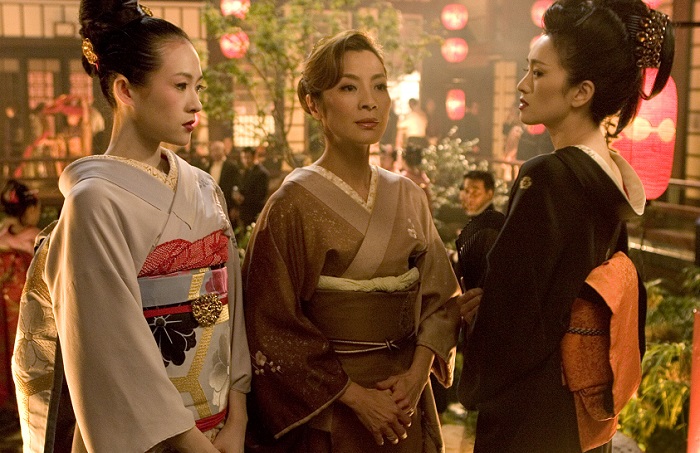
Casting, they say, is everything. So how can a cast that boasts the likes of iconic actresses Zhang Ziyi (House Of Flying Daggers), Gong Li (Farewell My Concubine, 2046) and Michelle Yeoh (Crouching Tiger, Hidden Dragon) get into so much trouble? Welcome to Chinese/Japanese relations, where the casting of Chinese actors in Japanese roles can reignite old grudges and set tempers alight. Relations between the two countries were particularly touchy at the time of production, with Japan downplaying its wartime atrocities against China with a revision of its textbooks, and China ensuring that Japan did not receive a seat on the UN Security Council. Another prominent factor was the fact that some Chinese mistook Japanese geishas to be prostitutes, and were offended by the casting. Said one decidedly irate and rather impassioned blogger at the time: “Zhang Ziyi sold her soul and betrayed her country. Hacking her to death would not be good enough.” Despite the controversy, the filmmakers behind Memoirs Of A Geisha defended its inter-Asian casting, using noted examples such as Irish-American actor Anthony Quinn playing a Greek man in Zorba The Greek. Acting ability and star power were more important than ethnicity, a factor that actress Zhang Ziyi defended when she released the following statement: “A director is only interested in casting someone that he believes is appropriate for a role…to my mind, what this issue is all about is the intense historical problems between China and Japan. The whole subject is a landmine. Maybe one of the reasons that people made such a fuss about Memoirs Of A Geisha was that they were looking for a way to vent their anger.” To no one’s surprise, the film was banned in China. Regardless of the controversy, Memoirs Of A Geisha went on to win three Oscars.
SEPTEMBER DAWN (2008)
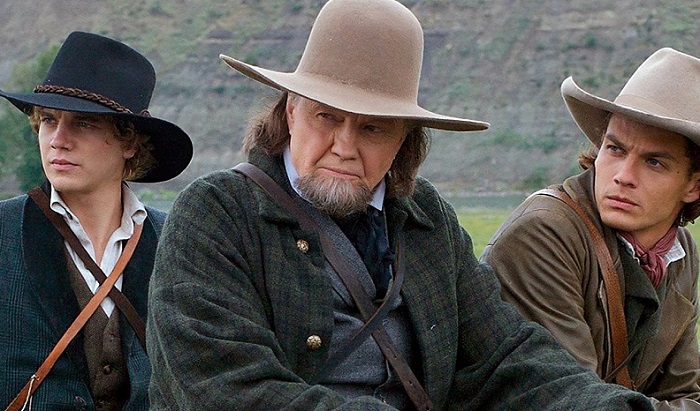
Let’s face it: the entertainment industry loves to rag on religion, and especially the Mormons, with everyone from the animated satire South Park, the TV drama Big Love, and a smattering of anti-Proposition 8 celebrity activists taking a shot at the church’s stance on issues ranging from gay marriage to polygamy. Thus we come to September Dawn, a controversial movie directed by Christopher Cain (Young Guns, The Next Karate Kid) and based on The Mountain Meadows Massacre of 1857, where 120 California-bound Christian settlers – men, women, and children – were killed by fifty members of The Mormon Church, led by the fanatical zealot, Bishop John Samuelson (Jon Voight). Where things get controversial is in the film’s insistence that Mormon leader Brigham Young (played by Terence Stamp) signed the death warrants, a historical assertion that is shaky at best. The Mormon community, in predictable fashion, were outraged. What was surprising was the response of film critics, who rather than swallow what September Dawn was offering, instead reacted with a chorus of boos. Roger Ebert gave the film a rare zero rating. “What a strange, confused, unpleasant movie this is,” he wrote. The New York Post also gave the film a zero rating. Box office wise, September Dawn didn’t do any better, bombing with a loss of $9.9 million in the US, while in Australia, it quietly went direct to DVD. The filmmakers tried to explain the controversy away by saying that the film was a meditation on religious fanaticism and terrorism within our society. Said writer Carole Whang Schutter: “Our fight is not against certain religions, but the powers of darkness, which are prejudice, hate, ignorance, and fear perpetrated by leaders who history will surely judge by their deeds.” It looks like history has already judged September Dawn to be an exploitative historical mess.
THE ALAMO (1960)
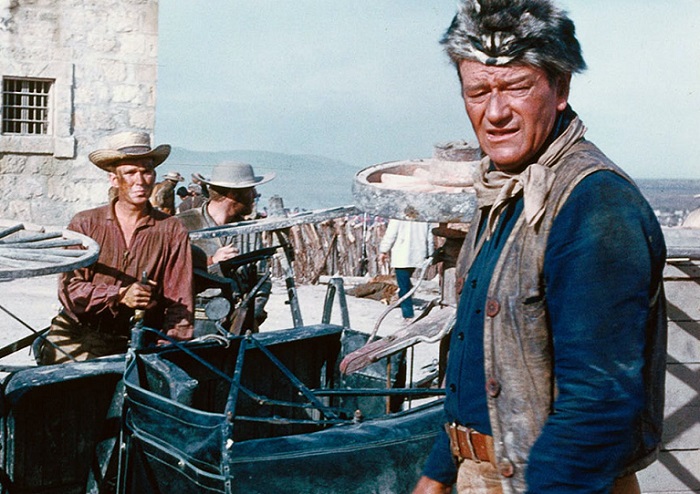
When is a historical film not an historical film? When politics are involved, of course. Cue John Wayne’s passion project The Alamo, which The Duke produced, directed, and starred in. The problem is that it did little to explain the causes of The Texas Revolution or why the 1986 Battle Of The Alamo took place, and instead plays out as an allegory for American’s Cold War with The Soviet Union. “There is not a single scene in The Alamo which corresponds to a historically verifiable incident,” said Alamo historian Timothy Todish. Many of John Wayne’s associates agreed that The Alamo was less history retold through cinema, and more Wayne using the film as a platform to spout his political views. The likes of Charlton Heston and Clark Gable turned down roles in the film for that reason. And with dialogue like the following, who could blame them: “Republic. I like the sound of the word. Means that people can live free, talk free, go or come, buy or sell, be drunk or sober, however they choose. Some words give you a feeling. Republic is one of those words that makes me tight in the throat.” It was that kind of overtly political sentimental dribble which saw prominent Alamo historians J. Frank Dobie and Lon Tinkle demand that their names be removed as historical advisors. Wayne’s daughter, Aissa Wayne, later wrote: “I think that making The Alamo became my father’s own form of combat. More than an obsession, it was the most intensely personal project in his career.” In spite of the film’s several Oscar nominations (all achieved through intense lobbying on Wayne’s part), the critical response was mixed. Years later, Leonard Maltin criticised the script as being “full of historical name dropping and speechifying.” Not surprisingly, the film was banned in Mexico.
If you liked this story, check out our features on real life figures in fictional films; actors who only appeared in one role; and real life figures who played themselves in movies.
