


by Dov Kornits
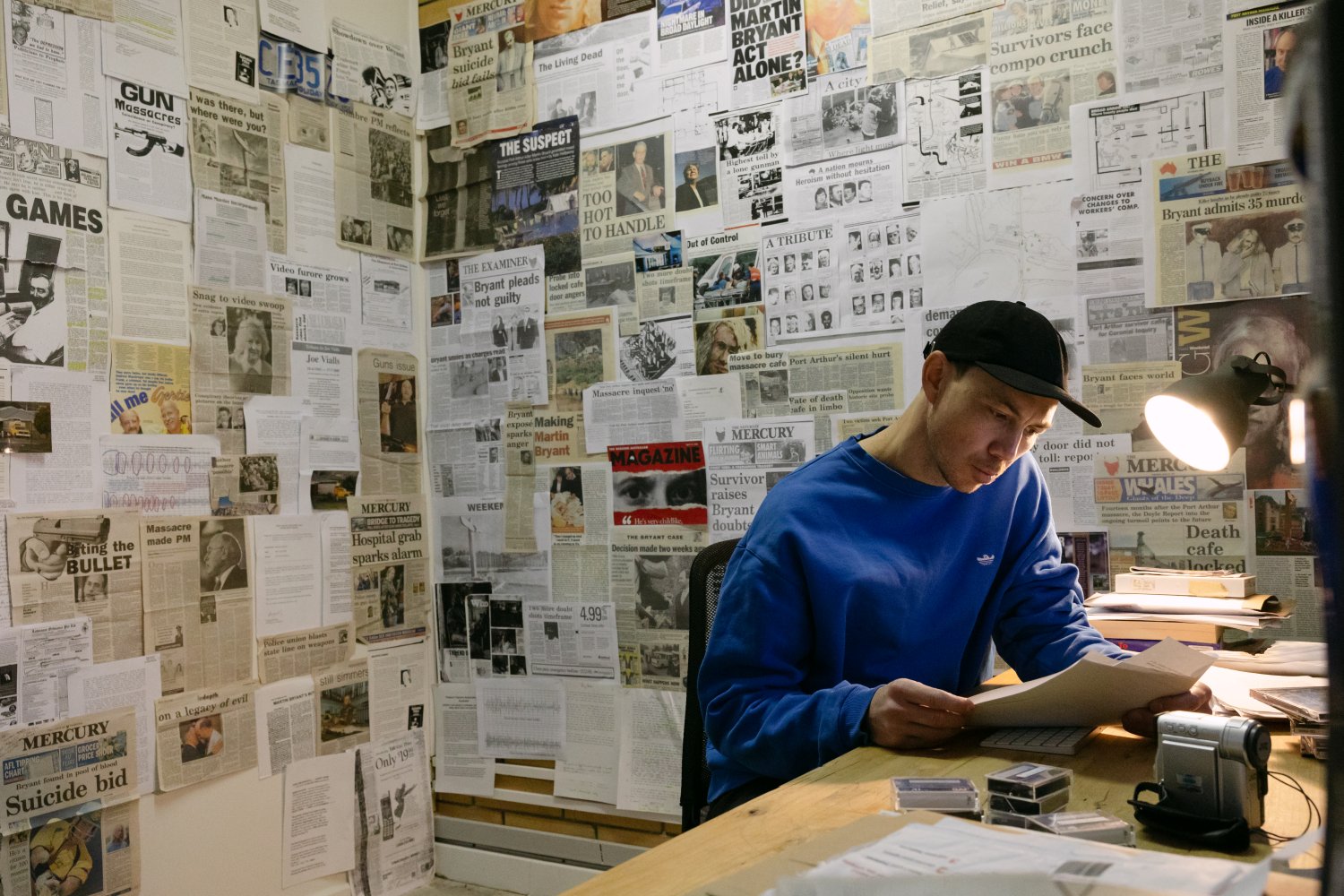
For Jared Nicholson, the documentary Aftermath started back in 2015, when he first heard Wendy Scurr’s story about her experience of the Port Arthur massacre. More than a decade later, the finished film is an impressive, highly personal, formally challenging, labyrinthine tale for our times.
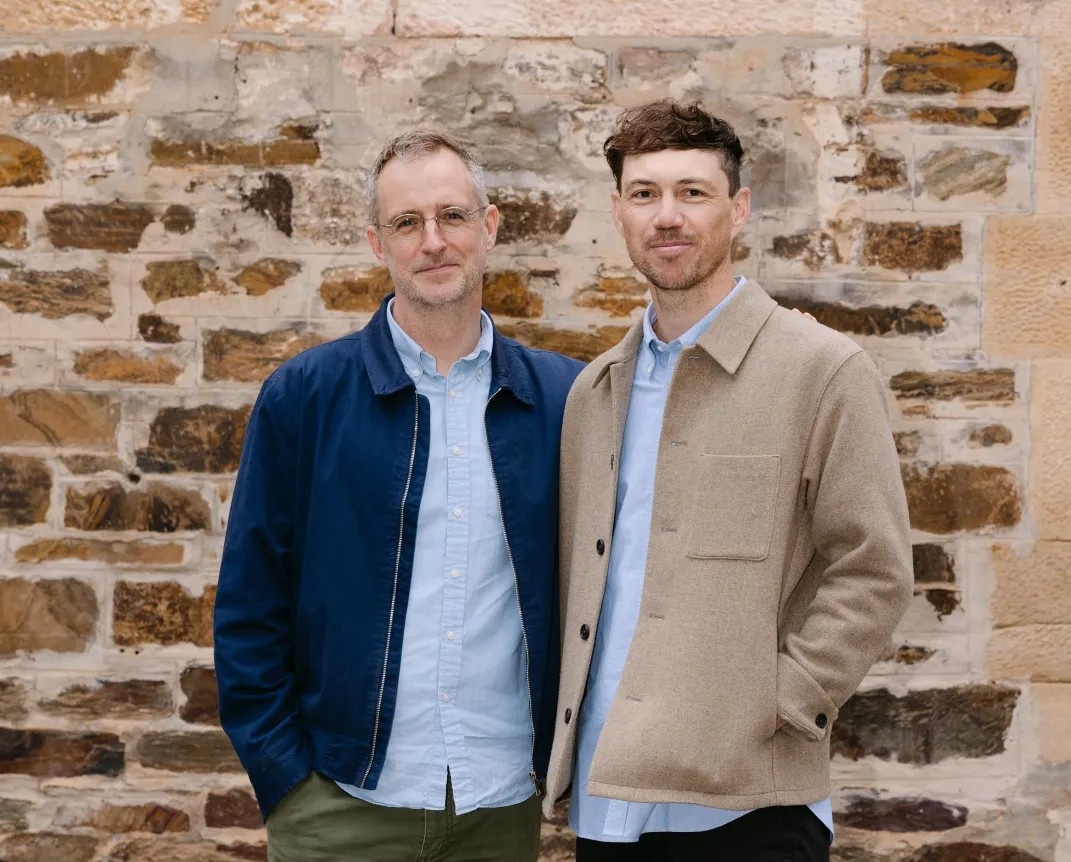
We spoke with Nicholson and co-director Ben Lawrence.
Jared, were you always thinking of this as a feature documentary?
Jared: “I basically spent three years with Wendy exploring her story, filmed a master interview and then a few various other trips. It was always positioned as an autobiographical documentary. And then after her passing, I hit a bit of a wall and a mental health battle and was just like, ‘What the fuck am I making?’ And then, talking to [producer] Rebecca Barry, we were quizzing why I believed the same thing as Wendy, and I just started to open up about my own childhood and how I viewed the world the same way as Wendy. And then we explored having myself in the film and my story as an opportunity to view a different perspective of this world and how Wendy and I both landed in the same place. I knew every element, every timeline, every beat of Wendy’s story, and I knew my story, but had no idea of what my story offered the film.
“It was at that point that we reached out to Ben [Lawrence] in 2023. Ghosthunter was a really big reference point for me. It was an incredible true crime project, which I think was quite different for the time and his approach to recreations or overlay… And it was just a no-brainer to reach out to someone like Ben who I’d never met and go ‘hey, I’ve got this project. It’s pretty crazy, but I need help’.”
Ben, how did you feel about joining the project considering your previous work parallels this?
Ben: “I definitely saw the parallels. There were a few things I was cautious of. I hadn’t co-directed anything before. I really wanted to meet Jared. I could clearly see that his story really mattered to the overall story and it would make a really interesting film. I was scared of the subject matter. I think it’s probably fair enough to say it’s [Port Arthur] quite a taboo subject in Australia. It’s difficult to talk about. It feels like it’s a very settled narrative around the results, the gun amnesty, et cetera. But it was challenging subject matter, particularly when you get into the conspiracy world. But then on the same front, I’m like ‘this is the most fascinating thing about it’. It’s very topical. Everyone has a conspiracy story or a conspiracy they’re interested in or a conspiracy they like talking about more and more so these days.
“But what I saw in Jared and certainly Wendy is that the conspiracy thinking had become debilitating and in Wendy’s case, obsessive. And that’s the story we want to tell; how that happens and how you get out of it. They’re things that I think really interested me, but it was quite a daunting project when it was first pitched to me.”
Where does [writer, dramaturg] Nico Lathouris – who appears in some scenes in the film – come in? Because obviously you guys inserted him into the film. Whose idea was that and did he end up helping you actually structure the drama within the film?
Ben: “He was someone who I’d worked with in the past a couple of times and continued to work with and refer to with story issues that I have. Jared by that point was clearly integrated within the film, but we really needed to have some voice for him, like an interview. And that’s where the story idea came from; how do we get Jared talking? How do we discuss a film about storytelling and the narratives we tell ourselves? And so, in this meta way, the process that we normally go through in developing a project was the story room and Nico was organically part of it, in my process at least. We put all those things together and we created a third Jared. So, we had the childhood Jared, the Jared making the film and the Jared trying to put the mess of the story together.
“It gave Jared a strong voice in an organic way and it pushes the form a bit. I thought it was interesting and it was a legitimate process and Nico, certainly over those days sweating it out in the room, you don’t see all of it, but it’s moments that you see trying to put it all together and create a safety net for the audience to feel that they’re being guided through the process but can see that it’s messy as well.”
With the story, there must have also been a process of omitting certain information, where it crosses the line, ‘is this real or not’. Were you going for this idea of us buying into the conspiracies?
Ben: I think that the film asks audience to sit in that uncertainty, and that’s the world that Jared immersed himself in. We ask that they go on the full journey and they get to the end and they have some perspective, but certainly there are those moments where they are questioning things, as Wendy did, as Jared did, and they are asked to as well. And to see the seduction and also the way it is that you slip into it. But we’re not trying to rehash what went on at Port Arthur. It is certainly a catalyst, but it is in the aftermath that we’re trying to investigate. And that vacuum that’s created by this lack of support for Wendy, that this lack of information, all sorts of things can slip into that and questions that Wendy became obsessed about, we expose within the film.
“We don’t ask audiences to rehash the event. We ask them to slip into the world and feel what Jared did so they can get a sense of what that uncertainty looks like and also bring people in who are partly conspiracy curious, but also people who have seen family members fall into this world and can’t connect with them. So, it’s trying to get people to meet from two different worlds. And I think in that way, it explores tricky territory.”
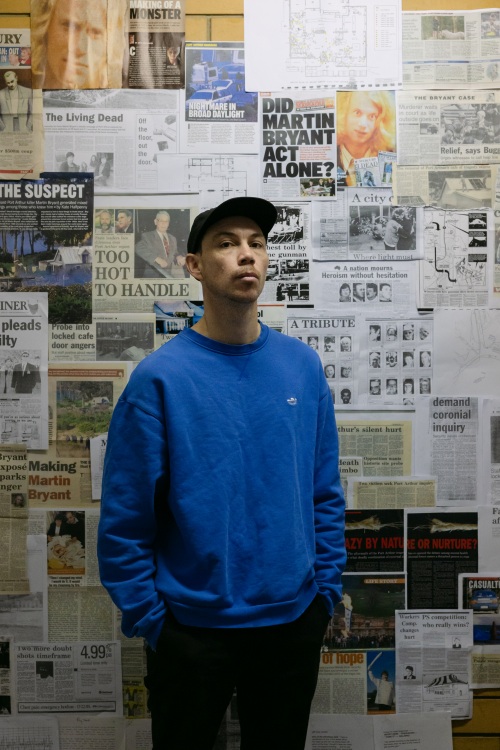 Is the answer offered by the film around conspiracy theories – which are just off the charts right now – is that you need to deal with the trauma?
Jared: “I feel like post-COVID, the door to the rabbit hole was much bigger and much easier to go into. What happened with COVID changed people’s views on a lot of things and people went searching for their own answers. And now, like you say, it’s coming at us from all angles with every event. We hope to build a bridge of understanding of how people get into this place, into this world and why we believed that. It helps make sense of the chaos, but also there’s a way out and we feel that further disenfranchised people or pushing them to the fringes is not a solution.”
Ben: “I think it’s really important we do meet people where they’re at and we invite them to try and meet us where we’re at when we’re discussing these things. But I think that conspiracy thinking, suspicion or a caution around dealing with institutions or other people or governments is quite well founded. I think most people in their lives are going to feel there is a sense of betrayal that’s gone on. And I think through history, the governments, I mean, you look at a project I recently did around Robodebt [The People Vs Robodebt], there was a huge government scheme that there was a lot of victims of, people lost their lives. That creates distrust. I think there’s a lot of distrust. And in that distrust, people have cautions and then they start looking for their own answers.
“And when those answers are shut down, as you saw in Wendy’s case, a very extreme example, you can see that she’s told not to talk. And I think what we’re trying to say is that you have to talk to people, you have to communicate. If someone’s been traumatised by a situation, they have to be allowed to ask questions. And the other thing, is that behind this debilitating conspiracy thinking is generally a betrayal. And that may sit in the past, it may sit very recently for someone and it may spread into other interactions they have. They may have a betrayal with some press story. They may have a betrayal with an incident with the government or a corporation. It’s a natural human condition, but if it affects your life in a debilitating way, I think that’s when you start to need friends and family to have an understanding ear.”
Jared, we see you skateboarding in the film, what is it with skateboarders and gravitating towards the arts?
Jared: I was a troubled child in the schooling system, so when I came across skateboarding, it was an outlet and then coming across the camera was another way of expressing ourselves. It just eventuated into thinking, how do you turn this into a career? I’ve known [Closer Productions’] Bryan Mason for a lot of years, having grown up with the sake skating community, and he was someone I aspired to, especially here in Adelaide. It kind of made it possible to do this and here we are.”
Aftermath premieres on 18 October at the Adelaide Film Festival, more information here.
