



by James Mottram
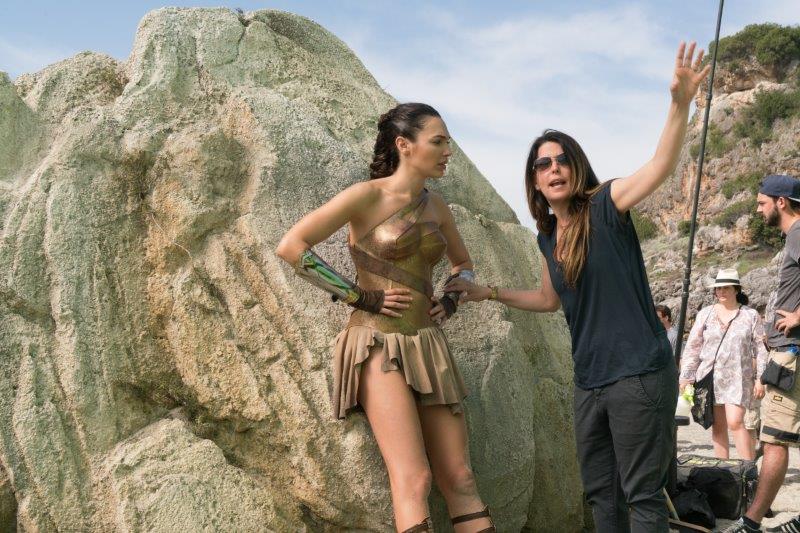
Best known for her 2003 real-life serial killer film Monster, Patty Jenkins returns with her second feature to make history. She becomes the first female director of a female-led superhero movie with Wonder Woman, an origin story for the DC Comics character. With Gal Gadot reprising the role she played in Zack Snyder’s Batman v Superman: Dawn of Justice, the film co-stars Chris Pine as Steve Trevor, a World War I pilot who washes ashore the remote, hidden island of Themyscira to encounter a race of Amazon women – and meet Gadot’s warrior Diana.
We spoke with Jenkins during the final stages of post-production.
What connections do you see between your first film Monster and Wonder Woman?
I personally see a lot of connections. My passion in my career is to tell very powerful stories with great drama and make great dramatic movies about universal emotions. So for me that was a woman, a person, going through an exceptional circumstance where they had to grapple with how they would face those things. And in her case [in Monster], it was becoming the worst possible thing you could imagine. This is the inverse. This is a woman who realises she has all of this power that she could do good with and how does she track that point of view? The great thing about that question – which I never get asked – is that nobody ever would see that link. When I talk about it to people…they say, ‘How difficult was it to wrap your head around a movie like this?’ Well, it wasn’t really that different to anything else I’ve done because it’s a singular character’s point of view and journey and arc and it requires drama and everything I did in the movie came from the same place as where I directed Monster from.
What does Gal Gadot bring to the role?
So much, because I’m a little bit of a believer in typecasting. I think the greatest thing about the A-List actors…they are over-celebrated at times, but not really. There is only a handful of people who can access this incredibly live bouquet of emotions in a really, really honest way. They may or may not be those people but somewhere in them, they are. So the thing about Gal is, she’s truly not vain, not shallow, and she’s deeply kind, deeply thoughtful, very optimistic, very strong and allows a purity in her smile that’s not based in not understanding what’s going on. She both grew up in Israel and has this incredibly complex understanding of seeing real conflict in her life and still is able to access this hope and purity. That is so Wonder Woman! That is exactly what Wonder Woman needs to be. It would be such a challenge if you had somebody who was shallow or vain. A lesser character wouldn’t know what a greater character acts like. But a person who has that true character, the choices are automatic. It comes very naturally.
How would you describe the tone of the film?
I think it’s like the original Superman, mixed with Casablanca, and mixed with a little Indiana Jones. Maybe there’s a slightly more serious film in there at moments, in subtext.
Was Ares the main villain you thought of?
Yeah, he’s from the lore. I really care about the original Wonder Woman comics, mixed with the little updates that smooth that out into a slightly more modern story. But he’s a great core villain who is wonderful.
What challenges have there been filming a London of a hundred years ago?
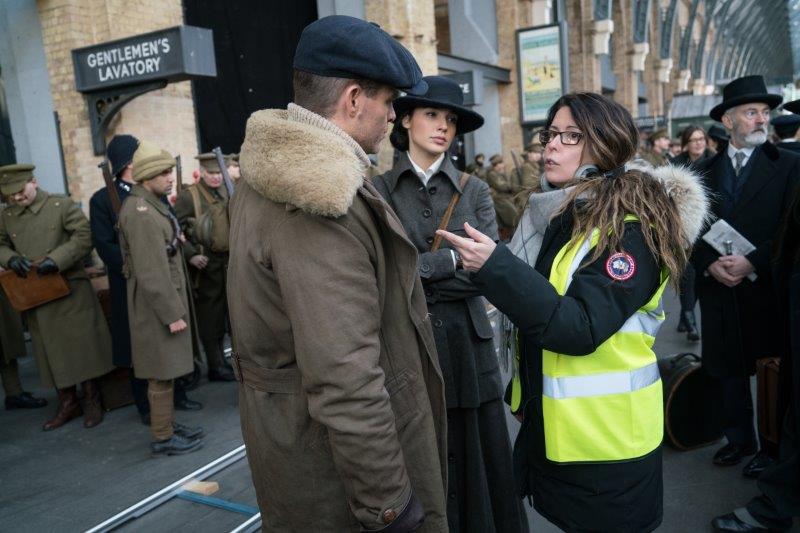
The biggest challenge was tone just because the filmmakers here are so great and they’re so great at doing authentic. So I was always like, ‘That’s great! But not too authentic!’ What you don’t want to do is suddenly have it look like Masterpiece Theatre, and there’s someone in a superhero costume walking around like [they are in] Downton Abbey! My obsession was tone and colour palette. It was graphic novels, 1917 and [American artist] John Singer Sergeant, who’s very modern in his way! Blacks, whites, reds…you’re adding a little veneer to something, so it’s slightly painterly. You’re creating a third reality that’s close to reality but is not exact identical reality. But it was amazing: the crews here were amazing, the people were amazing. You ask for World War I stuff, there were troves of it…really great. We shot on location a lot. I tried to do everything as filmic as I could, because then you’re setting the bar for looking like film. I’m personally not at all a green screen person, so it was great that way.
How much violence will we see in the film? Will she kill anybody?
Wonder Woman always – and in my world – will only kill because she has to. So we will never feel that turn. She does really struggle at the end of this movie. She really struggles with what this is going to take and who these people are and what it all is! So that is real and it happens. But in my belief of Wonder Woman, she never – not in the past, not in the future – is somebody who will ever be fine with killing. She will only do it out of absolute necessity. In that way, Indiana Jones was something I looked to for that. They just killed seventy people in that scene but you’re not feeling that! They didn’t want to have to do that; they have to get through something and they’re defending themselves. I have the same thing: we’re fighting a war and there’s no way we’re not killing people. How do I do that tone? That was where I centred myself: necessity, don’t glory in it, don’t overly see anything, don’t ever get hard about it.
You also worked on a Marvel project – Thor: The Dark World – before leaving the film. What is the difference between working for DC and Marvel?
For me, my vision was less right for what they decided they wanted to do. I actually wanted to do something more similar to this on that movie, and they thought they could do it and got really excited about it, and as I was there, they started to realise that the universe was around it, in a way that changed what they needed to do. I did not feel like I was the right person for that story. It was so completely different than where I come from. They’re lovely people and I really like them and really respect what they do. And I’m so grateful to them still. They weren’t thinking about whether I was a woman or a man – they just liked my vision and wanted to do it.
Are you thinking about a second Wonder Woman movie?
Yeah, I think about a second movie all the time! And more! Yes, I’m not interested in ever making a movie about a fully confident character with no change. In no circumstances – life is not that way. In this case, I was extremely interested in her cockiness, her naïvete, meets the world, what that journey is like and what you decide on the other end. In the next movie, I think there is going to be a new journey which is a different journey, but it’s as vulnerable of a journey and as complicated and linear…so I’ve thought about it all the time.
Will we see a link between Wonder Woman and the upcoming Justice League?
Not a huge one, but there is a connective device, yeah.
Do you feel now she’s going back into Justice League that you have some ownership over the character?
Totally, to some extent, but it’s a different version of her. She’s much more naïve and young. That’s why I like the time period difference. I’m intrigued by where she’ll end up in the future for other reasons – whereas I’m directing the core of that person who is different. What’s even more interesting, I remember this from Monster… the day the movie came out is a little sad because you’re having a personal relationship with the movie and it’s not in the world yet. This is my job and therefore it’s an active relationship in my life. And then it will belong to the world – that daily Diane and Steve chess-game will end. So it’s strange and proprietary in all kinds of ways.
The film features an incredibly powerful scene of Wonder Woman crossing No Man’s Land. How was it to incorporate her powers into a war-zone?
It was great! That’s why I love this scene so much. Even though it’s an obvious scene in a way, and it will be an obvious scene in retrospect, there was a lot of conversation about, ‘What would she do? She should just fight soldiers somewhere.’ I was like, ‘No, this is super-important.’ You’re talking about someone who can block bullets in No Man’s Land and the question is not how many bullets…the question is, that’s an arc that takes place in an action scene that I love, which is, ‘Can I do this? Oh my God, I can do this!’ I just loved taking a superhero, taking real life and figuring out how to blend the two of them together to exactly something like this. One could in the past have said, about any superhero, ‘well they can only do that…’ but there are going to be scenarios where you say, ‘You can block bullets? Wow!’ This is a pretty great context – somebody who is impervious to bullets is pretty powerful in that situation.
Wonder Woman is in cinemas June 1, 2017.
