


by Gill Pringle
What was it like working with Patty Jenkins?
Connie Nielsen: For a woman to work with a female director, first of all, it’s rare for us, so there’s already this. I’ve been privileged to work with two other women before [Vibeke Idsoe on Lovekvinnen; Susanne Bier on Brothers), but I will say that this is a special experience for us. I’m sure Chris has had the opposite experience, but it does make me feel like, when I’m making creative decisions, or I do have ideas about the character, there is much more likelihood that the director will recognise those feelings or ideas as pertinent to the character, than many times when you’re positing an idea to a director who is not aware of any of those things, so it does make a difference for me.
Chris Pine: Yeah, I mean, she’s a human being, she’s great, she kicks ass, she’s a great director, she happens to be a woman.
Obviously, people know Wonder Woman, but who are your characters?
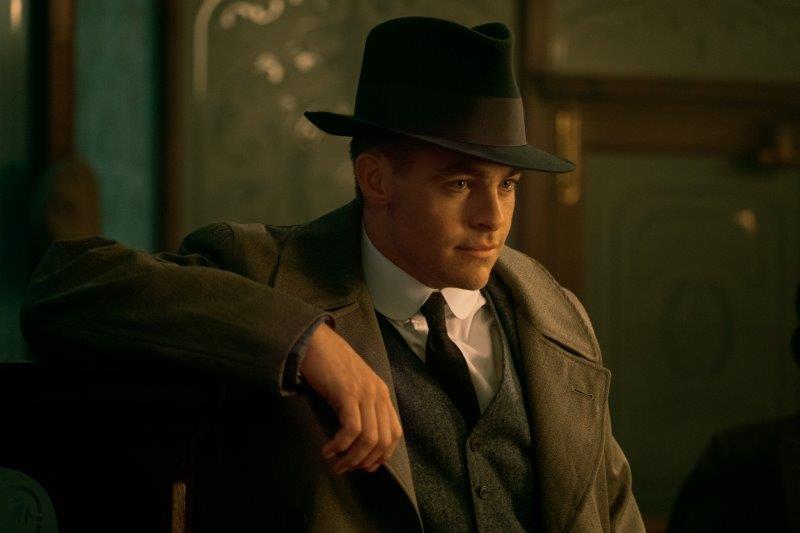
CP: I play Steve Trevor, who’s an American pilot, who is a spy, and he has seen the horrors of war, and is a grave realist in terms of the depths of violence, and the chaos of war. And then he meets Diana [Wonder Woman], who’s new to the world of men, and has these high hopes about what human kind can achieve and do, and the trajectory for us is I learn a lot about hope and the positive potential of mankind, and she learns what it’s like to live in the real world, which is that it’s not all black and white and rosy and fantastical; it’s complicated, so I think that’s the conflict between us.
CN: There’s this innocence that Chris is talking about, that Gal really, really does so well in the film, she just has this luminous quality, and really plays into the whole deer in the headlights kind of thing, where she’s just so pure. My character, Queen Hippolyta, has worked really hard to maintain her sense of innocence. I related to that as a mother myself, wanting to shield my children from all of the ways in which human beings fail, whereas he plays the realist, who almost finds it funny that we’re so imperfect. Diana is driven by the purest of human ideals, and my character tries to protect those and refusing to let her fight, and his character having to shepherd her into the actual midst of one of the worst periods in human history… I think that’s a really great setup for the film.
Did you all have to get conditioned? There’s horseback riding, but what were the skillsets you each had to up your game to, to get ready for this movie?
CN: Well, we were just talking about that, because I said, ‘dude, you lost weight’ to Chris. I did, too, because we had so much muscle. We just put on so much, doing massive weight gain to start with, and then I had a program that involved at least six hours of muscle training. And sword training, and horseback riding. So all of that stuff was a very, very intense part of creating the character.
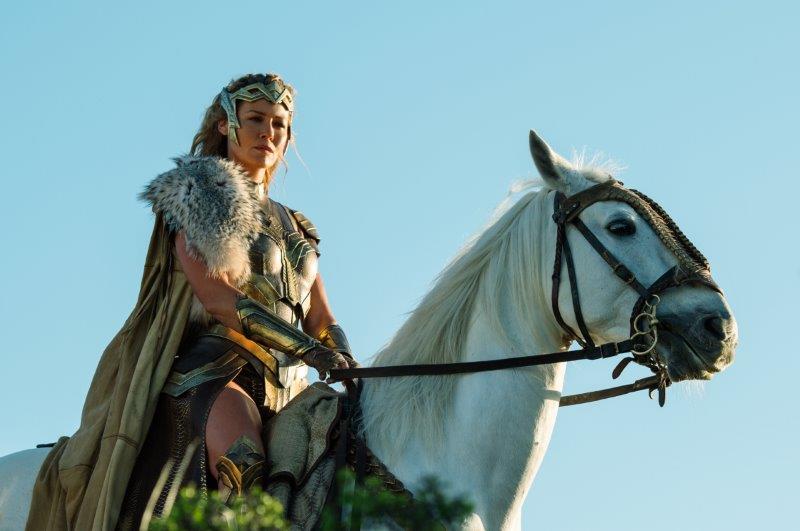
Connie, your costume is amazing, who are you channelling as this queen?
CN: I had nothing to do with it, it’s Lindy [Hemming], she’s just one of the most extraordinary costume designers in the world, and she has an incredible imagination. And I will say, Patty Jenkins is such a detail oriented person who never loses sight of the bigger picture. She has both the big overview, and it goes all the way into the smallest detail. She even looked into the shape of the actual breast, and they had to go through all these leather-workers who were men, a hundred different kinds of shapes of these breasts, in order to make sure they were right, and not like a boob job. Some of them look obscene, and getting it just right, was the thing. There’s the crazy thing with superheroes. Everything shows whether you are a man or a woman in a superhero film, everything shows, it’s a very big thing, it goes for both, and so you just have to be able to do all of those stunts, wearing a double corset, one of which is made out of leather, and then move.
Connie, how was it playing such a physical character?
CN: I took it as a real opportunity to discover this kind of physical acting, and I had a ball with it, I loved every minute of it. And the Queen of the Amazons… the Amazons are considered mythical, but I read some pretty interesting literature, for example, by a Stanford based anthropologist, who posits that these are not mythical people, that they in fact exist down to this day, in parts of the Asian Steppes. Eagle Huntress as a film right now is emphasising that it’s not only men that are doing it, but in fact, historically, women in that part of the world did so all the time; they had their own dogs, their own horses, and their own eagle, and they were hunters, and they were warriors. 30% of the warrior graves have now been discovered to be women, and then these people informed the Greeks, who then wrote incredible stories about Amazons. It was a really fun thing for us to make all these stories about this mythological tribe of Amazons, that Diana is born into, and this demigod that she purports to be in the beginning, and then to get in as much of the historical Amazonians, so to speak, into those characters. There is that moment when your character is meeting both an historical truth, and this mythological underpinning which makes it exciting, because we use our imagination. I had a ball.
Chris, how was it to play a character who is strong, and also supportive of these incredibly strong women, but also not to be emasculated by them. Was it a fine balance?
CN: Well, you could also ask the women because we must hold our own all the time in film under very difficult conditions, I mean, right?
CP: You just play the reality of the scene, and it’s up to Patty [Jenkins]. Patty always says that she thinks that a lot of women want to see a man who’s kicking ass in his own way. Humans are humans, and we get beaten up a lot, and we fall off and get ourselves back up. I think all the heroes I really liked growing up, and we always talk about Harrison Ford, but he’s always that guy who is always sporting a bruise, and there’s always some obstacle for him to go up against, and that’s why you love the guy, because he always gets up. I love that quality, but it’s up to my director whether I get that tone or not.
CN: I have to give a shout out to Chris, he was on set with 75-80 women… A lot of guys would have had ego problems, he had none. I take my hat off, he was amazing.
CP: I have to be real clear about this. We were on a beach, with beautiful women in skirts, I was having the time of my life.
How do you think the character of Wonder Woman and the film in general reflect the world that we live in right now?
CN: I see her as an empath, to me she’s utter empathy, and she’s about defending human beings from whatever is threatening them, and keeping them safe; someone who is driven by her need to protect.
CP: You have a classic revenge cycle story, which is what all these superhero stories are, someone does bad, good guy fights bad guy, revenge is everything, and the bad guy dies. Well, in this, I think you find whether it be because of the women or not, in the final act of the film it’s really engaging in the question of does the revenge cycle that we’ve been playing out for millennia as human beings, serve anything? Because clearly it doesn’t seem like it’s doing anything in the real world. We go out, we kill the Taliban, and they fucking hate us even more, and they come back and kill us and it goes on and on and on. So, you have this really wonderful question of whether or not that works, and whether compassion and empathy should be embraced, and equanimity and whether that should really be, and we have all this wrapped up in the wonderful fairy tale stuff, and great explosions, and all that stuff that people want. That I think is the deep question here, and it’s prime and central, and probably just as important as in any indie film.
