


by James Fletcher
After shuttering doors in 2020 and taking the event virtual with an online program at the last minute, 2021 promised a return to form for the Sydney Film Festival, with projectors locked and loaded across all venues, and a number of safety protocols and precautions having been put in place. After the added hiccup of the latest Sydney lockdown, and the festival shifting to a November date, it finally looks like the 2021 Sydney Film Festival will be going ahead.
Amidst all of these unpredictable factors, one saving grace that the Festival continues to benefit from is the exemplary leadership under Nashen Moodley, a South African born film curator, who celebrates his tenth tenure as Festival Director, having guided the SFF into one of the globe’s most successful film festivals.
“It’s gone fast,” reveals an amused Moodley as he reflects on his time as Festival Director. “It’s hard to imagine that it’s been, well, nine years already. And yeah, it’s been a wonderful experience for me. I think the festival has grown an enormous amount over that time.
“In my first year, we were only in the Sydney CBD, but over time we’ve managed a geographical expansion of the festival, to Cremorne and to Randwick; to Newtown and to Casula. That expansion, in terms of geography and the number of cinemas, led to us selecting more films. And the great thing is, that led to more and more attendance, and more and more filmmakers coming to the festival. And that has been remarkable. We were able to expand the program and implement so many wonderful initiatives.”
In fact, under Nashen’s guidance, the Sydney Film Festival not only managed to physically expand its reach from a limited number of physical screens, but also developed a viable online presence, eventuating with 2019’s most successful festival to date, enjoying record breaking attendance across all venues and screening over 300 films from around 55 countries. A milestone that Nashen attributes to the Festival’s hard won reputation, not only within local communities and media reach, but with the international filmmaking community, itself having embraced SFF as a real contender on the global Festival circuit.
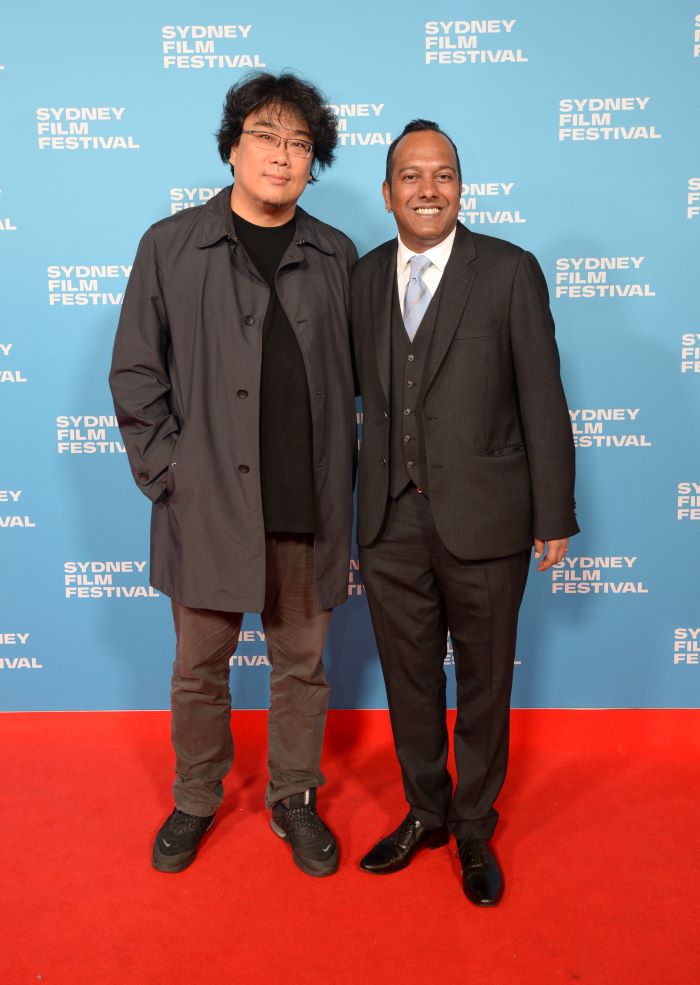
“2019 was an incredible year. It was really, I think, the best year that I’ve had at the festival. It was great to have Parasite at the festival and have Bong Joon-ho here. That was a great thing. I love him and I love his films, but to have him here just after he won the Palme d’Or in Cannes, and then for that film to go on and win a bunch of Oscars. I think that was a great moment.
“It shows that even if we know that that type of cinema is struggling, in terms of theatrical release and worldwide distribution, that to have this incredible story, this Korean film that was not only a fantastic film, but also made a vast sum of money. And won all these prizes all around the world, including Sydney Prize… People who had never seen a Korean film before, had never heard of Bong Joon-ho, went out and saw that film, and loved it, and told their friends about it, who also went and saw it.
“There have been many films like that over t
e years that we’ve brought to an audience, where we’ve had the filmmaker here. And it’s been a great experience for those filmmakers and a great experience for the audience, one that we long to make happen again.”
While the casual observer might consider Sydney Film Festival as merely a unique chance to see otherwise unavailable films on the big screen, Nashen’s influence over the past decade has seen a number of social and activist initiatives also bloom across screens, including European Cinema: 10 Women Filmmakers to Watch, Lexus Australia Short Film Fellowship and the Travelling Film Festival, which showcases a limited festival program to rural communities.
The one key initiative that Nashen quietly prides himself on most, and one which has been gaining more and more relevance recently as the film industry faces uncomfortable truths about representation, is the programming of First Nation films into the Festival, which has culminated with this year’s introduction of the Deutsche Bank Fellowship for First Nations Film Creatives.
“The establishment of the First Nations Program, it has had a few other names over the years but now it’s called the First Nations Program, is something I’m very proud of. I’m very happy that we’ve done that.
“When I arrived from South Africa, the filmmakers from Australia that I loved were indigenous filmmakers. Those were the films that made an enormous impact on me, the films of Warwick Thornton and Ivan Sen for instance.
“To me, it was incredibly important to highlight this aspect of the Australian film industry, because I thought many of the best films were coming from indigenous filmmakers. We’ve maintained and increased the number of First Nations films we show, not just from Australia, but from around the world. And this year, we’ll have a fairly substantial program. Again, not just from Australia, but from around the world, and all very strong films.
“I think this focus on indigenous film is increasing internationally. You’ll see that some festivals are quite committed to presenting First Nations films, Berlin for instance, Sundance, those are just two examples alongside festivals dedicated entirely to First Nations filmmaking.
“The First Nations Program is something we’re very proud of.”
With the Sydney Film Festival disrupted in 2020 and 2021 thanks to the virus, Nashen has nonetheless approached 2021, which heralds the 68th iteration of the Festival, with an enthusiastic optimism, building a Program that includes a diverse selection of films ranging from thrillers, dramas, documentaries, comedies, arthouse, shorts and cross-genre experimental entries from around the globe, including indigenous resistance thriller Night Raiders, produced by Taika Waititi, and a beautifully curated retrospective of Abbas Kiarostami, featuring eight films from the iconic master of cinema.
As Sydney comes out of lockdown, the Film Festival remains optimistic that a smooth, safe and effective event will move forward with the hope of showcasing how large scale gatherings can adapt, and flourish under the new normal.
“What I can say is that the Sydney Film Festival will be one of the first big public festivals to run in cinemas, fully in cinemas, and on a similar scale to past festivals,” elaborates Moodley as the inevitable subject of the virus and its decimation of the live entertainment industry is broached.
“This year, the Sydney Film Festival will be slightly smaller than usual, because we need more time between sessions for cleaning. If you’ve come to many of the screenings at the State Theatre or done back-to-back sessions, you know that people are actually leaving while the next group is already waiting to go into the cinema. And that’s obviously not ideal in these circumstances.
“So, we’ve had to lessen the number of sessions and therefore the number of films. But we’ll certainly be one of the first to stage a very large in-cinema festival.”
The 68th Sydney Film Festival will run from November 3 – 21, 2021. For updates on the program, screening times and ticket information visit https://www.sff.org.au
