



by Adrian Nguyen
Worth: $11.00
FilmInk rates movies out of $20 — the score indicates the amount we believe a ticket to the movie to be worth
Cast:
Deborah Mailman, Thomas M. Wright, Joe Bird, Pedrea Jackson, Anni Finsterer, Natassia Gorey Furber, Erroll Shand, Matt Nable
Intro:
… every narrative choice is banal and predictable by the genre and the filmmaker’s standards.
Sweet Country is one of the greatest meat pie Westerns of all time. What is essentially an old-fashioned tale of revenge that oversaw a fight between gnarly Anglo-Celtic Australians and justice-rearing Indigenous Australians, it brings a moral complexity to the genre’s exploration of colonial society. Warwick Thornton’s visual palette was distinguishably hypnotic, often drawing on influences of the Dreamtime and other Westerns, while taking an original approach to the genre.
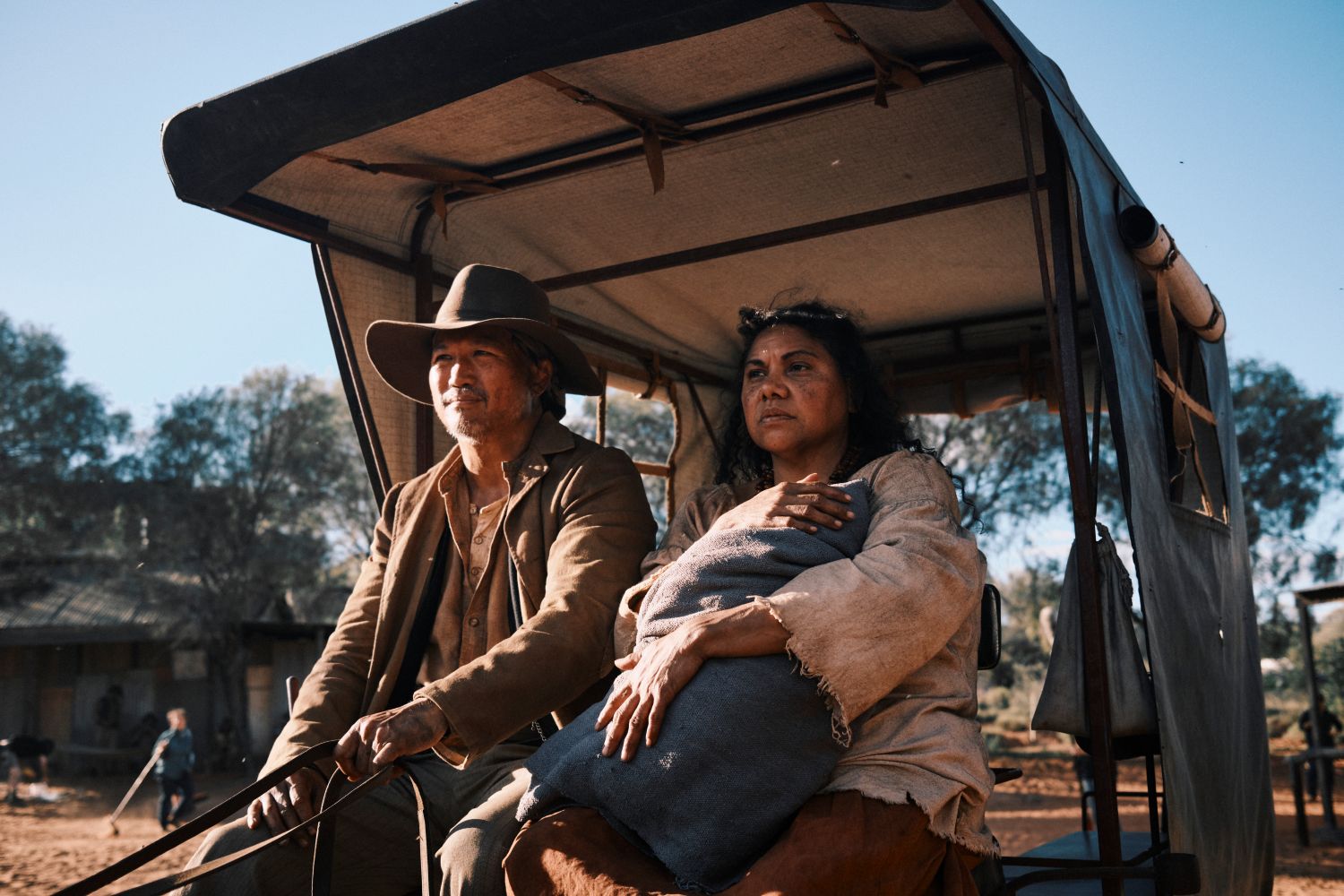
Thornton returns with sequel Wolfram (named after the tungsten mine in the Northern Territory), which is set five years after the events of Sweet Country and has a fraction of its strengths. It addresses the Stolen Generations, where an Indigenous woman named Pansy searches for two kids after a miner abducts them.
There are several differences between Wolfram and Sweet Country. Thornton eschews landscapes that were predominant in the latter, for intimate closeups and medium shots of each character, sprinkled with flashbacks. The outlook in Wolfram is harsher, but it removes the dreamlike vibe of its predecessor.
Some of the characters from Sweet Country return, including Mick Kennedy (Thomas M. Wright) and Philomac (Pedrea Jackson), who he now takes under his wing as well as Lizzie (Natassia Gorey Furber), the widow of the stockman Sam Kelly (the lead in Sweet Country). But the nuance portraying the new and older characters is nowhere to be found. The Anglo-Australians are cartoon villains, especially the grisly Casey, played with such scene-chewery by Erroll Shand, while the Indigenous and migrant characters are seen as nothing but nobles.
Deborah Mailman’s Pansy doesn’t have much to do and neither does Anni Finsterer and Shanika Cole as the two patrons of the pub central to Sweet Country. In Sweet Country, Kennedy’s interactions with Philomac, a runaway youth and Archie are important in establishing the complicated (although harsh) relationship with Indigenous Australians. In Wolfram, Thornton doesn’t explore the worlds he initially portrayed in detail, except to say that the atmosphere shaped by British colonialism has not changed.
Wolfram has less world building than its predecessor, and every narrative choice is banal and predictable by the genre and the filmmaker’s standards. This would not be surprising if it was a famous franchise, but there are fewer sequels in the Australian film industry, and Wolfram is unnecessary when it continues to stray away from what made its predecessor so fascinating.
