



by Christine Westwood
Short skirts were already appearing when Mary Quant came on to the scene in the 1960s; the elfin, gamine look was already in vogue in Europe, and designers like Scandi’s Marimekko were producing youthful pop art, flower power designs. But Quant gave the new look coherence and absolutely nailed the zeitgeist with skinny ‘dolly’ models like Twiggy, who epitomised the emerging generation of working women.
With their new career freedom and pay packets, young women wanted to ditch the 1950s housewife role in favour of play and freedom. Quant’s influence was all-pervasive and reverberates through decades into youth-oriented brands including Sportsgirl, while blazing a trail for iconoclasts like Vivienne Westwood with her Worlds End punk branding.
A new documentary, simply titled Quant, with the tag line ‘An extraordinary fashion icon,’ is a terrific slice of social and cultural history and a respectful account of its subject. Directed by Sadie Frost, actress, producer, who ran fashion label Frost French (1999-2011). Add her marriages to Gary Kemp and Jude Law, and it’s apparent that she is well qualified to understand popular culture and the fashion industry’s place in it.
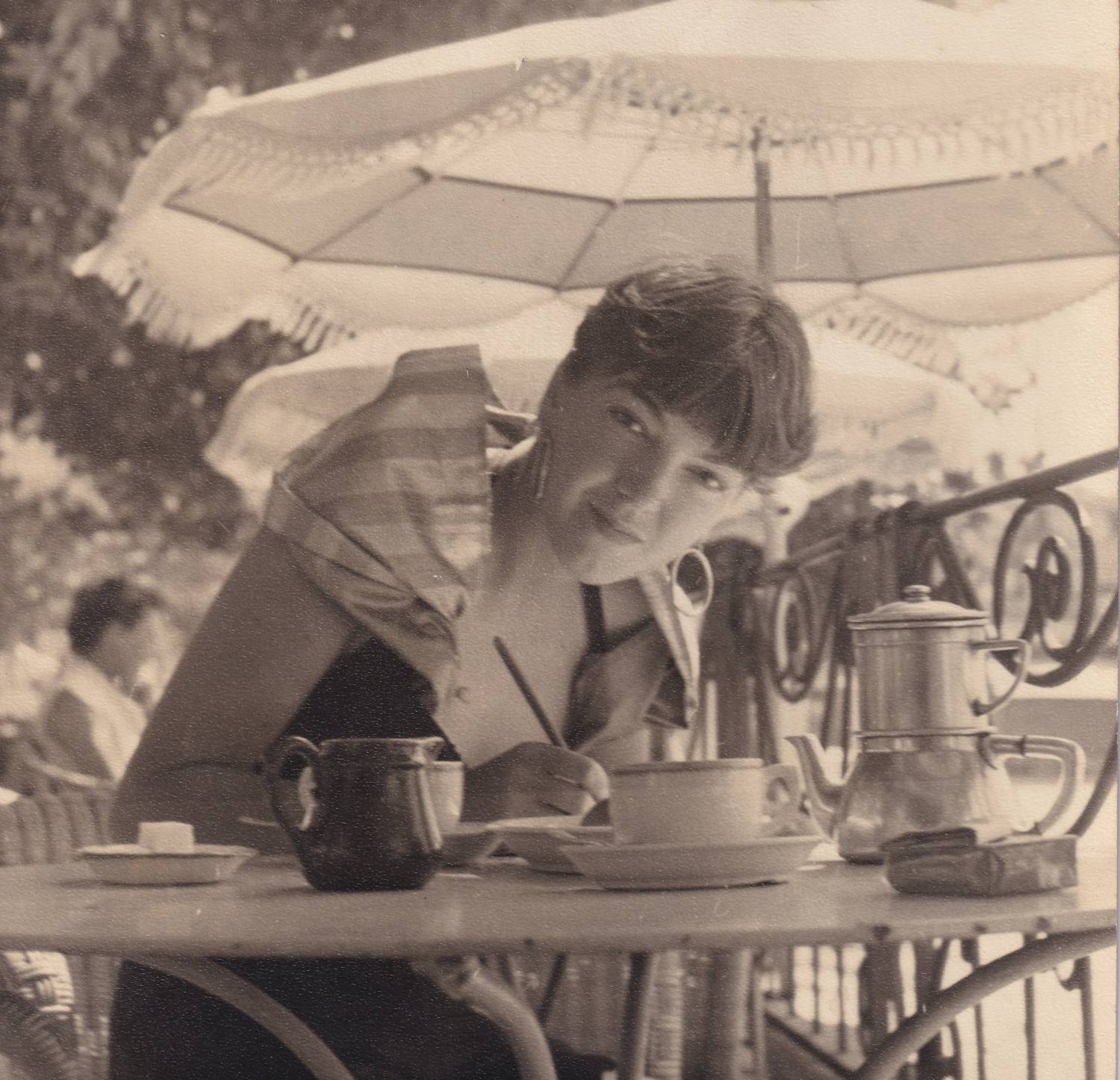
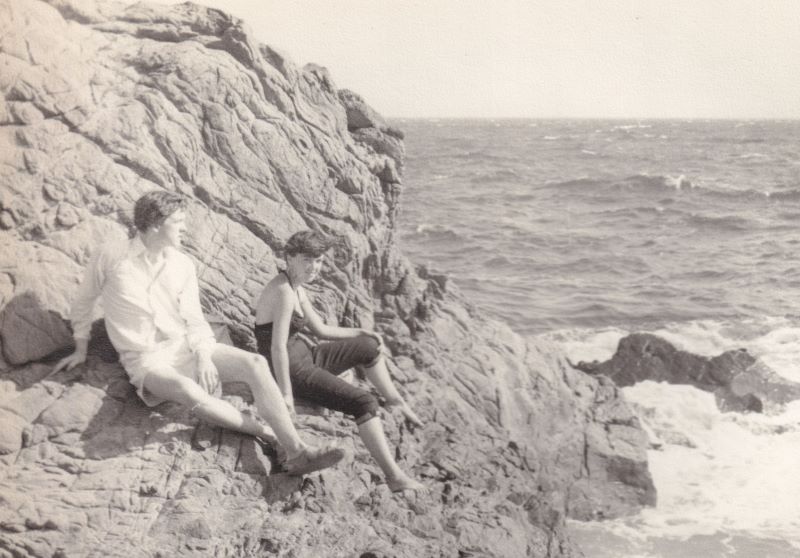
The 1960s was a well photographed decade and Frost had access to contemporary images and fantastic video footage. The interview fragments with Quant are especially fascinating. There are also highly staged ‘fly on the wall’ business conversations with her husband, Alexander Plunket Greene [pictured below with Mary Quant]. It’s no stretch to work out that he, the consummate marketing extravert, came up with these. Their relationship is an intriguing thread in the documentary, revealing how his business acumen and upper class social connections balanced Quant’s reserve and artistry.
While the archive footage is the strong element of the film, there are also interviews with Quant’s contemporaries and fashion figures like Vivienne Westwood, Kate Moss, and Zandra Rhodes to provide context. These interviews range from substantial commentary to random sound bites, generally colourful but sometimes baffling, such as The Kinks’ Ray Davies.
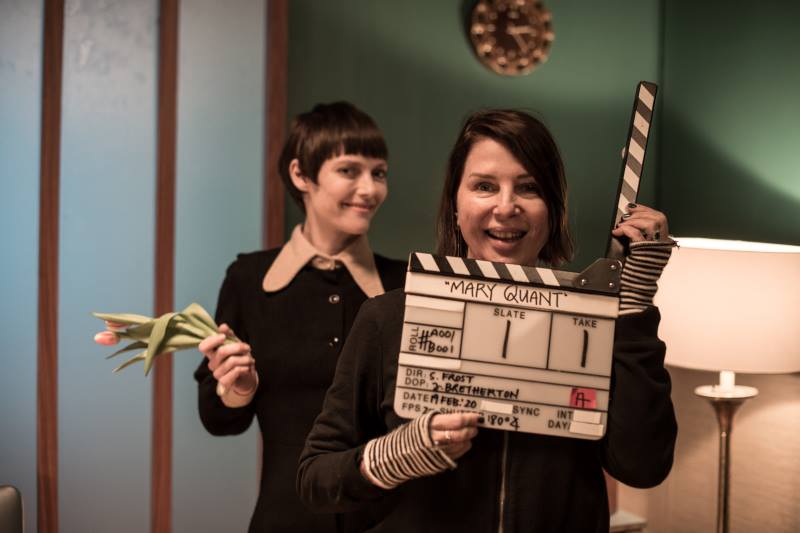
The decision to cast an actress (Camilla Rutherford, pictured below with Sadie Frost) to enact Quant in stylised scenes seems oddly misplaced. Quant’s pithy statements are much more engaging when quoted in text or spoken by Quant herself. The juxtaposition of these scenes with footage of the real Quant is jarring, as her personality is so unique, and not at all performative.
Speaking of pithy comments, “There are three things you want clothes to do – get noticed, look sexy, and feel good,” Quant said.
She achieved this with a creative, freedom-loving attitude. English fashion always tended to be conservative and when Quant finished her training at the Royal College of Art, the scene was ripe for a change. As a reaction to wartime, 1940s and 1950s fashion was dominated by the likes of Christian Dior elevating the ultra-female hourglass figure and elite couture.
Quant described her early fashion assignments, spending five days to make a hat for wealthy women at Ascot. “Unrealistic, out of date nonsense,” she says in her clipped, Sloane girl speech.
With her own elfin looks and shaggy short hairdo, she is cousin to French gamine style, though an urchin version. Her childhood in Wales was characterised by physical freedom and active outdoor play,
As one commentator says, “You could run for the bus, move, in Mary’s clothes.”
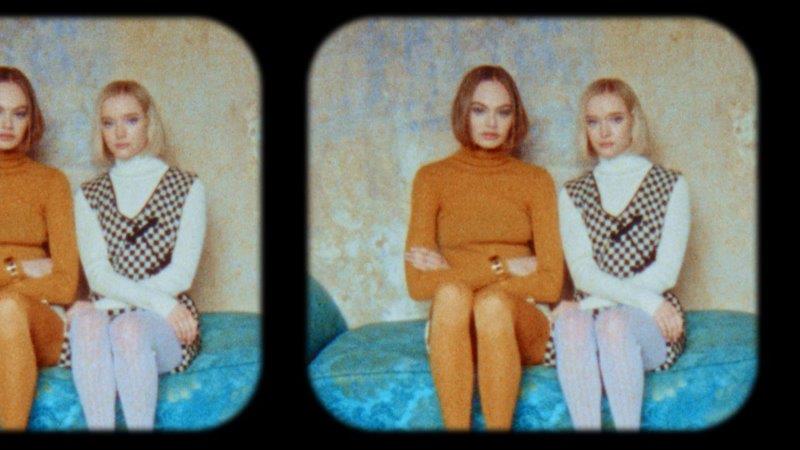
With their short tunic styles, the clothes look remarkably like pre-pubescent play clothes and always reflecting Mary’s own slender girlish look. It was all about the skinny, coltish legs and it screamed youth.
Mary was the first to design tights to accommodate her ever shortening skirts. Gone were restrictive corsets and suspenders. The pill was available in 1961 and for the first time, women were in charge of their own reproductive biology. Quant’s fashion absolutely fitted the bill. For the window displays in her first shop, Bazaar, Quant created sportier and more youthful looking mannequins than had ever been seen before.
A great strength of the documentary is how it uses Quant’s story to show that fashion is a fusion of art, business and culture. Quant, endlessly inventive, came up with many firsts that are now common currency for fashion houses. She created her own makeup range to complement the fresh look of her clothes and baby doll aesthetic. Her packaging was the master stroke, brilliant paintboxes, where women could have all their creams, powders and brushes together in one palette.
Plastic boots were another innovation, perfectly complementing the pop art, sleek and modern look of her designs.
With Vidal Sassoon creating his famous geometric haircuts and photographers like David Bailey capturing a grittier aesthetic closer to working woman than post war housewife, working class music groups like The Beatles, The Kinks and Rolling Stones dominating the charts, the 1960s were Quant’s heyday, an unparalleled fashion boom never seen before.
A decade on, and ultra mod and futurism was giving way to a vintage, recycled and back to nature sensibility with the hippies. The Beatles disbanded in 1969 and there was increasing disillusion with government. Suddenly, Quant wasn’t the IT girl anymore. As an artist, she wanted to work, needed to create and reinvent, but the perfect storm of culture, pop, and youthful style had run its course.
Quant diversified more than any fashion house before, pioneering the business model that spawned perfume and household goods from the fashion brand. Japan continued to embrace Quant’s more classic take on modern style, and still runs 100 shops in Japan today.
At her peak, Quant had a multi billion pound business, homes in London and the country and a family to complete the dream. She weathered huge challenges in riding the natural cycle of social trends, and especially the early death at 56 of her husband, business partner and best friend Plunket Greene.
Dame Mary Quant was the real deal, following her own aesthetic and delivering an extraordinary output until she quit fashion in her 60s. This documentary is homage to her remarkable life which ended in 2023, at the grand age of 93.
Quant is in cinemas now.
